Vinayak Foods — Verified Supplier
About Vinayak Foods - Food Products and Spices Supplier in India
Vinayak Foods is an India-based supplier operating with 37 active product listings, concentrated in two clearly defined food categories: ready-to-eat freeze-dried Indian meals and blended spice powders (masalas). The catalogue spans regional Indian ready meals such as Gujarati Dal Rice, Kadhi Chawal, Rajma Chawal, Lemon Rice, Jeera Rice, Schezwan Fried Rice, Kanda Poha, Masala Veggi Upma, Dal Makhani, Gujarati Kadhi, Moongdal Sheera, Rava Sheera, Masala Khichadi Kadhi, Khichadi Kadhi, Pav Bhaji and Gajar Ka Halva, alongside ground spice lines including Turmeric Powder, Coriander Powder, Cumin Powder, Chilli Powder, Garam Masala, Super Garam Masala, Chaat Masala, Pav Bhaji Masala, Sabji Masala, Chicken Tandoori Masala, Egg Curry Masala, Fish Curry Masala and Meat Masala. The combination of freeze-dried ready meals and dry spice blends places the supplier at the intersection of HS chapter 21 (prepared/preserved foods, including ready-to-eat preparations) and HS chapter 09 (spices, including powders and mixes), the two chapters that account for the bulk of India's branded ethnic food exports. The supplier is listed at the harbor trust tier, meaning catalogue presence is verified but deeper commercial and certification data has not been independently confirmed at this stage.
The mix of formats is worth noting for a buyer scanning the catalogue: roughly two-thirds of the 37 SKUs are freeze-dried, retort-style or dehydrated ready meals built around Indian regional cuisines (Gujarati, Maharashtrian, South Indian, generic North Indian), while the remaining third is a conventional ground-spice and masala-mix line. Freeze-dried Indian meals are a relatively small but fast-growing sub-segment of India's processed food exports, typically shipped in aluminium-foil laminate pouches of 50-200 g retail units or 1-5 kg bulk packs, with moisture commonly held below 4% to support a 12-24 month ambient shelf life. The spice powders sit in the more mature Indian export category, where India is the world's largest producer, consumer and exporter of spices, with ground and blended spices typically packed in 100 g to 25 kg packs under inert or nitrogen-flushed conditions to preserve colour and volatile oil content. Together, these two formats give Vinayak Foods a catalogue that can serve both retail ethnic-food buyers and food-service or institutional kitchens looking for shelf-stable Indian dishes and flavour bases.
Product Range and Specialties of Vinayak Foods
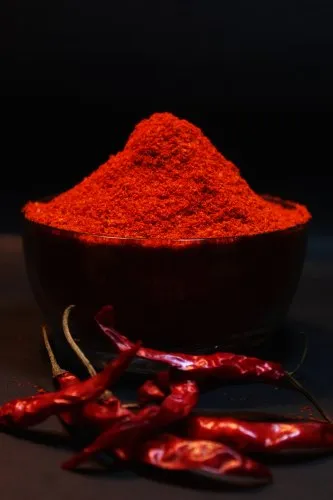
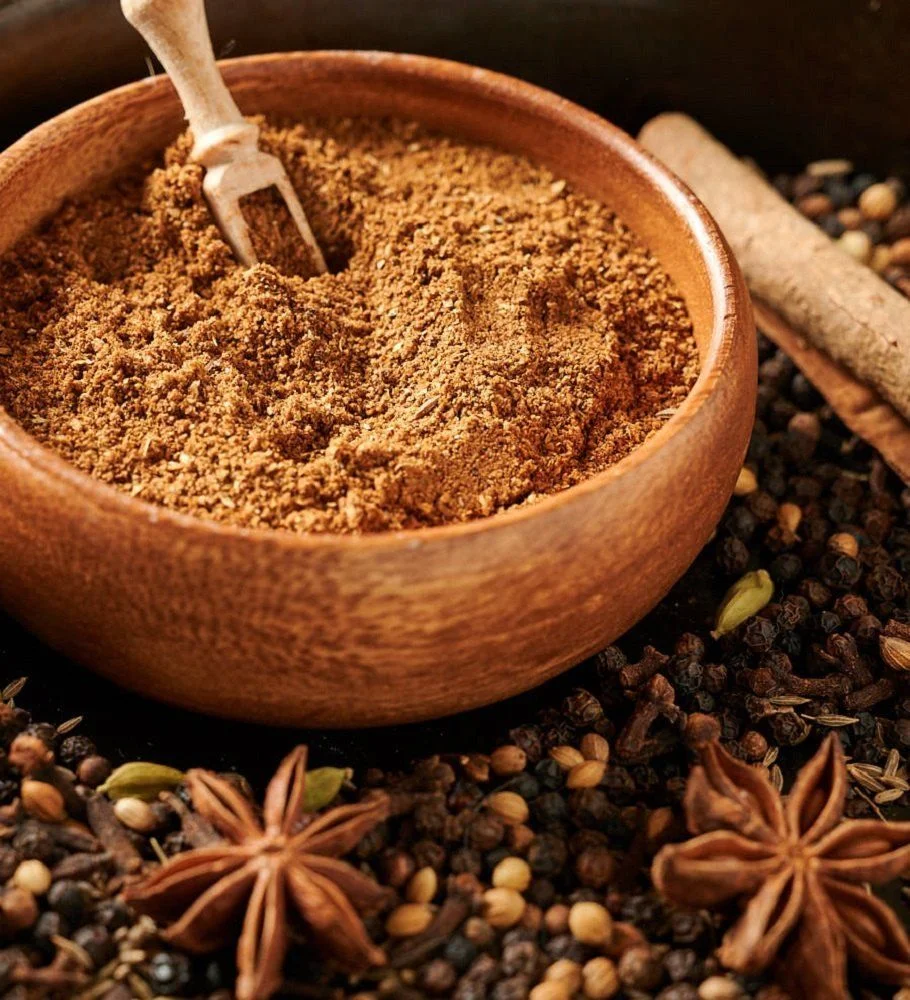
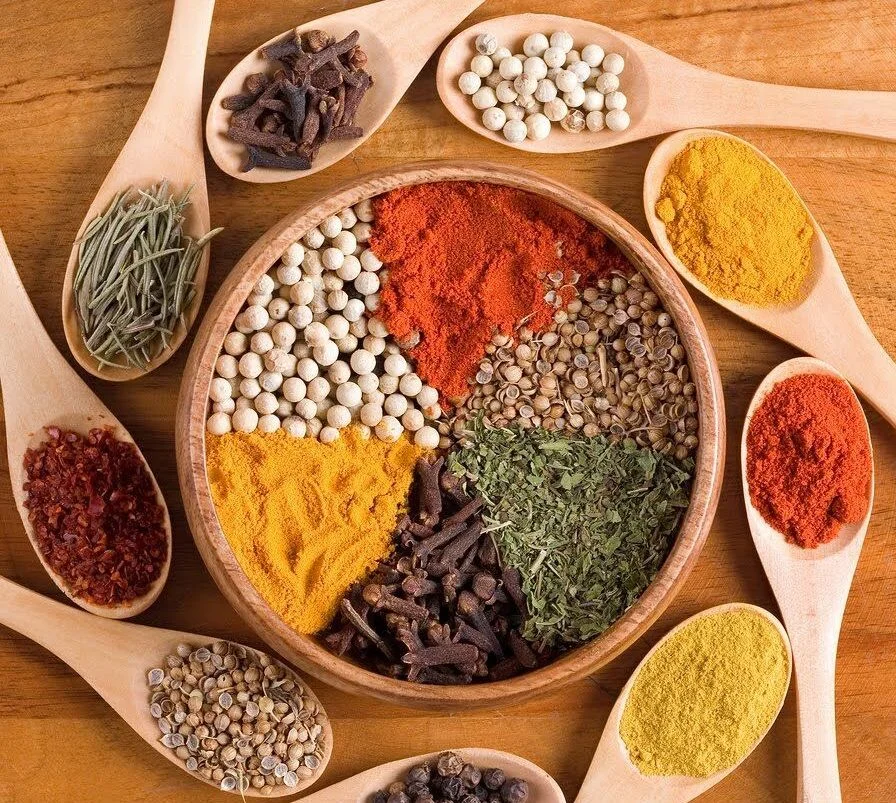
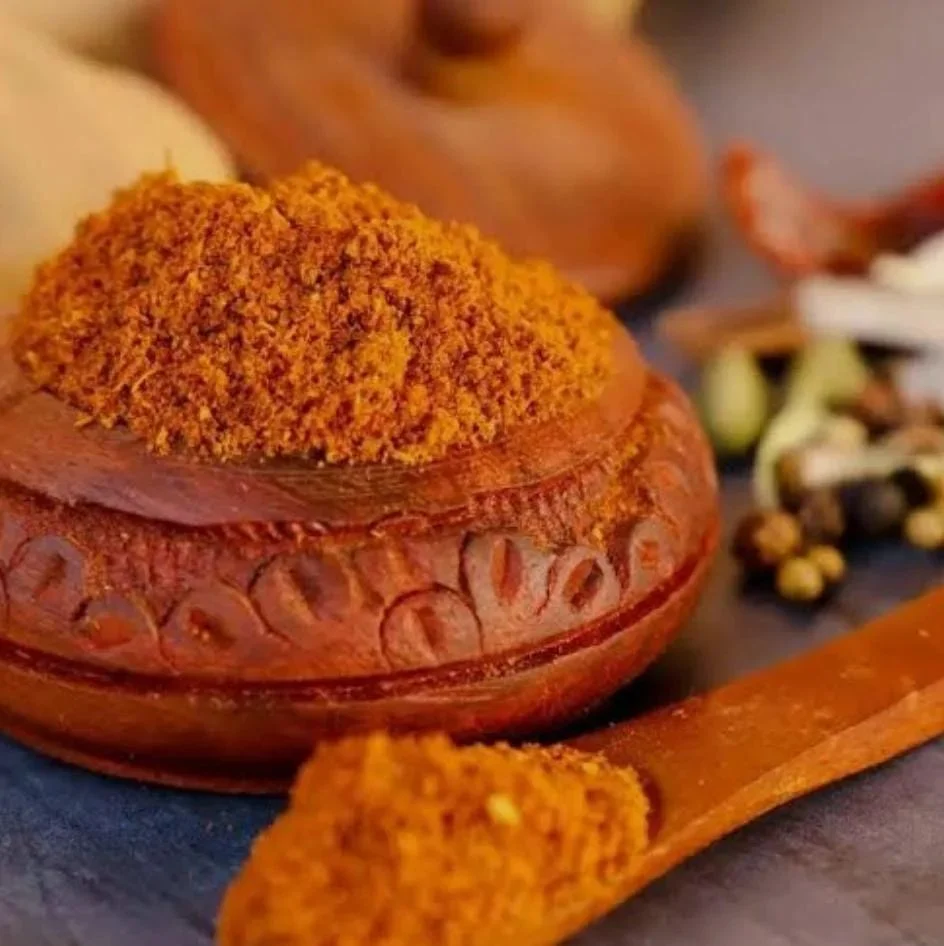
Vinayak Foods' catalogue is built around two technical families. The freeze-dried ready-to-eat meals are produced by removing water from cooked Indian dishes under vacuum at low temperatures, retaining shape, colour and most volatile flavour compounds; commercial freeze-dried Indian meals typically reach moisture levels of 1-4%, water activity (aw) below 0.6, and a shelf life of 12-24 months in foil-laminate pouches. The spice and masala range covers the standard Indian ground-spice palette - turmeric (Curcuma longa rhizome, ground to 60-80 mesh, typical curcumin content 2-5%), red chilli (Capsicum annuum, with Scoville Heat Units ranging from 30,000 SHU for regular Indian chilli powder to over 100,000 SHU for Guntur/Sannam grades), coriander seed powder, cumin seed powder, and blended masala mixes where Indian and FSSAI-defined composition standards (such as the FSSAI's Food Safety and Standards (Food Products Standards and Food Additives) Regulations) set minimum spice content and labelling rules. Masala blends like Garam Masala, Pav Bhaji Masala, Chaat Masala, Chicken Tandoori Masala, Egg Curry Masala, Fish Curry Masala and Meat Masala are typically formulated with 8-15 ingredients each, including coriander, cumin, red chilli, turmeric, black pepper, cardamom, cinnamon, clove, fennel, fenugreek, ginger, garlic, dried mango powder (amchur) and salt, with regional variants differing in the balance of warming versus pungent spices.
The ready-meal SKUs map closely to the Indian RTE/dehydrated food segment, where buyers typically evaluate products on moisture content, aw, reconstitution time, caloric density per 100 g (often 350-450 kcal for a full meal), protein content (commonly 8-15 g per 100 g for legume-based dishes such as Gujarati Dal, Dal Makhani, Rajma Chawal), and the absence of added preservatives. The spice SKUs are evaluated on parameters such as volatile oil content (e.g., cumin seed powder typically 2.5-4.5% v/w, coriander seed powder 0.3-1.0% v/w), total ash, acid-insoluble ash, lead content (the EU maximum for spices is 3.0 mg/kg for general spices and tighter limits for some categories), aflatoxin levels (EU limits of 5 µg/kg for aflatoxin B1 and 10 µg/kg total aflatoxins for spices), and Salmonella absence in 25 g. Indian exporters of these categories typically work to FSSAI licensing on the domestic side and to importing-country regulations such as the US FDA's FSVP, the EU's Regulation (EC) 1881/2006 for contaminants, and the Codex Alimentarius standards for spices and culinary herbs.
Trade and Export Information - Vinayak Foods
India is the world's largest producer and exporter of spices, with the Spices Board of India reporting annual spice exports above 1.4 million tonnes in recent years, and a parallel export of processed/ready-to-eat Indian ethnic foods that has been growing at low double-digit annual rates, driven by demand from the Indian diaspora and mainstream interest in global cuisines. Buyers of Indian freeze-dried ready meals and masala powders typically come from the United States, the United Kingdom, Canada, the Gulf Cooperation Council states (UAE, Saudi Arabia, Qatar, Kuwait, Bahrain, Oman), Australia, New Zealand, the European Union (Germany, Netherlands, France), Singapore, Malaysia, South Africa, and East Africa. The relevant HS code families for this catalogue are HS 0904 (pepper), HS 0905 (vanilla), HS 0906 (cinnamon), HS 0907 (cloves), HS 0908 (nutmeg, mace, cardamoms), HS 0909 (seeds of anise, cumin, fennel, coriander), HS 0910 (ginger, turmeric, other spices, including mixtures, i.e. masalas), HS 2103 (sauces and preparations therefor, mustard flour and meal), and HS 2106 (food preparations not elsewhere specified, which covers most freeze-dried and dehydrated ready meals). Within HS 0910, blended masalas are classified under subheading 0910.91 (mixtures of two or more products of different headings 09.04-09.10) in many customs regimes, while single-spice powders sit under 0910.99.
Indian exporters of spices and ready-to-eat ethnic foods typically ship under FOB or CIF Incoterms in 20 ft and 40 ft dry containers, with palletised cargo of 18-25 tonnes per 40 ft FCL for spices and lower tonnage for the lighter freeze-dried meals. Common export documentation includes a Certificate of Origin from the Spices Board of India (for spice shipments), FSSAI licence and product approvals, a health/phytosanitary certificate from the designated authorities, a commercial invoice, packing list, and bill of lading. For shipments to the EU, exporters are expected to comply with Regulation (EC) 1881/2006 on contaminants and EU Regulation 2015/2283 on novel foods where relevant; for the US, prior notice to FDA and FSVP compliance by the importer are standard. Buyers in the institutional, food-service, and retail-ethnic segments are the typical end customers, alongside defence, expedition, and outdoor-catering buyers who use freeze-dried Indian meals for their long ambient shelf life and low weight-to-calorie ratio. Vinayak Foods' own target export markets are not specified in the available data, so any destination discussion should be raised directly with the supplier.
Sourcing from Vinayak Foods - Buyer Guidance
A buyer evaluating Vinayak Foods should anchor the conversation in the supplier's 37 active SKUs and request product data sheets for each line of interest, including moisture, water activity, ingredient declaration in descending order of weight, declared shelf life, country of origin, and primary pack size. For the freeze-dried ready meals, it is standard to ask for a Certificate of Analysis (CoA) covering moisture (target 1-4%), water activity (aw below 0.6), total plate count, coliforms, E. coli, Salmonella, Staphylococcus aureus, and yeast and mould, along with a nutrition panel per 100 g and per serving. For the spice powders and masala blends, the CoA should include volatile oil content, total ash, acid-insoluble ash, moisture (typically below 10-12% for ground spices), lead, cadmium, aflatoxin B1 and total aflatoxins, ochratoxin A (EU limit 15 µg/kg for Piperaceae and 5 µg/kg for other spices), and a microbiological panel with Salmonella absence in 25 g. Buyers should also request the FSSAI licence number, the Spices Board registration (CRES for spice exports), and any third-party certifications the supplier holds; if no certifications are confirmed, this should be treated as a verification gap rather than a confirmed fact.
Because Vinayak Foods is listed at the harbor trust tier, the prudent next steps before placing a commercial order are: (1) request a representative sample set covering both a freeze-dried meal and a masala blend to evaluate appearance, aroma, reconstitution behaviour and taste; (2) ask for the supplier's manufacturing and export experience in years, monthly production capacity in kg or tonnes, and a list of existing export destinations; (3) confirm labelling compliance for the destination market, including allergen declarations, vegetarian/non-vegetarian symbols as required by FSSAI, and English-language ingredient panels; (4) clarify packaging (foil laminate pouches, cartons, master carton weights, palletisation), MOQ per SKU, lead time from confirmed purchase order to ex-factory dispatch, and accepted Incoterms; (5) agree on a pre-shipment inspection by a third-party agency such as SGS, Bureau Veritas or Intertek for microbiological and contaminant parameters, especially for first orders. For spices, the EU's maximum residue levels for pesticides under Regulation (EC) 396/2005 and the US FDA's action levels for aflatoxins are the most common points of rejection at destination, so pesticide-residue testing on a representative lot should be requested before shipment.
Frequently Asked Questions About Vinayak Foods
What product categories does Vinayak Foods supply?
Vinayak Foods lists 37 active products split between freeze-dried and dehydrated ready-to-eat Indian meals (such as Gujarati Dal Rice, Rajma Chawal, Pav Bhaji, Lemon Rice, Dal Makhani and Gajar Ka Halva) and ground spice and masala powders (such as Turmeric Powder, Coriander Powder, Cumin Powder, Chilli Powder, Garam Masala, Pav Bhaji Masala and Meat Masala). These two groups fall under HS chapters 21 (food preparations) and 09 (spices, including blended masalas under HS 0910.91 in many tariff regimes).
Which specifications should a buyer request for the freeze-dried ready meals?
Request a Certificate of Analysis covering moisture (typical target 1-4%), water activity (aw below 0.6), reconstitution time in boiling water, total plate count, coliforms, E. coli, Salmonella, and Staphylococcus aureus, plus a nutrition panel per 100 g. Confirm declared shelf life (commonly 12-24 months), primary pack format (foil-laminate pouches of 50-200 g retail or 1-5 kg bulk), and ingredient declaration in descending order of weight.
Which quality parameters matter most for the spice and masala SKUs?
For ground spices and masalas, the key parameters are volatile oil content (e.g., 2.5-4.5% v/w for cumin powder, 0.3-1.0% v/w for coriander powder), moisture below 10-12%, total ash and acid-insoluble ash, lead (EU limit 3.0 mg/kg for most spices), aflatoxin B1 and total aflatoxins (EU 5 µg/kg and 10 µg/kg respectively), ochratoxin A, and Salmonella absence in 25 g. A full pesticide-residue screen against EU Regulation (EC) 396/2005 should also be requested for shipments to Europe.
Which certifications and documents should a buyer ask Vinayak Foods to provide?
Ask for the FSSAI licence, Spices Board of India CRES registration for spice exports, and any third-party certifications the supplier actually holds. Standard export documents are a Certificate of Origin, health/phytosanitary certificate where applicable, commercial invoice, packing list, and bill of lading. For the EU, confirm compliance with Regulation (EC) 1881/2006 on contaminants; for the US, confirm FDA prior notice and FSVP readiness on the importer side.
What are typical MOQ and lead time expectations for this category?
For Indian freeze-dried ready meals and spice powders, MOQs vary by SKU and pack size but commonly start at a few hundred kilograms per SKU for masalas and a few tonnes per SKU for freeze-dried meals, with lead times of 2-6 weeks from confirmed purchase order to ex-factory dispatch depending on production slot and raw-material availability. Specific MOQ and lead time for Vinayak Foods should be confirmed directly, as they are not stated in the available catalogue data.
How are these products typically packed and shipped internationally?
Spice powders are usually packed in 100 g to 25 kg units inside food-grade poly liners within corrugated cartons, often palletised at 500-1000 kg per pallet; freeze-dried meals are packed in aluminium-foil laminate pouches of 50-200 g retail or 1-5 kg bulk, then cased in cartons. Export shipments typically move in 20 ft or 40 ft dry containers under FOB or CIF Incoterms, with 18-25 tonnes per 40 ft FCL for spices and lower net weights for the lighter freeze-dried meals.
Which destination regions typically import Indian freeze-dried meals and masalas?
Typical importing regions for Indian spices and ready-to-eat ethnic foods are the United States, the United Kingdom, Canada, the Gulf Cooperation Council states (UAE, Saudi Arabia, Qatar, Kuwait, Bahrain, Oman), the European Union (Germany, Netherlands, France), Australia, New Zealand, Singapore, Malaysia, South Africa and East Africa. Vinayak Foods' own target markets are not specified in the available facts and should be confirmed with the supplier directly.
What verification steps are recommended before placing a first order?
Request product samples across both categories, review CoAs for the parameters listed above, confirm FSSAI and Spices Board registrations, and commission a third-party pre-shipment inspection (for example SGS, Bureau Veritas or Intertek) covering microbiological and contaminant testing. For the first order, consider a smaller trial shipment to validate lead time, documentation accuracy, and conformity with destination-market labelling and contaminant rules before scaling up volume.




 , India