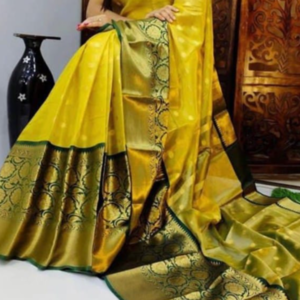
Import Banarasi Saree Most Demanded Kora Dalyable Saree — Buy in wholesale FOB from Supplier in India
Similar Products
More from this Supplier
- Banarasi georget most demanded dyable saree
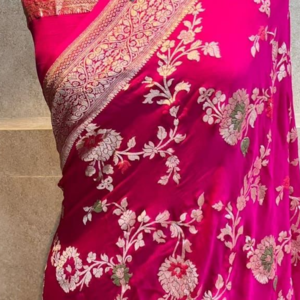
- Banarasi dyablekatan georget bridle and party wear saree
- New banarasi demanded soft silk saree
- Kanjeevaram demanded saree
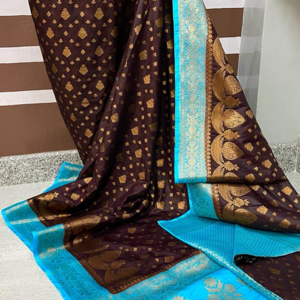
- *Banarasi bridal dyable kora soft shiny and silk saree* *standared pallu & blouse* *double zari work* * *full handstock* *
- New tissu ikkat border saree
- Zari weaving work bridle saree
Related Products
- Segment Box Girder Mold – Short Line / Long Line Match Casting System
- Cashew Kernels W320
- Sesame seed
- Tre-en-en Grain Concentrates
- Vanilla beans
- Cashew kernels LP
- Fresh Onions Exporters Cheap Price 5-6/7-8cm
- Dried Grade 2 Yellow Maize/Corn Non-GMO
- Rice (Basmati & Non Basmati) Rice
- Top Quality Palm Kennel Shell - Best Quality
- Thai Curry (red, green, yellow)
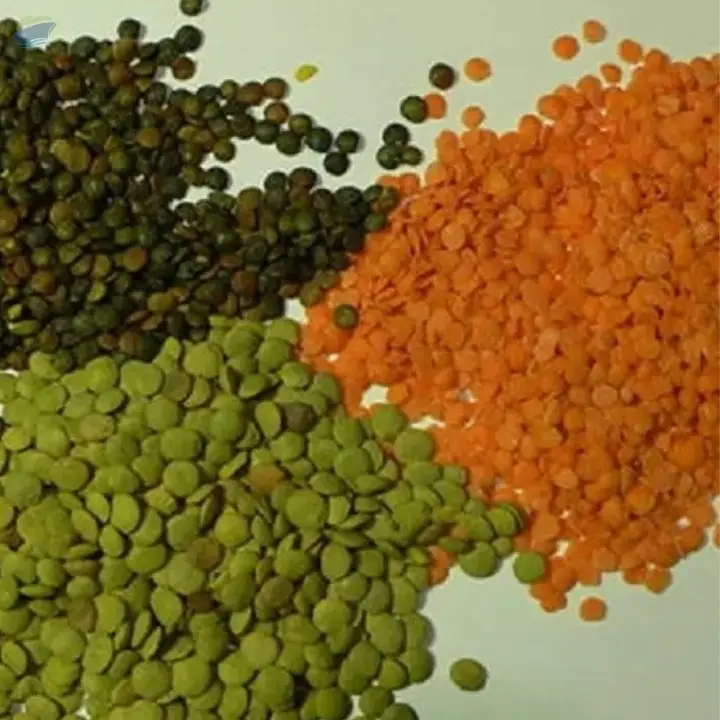
- Red Lentils and Green Lentils Top Quality
Trending in this Category
Top Suppliers for this Product
Compare Other Sellers
More from Parent Category
Related Products
- 1509 Golden Sella Rice
- 1509 Sella Rice
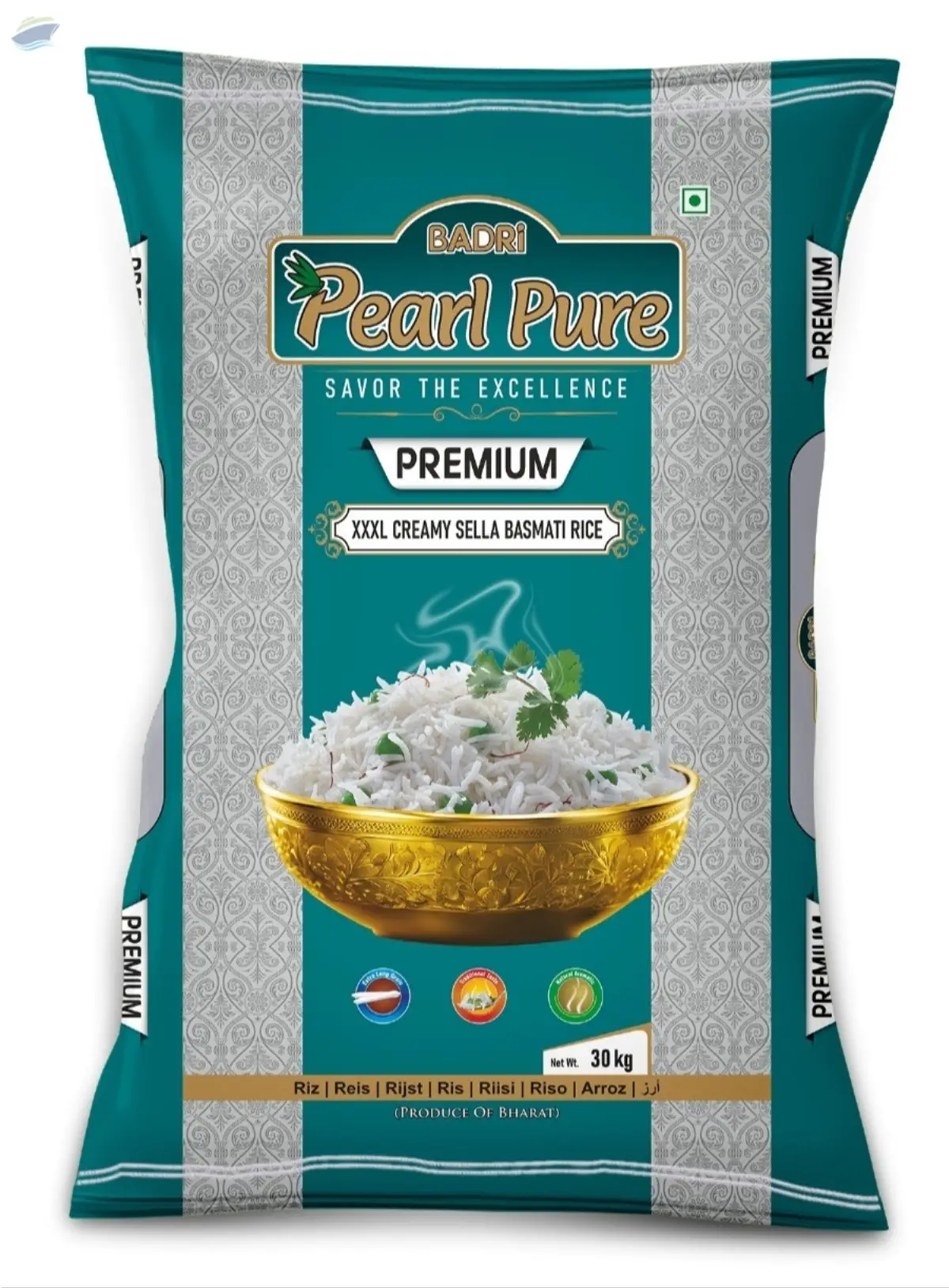
- Pearl Pure Premium Sella Basmati Rice
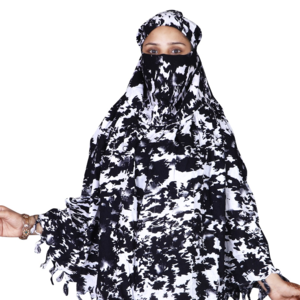
- Burkha Duppta
- Traditional Basmati Rice
- Pusa Basmati Rice
- 1509 Basmati Rice
- 1401 Basmati Rice
- 1121 Basmati Rice
- 1121 LONG GRAIN STEAM BASMATI RICE
- 1121 LONG GRAIN WHITE SELLA
- 1121 GOLDEN SELLA
- 1509 LONG GRAIN BASMATI RICE
- 1401 BASMATI RICE
- WHITE SELLA 1121 rice
- GOLDEN SELLA 1121 rice
- SONA MASURI rice
- Chana dal
- Indian Basmati Long Rice 1121 Golden Sella Basmati Rice
- Basmati Rice
- Red Masoor Dal
- Biryani Masala
- Basmati rice, Golden rice, Brown rice
- Basmati rice
- 1121 Basmati Creamy Sella Rice
- Matka Potli
- Deginer Matka Potli
- Basmati Rice
- Non-Basmati Rice
- Super Kernal Basmati Rice
- 1121 Basmati Steam Rice
- Parboiled Sella 1121 Rice
- Basmati - 1121 Raw Basmati White Rice
- PK 386 WHITE /SELLA RICE
- Brown Basmati Rice
- C9 WHITE /SELLA RICE
- IRRI 6 WHITE / SELLA RICE
- Yellow Moong Dal - Premium Quality
- 1121 Basmati Steam Rice
- Thailand White rice basmati and jasmine
- Ceylon Rice Verities
- 1121 Sella Rice
- Pancharau thin
- basmati rice
- non basmati rice
- 1121 Creamy Sella Basmati Rice
- 1121 Golden Sella Basmati Rice
- 1121 White Steam Basmati Rice
- Pusa White Steam Basmati Rice
- choki bajot
- biriyani masala
- Tandoori Masala
- Kanda lasun masala
- Non Basmati Rice
- Basmati Rice
- Tanika Saree
- Induction kadai 24 cm
- Dry REd Chilli, Kashmiri chilli byadgi chilli Teja Chilli
- Sona mukhi rice
- INDIAN BASMATI RICE
- Royal Rice Jasmine Rice Packing 1kg 5kg 25kg Long-grain-white-Rice 0.1 Admixture Sortex - Riz - Arroz
- Long Grain Jasmine Rice 25kg Vietnam export wholesale rice price 2022 new crop- RIZ AU JASMIN ARROZ
- The Ordinary
- Tilda Basmati Rice
- Banarasi georget most demanded dyable saree
- Kanjeevaram demanded saree
- Corporate Finance For BG SBLC
- WS Cashew Nut Vietnam White Splits Cashews +84 84 885 2227
- basmati rice
- non basmati rice
- TOP WHOLESALE FROZEN RED CHILI VIET NAM/ PREMIUM QUALITY AND COMPETITIVE PRICE +84 938023905 - Nhat
- INDRA Mala Small
- Vanili Tahiti
- 15 Mukhi Rudraksha Bead
- 15 Mukhi Rudraksha Bead
- 24 Mukhi Rudraksha
- 25 Mukhi Rudraksha
- Basmati Rice High in Quality and Healthy
- ROYAL BASMATI RICE
- 1121steam Basmati Rice
- 1121 White Basmati Rice
- 1121 Sella Basmati Rice
- 1509 steam Basmati Rice
- 1509 White Basmati Rice
- 1509 Sella Basmati Rice
- Super Kernal steam Basmati Rice
- Super Kernal White Basmati Rice
- Super Kernal Sella Basmati Rice
- PK-386 White Basmati Rice
- PK-386 Sella Basmati Rice
- C-9 steam Basmati Rice
- C-9 White Basmati Rice
- C-9 Sella Basmati Rice
- IRRI-6 steam Basmati Rice
- IRRI-6 White Basmati Rice
- IRRI-6 Sella Basmati Rice
- ROHA DELICIUOSE
- Tandoori Masala
- Basmati rice
- Jaipuri Potli
Top Verified Suppliers
- Zhengzhou Haixu Abrasives Co., Ltd. · China
- China-Lutong Parts Plant · China
- Shenzhen Bio Plastic Technology Co., Ltd. · China
- Xinxiang Haishan Machinery Co., Ltd. · China
- Anhui Safe Electronics Co., Ltd. · China
- Rack In The Cases Limited · China
- HKN Exim Co., Ltd. · Viet Nam
- Om Sai Enterprises · India
- Kim Minh Exim Co., Ltd. · Viet Nam
- Qingdao Rensheng Huida Trading Co., Ltd. · China
- Shandong Bochuang Seal Co., Ltd. · China
- Dongguan Songshun Mould Steel Co., Ltd. · China
- A&S Pump Co., Ltd. · China
- Shenzhen Junen Packaging Co., Ltd. · China
- Jiangsu Steel Group Co., Ltd. · China
- Numen Eduservices LLP · India
- Duqaa Handicrafts · India
- Zhengzhou Zms Cable Co., Ltd. · China
- Week Technology Ltd. · China
- Anping Nanhai Sanitary Ware Co., Ltd. · China
- Dongying Lake Petroleum Technology Co., Ltd · China
- Qingdao Rongli Packaging Co., Ltd. · China
- Hebei Tuohua Metal Products Co., Ltd. · China
- Guangzhou Songtao Craft Artificial Tree Co., Ltd. · China
- Shanghai Cixi Instrument Co., Ltd. · China
- China Coal Industry And Mining Group · China
- Hebei JOESCO Import & Export Trade Co. Ltd. · China
- Chen Chen Diesel Parts Plant · China
- Hebei Yida Reinforcing Bar Connecting Technology Co., Ltd. · China
- Dongying Lake Petroleum Technology Co., Ltd. · China

 Agriculture›
 Apparel and fashion accessories›
 Construction & real estate›💡Electronic & Electrical›🍎Food & Beverages›🛋️Home furnishing & supplies›⚗️Industrial goods & chemical›🪨Minerals & metals›📦Miscellaneous›Agriculture›Apparel and fashion accessories›Construction & real estate›💡Electronic & Electrical›🍎Food & Beverages›🛋️Home furnishing & supplies›⚗️Industrial goods & chemical›🪨Minerals & metals›📦Miscellaneous›


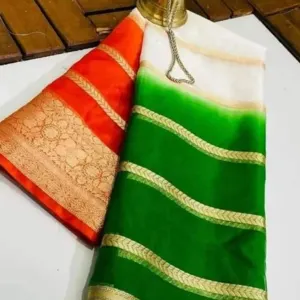
The kora dyable Banarasi saree from Banarasi handmade sarees is constructed from kora fabric, a semi-transparent base material composed of degummed but unbleached silk or fine cotton-silk blend that accepts acid, reactive, and natural dyes with high colour yield. The saree measures 5.5 to 6.0 metres in length, with the kora base typically weighing 50 to 80 GSM before dyeing and 80 to 120 GSM after finishing, depending on pick density and supplementary weft insertion. Unlike fully finished Banarasi brocades, this variant ships in undyed or minimally processed form, enabling buyers to apply custom colour palettes, block prints, or direct digital prints for regional market preferences in the Middle East, Southeast Asia, or diaspora communities.
The kora material derives its dye affinity from residual sericin content (8 to 12 percent typical, versus under 3 percent in fully degummed silk) and natural gum binding, which creates a slightly stiff hand that softens after first wash and dye fixation. Warp threads use 2/120 or 2/140 NM count silk, with weft counts of 2/100 to 2/120 NM, producing an open, breathable structure with 30 to 40 percent visible light transmission in the undyed state. The absence of pre-applied zari or brocade makes this saree category suitable for machine embroidery, sequin work, or applique after dyeing, expanding its use beyond traditional bridal markets into contemporary fashion and uniform applications.
Primary buyers include garment exporters seeking customizable base fabric, dye houses in Tiruppur and Surat, and retailers serving South Asian communities in the UAE, UK, and North America. The lightweight drape suits tropical climates and indoor ceremonial functions where heavier brocades would prove impractical. Banarasi handmade sarees operates from Varanasi city proper, positioning it within the same artisan ecosystem as traditional brocade weavers but with product focus on unfinished, adaptable material. Buyers should confirm whether the supplier provides dyeing services in-house or sells exclusively undyed goods, and whether minimum order quantities apply per colour shade or per base fabric batch.
| Base material | Kora (semi-degummed silk or fine cotton-silk blend, standard for dyable base cloth) |
| Saree length | 5.5 - 6.0 m (standard Banarasi cut, confirm if fixed or variable per order) |
| Pre-dye fabric weight | 50 - 80 GSM (typical for kora construction; post-dye: 80 - 120 GSM) |
| Warp yarn count | 2/120 to 2/140 NM silk (standard for Varanasi kora base) |
| Weft yarn count | 2/100 to 2/120 NM (typical range for balanced plain or twill ground) |
| Residual sericin content | 8 - 12% (typical for kora; enables dye absorption, higher than fully degummed silk) |
| Light transmission (undyed) | 30 - 40% (characteristic semi-transparency of kora weave) |
| Packaging | Rolled packing for transport (supplier to confirm: individual rolls or bulk bales) |
| Dye compatibility | Acid dyes, reactive dyes, natural dyes (standard for kora silk; confirm fastness requirements) |
| Origin | Varanasi, Uttar Pradesh, India (Geographical Indication protected region) |
Banarasi handmade sarees is based in Varanasi, Uttar Pradesh, India, carrying an "organic" supplier tier and "voyage" trust tier designation. The listing records a 0.00 percent response rate with zero average response hours, suggesting either recent platform registration or incomplete engagement tracking. The supplier name indicates artisan or cooperative orientation rather than large-scale mill production, though the listing does not specify loom count, workforce size, or organisational structure. The city location places it within the broader Banarasi weaving geography, but no specific ward, cluster, or workshop address is provided beyond "Varanasi."
The profile lacks verified export history, named certifications, or buyer references. The material specification "Kora dyable" and emphasis on rolled packaging for export suggests experience with B2B bulk supply rather than purely retail orientation. Buyers should independently confirm whether Banarasi handmade sarees owns kora weaving capacity, sources from associated artisans, or operates as a finishing and trading intermediary. Direct verification of dyeing facility relationships, if any, and quality control procedures for shade consistency across dye lots is advisable before committing to volume orders. The organic tier may imply sustainable or traditional production claims; request specifics on what this designation covers.
This premium Banarasi saree is crafted from Kora fabric, a fine semi-transparent cotton or silk material widely used in traditional Indian textiles. Most in-demand for its lightweight drape and suitability for both casual and festive occasions, this saree is sourced directly from Varanasi weaving clusters and is ideal for bulk buyers, importers, and ethnic wear retailers. The product is available in standard 5.5 to 6-meter lengths with rolled packaging for safe transport, making it a reliable choice for export-oriented supply chains across South Asia, Middle East, and Western markets.
大家还在搜
| 企业类型 | Supplier |
| 成立年份 | Contact Supplier |
| Employees | Contact Supplier |
| Annual Revenue | Contact Supplier |
| Main Products | View Products Tab |
| Major Markets | Global |
| 响应时间 | <4h |
| 响应率 | Contact Supplier |
Sourcing Banarasi saree from Banarasi handmade sarees - India Import Guide
Before committing to Banarasi handmade sarees, commission an independent pre-shipment inspection focusing on yarn count consistency, absence of oil or soil staining from loomstate handling, and roll-to-roll shade variation in the undyed state. Verify that selvedge finishing is secure enough to withstand dyeing tension without unravelling, a common defect in small-loom kora production. Request a production sample dyed to your target shade using their recommended protocol, as kora from different Varanasi suppliers responds differently to identical dyebaths owing to sericin variability and water mineral content. Confirm whether the supplier accepts payment through escrow or requires direct wire transfer, and establish explicit rejection criteria for off-shade or damaged rolls before final invoice authorisation.
Logistics from Varanasi to major export gateways involves 12 to 16 hours road transit to Delhi for air freight, or 24 to 36 hours to Kolkata Port for sea freight container loading. The nearest ICD (inland container depot) is at Kanpur or Mughalsarai (Deen Dayal Upadhyaya Nagar). Discuss Incoterms with Banarasi handmade sarees, as ex-works Varanasi places all inland costs and export customs clearance on your forwarder. CIF terms to Dubai, London, or New York require the supplier to arrange marine insurance, which may be preferable given their local freight relationships. For LCL shipments, confirm whether they palletise rolls or ship loose, as loose roll handling increases crease and edge damage risk. Payment terms of 30 percent advance with 70 percent against scanned BL are standard for unrated suppliers; consider documentary credit for initial orders exceeding USD 10,000.
Quality verification on arrival should include spectrophotometric shade comparison against approved production samples, tensile strength testing per ISO 13934-1 (typical breaking strength for this kora construction: 350 to 450 N warp, 250 to 300 N weft), and abrasion resistance per Martindale method if the finished garment will undergo mechanical wear. Check for weft bars, warp streaks, or reed marks that would telegraph through light-coloured dyes. Documentation to retain includes the supplier's packing list with roll numbers, your dye house's batch records with chemical lot numbers, and any GI certificates for end-customer marketing claims. For repeat orders, establish a master shade standard and toleranced colour difference (Delta E 1.0 or less for premium positioning, Delta E 2.0 for volume markets) to minimise subjective acceptance disputes with Banarasi handmade sarees.
Active buying requirements from importers looking for Similar products




- ✓谁在进口这款产品
- ✓他们的成交价格
- ✓他们使用的港口
Related Products & Suppliers
Compare alternatives, find similar products and connect with verified suppliers
Similar Products
More from this Supplier
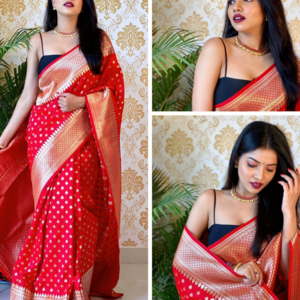
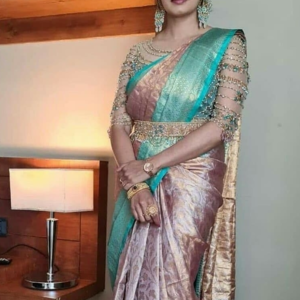
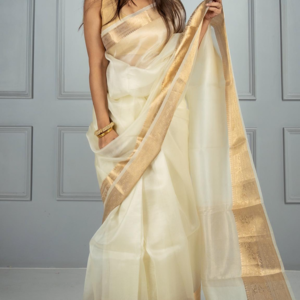
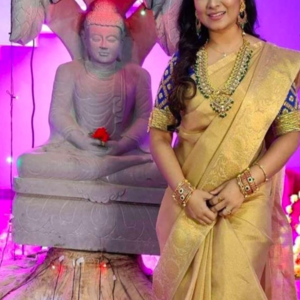
Related Products
.jpg.png)


Trending in this Category
Top Suppliers for this Product



Compare Other Sellers
More from Parent Category
Browse Banarasi saree most demanded kora dalyable saree — Top Products
100 listingsTop Verified Suppliers for Banarasi saree most demanded kora dalyable saree
30 suppliersBuy Banarasi Saree Most Deman in Bulk — Verified Supplier in India
When sourcing Banarasi Saree Most Demanded Kora Dalyable Saree for your business, securing the right balance of quality and cost is essential. Banarasi handmade sarees, a verified supplier based in Varanasi, India, offers this product with key specifications including Premium Grade / Kora Dhabla (Unbleached Cotton-Silk Blend), 60% Cotton, 40% Silk (Blended Yarn), and 5.5 - 6 meters length, 1.1 - 1.2 meters width. By purchasing directly from the manufacturer or authorized exporter, buyers can negotiate favorable FOB prices starting at $25/Carton and manage bulk orders with a minimum order quantity (MOQ) of 25 Carton. This product is actively traded under HS Code 6204.42, making it a staple in the Sella Basmati Rice sector with strong demand from importing countries worldwide.
Banarasi Saree Most Deman Specifications, Trade Terms & Pricing
Importing Banarasi Saree Most Deman requires careful attention to shipping logistics, customs compliance, and secure payment terms. Banarasi handmade sarees offers flexible shipping options such as Full Container Load (FCL) or Less than Container Load (LCL) via sea freight. To ensure a smooth transaction, buyers should verify import duties for HS Code 6204.42 in their destination country. Common payment methods for international B2B transactions include Letter of Credit (L/C), Telegraphic Transfer (T/T), and Documents against Payment (D/P). All transactions and RFQs are facilitated through EximNext, a leading B2B marketplace designed to make cross-border trade secure and efficient.
About Banarasi handmade sarees — Supplier in India
Finding trustworthy partners is the foundation of successful importing. The supplier of this Banarasi Saree Most Deman has been verified on our platform. Whether you are a distributor, wholesaler, or procurement manager, you can request a free quotation, ask for product samples, and finalize your bulk purchase with confidence. EximNext hosts thousands of verified manufacturers and exporters across 200+ countries. Explore similar products in the Sella Basmati Rice category and connect with top-tier exporters on our comprehensive global B2B marketplace. Start your sourcing journey today.
Import Banarasi Saree Most Deman — Shipping, Logistics & Customs
Importing Banarasi Saree Most Deman requires careful attention to shipping logistics, customs compliance, and secure payment terms. Common shipping options include Full Container Load (FCL) or Less than Container Load (LCL) via sea freight. Buyers should verify import duties for HS Code 6204.42 in their destination country. Common payment methods include Letter of Credit (L/C), Telegraphic Transfer (T/T), and Documents against Payment (D/P).
Frequently Asked Questions About Banarasi Saree Most Deman
What is the wholesale price of Banarasi Saree Most Demanded Kora Dalyable Saree?
The current listed wholesale price for Banarasi Saree Most Demanded Kora Dalyable Saree from Banarasi handmade sarees is $25/Carton on FOB terms from India. Prices may vary depending on order volume, packaging, and destination. For the most accurate bulk quote, send a direct RFQ to Banarasi handmade sarees through EximNext.
What is the Minimum Order Quantity (MOQ) for Banarasi Saree Most Deman?
The supplier, Banarasi handmade sarees, has set a Minimum Order Quantity (MOQ) of 25 Carton for Banarasi Saree Most Deman. For sample requests or smaller trial orders, contact the supplier directly through our platform's inquiry system.
What is the HS Code for Banarasi Saree Most Demanded Kora Dalyable Saree?
For international shipping and customs clearance, Banarasi Saree Most Demanded Kora Dalyable Saree is classified under HS Code 6204.42. Buyers should verify their local customs regulations to determine applicable import duties and taxes for this classification.
How can I import Banarasi Saree Most Deman from India?
To import Banarasi Saree Most Deman from India, negotiate shipping terms (FOB, CIF, or EXW) directly with Banarasi handmade sarees. Ensure you have the necessary import licenses for Sella Basmati Rice products in your destination country.
Is Banarasi handmade sarees a verified supplier?
Yes, Banarasi handmade sarees is a verified supplier on EximNext. You can view their complete company profile, business registration details, certifications, and export history before placing a bulk order.
What are the key specifications of Banarasi Saree Most Demanded Kora Dalyable Saree?
The key specifications for Banarasi Saree Most Demanded Kora Dalyable Saree supplied by Banarasi handmade sarees include Premium Grade / Kora Dhabla (Unbleached Cotton-Silk Blend), 60% Cotton, 40% Silk (Blended Yarn), and 5.5 - 6 meters length, 1.1 - 1.2 meters width. For a complete technical data sheet or Certificate of Analysis (COA), send an inquiry directly to the supplier through EximNext.
What packaging options are available for bulk orders of Banarasi Saree Most Deman?
Banarasi handmade sarees offers Banarasi Saree Most Deman with standard export packaging. Custom packaging, private labeling, and OEM/ODM options may also be available for large wholesale orders.
Which countries import Banarasi Saree Most Deman the most?
Banarasi Saree Most Deman is actively imported by buyers worldwide. Request a destination-specific CIF or CFR quote from Banarasi handmade sarees through our platform.
What certifications does this Banarasi Saree Most Deman supplier hold?
Banarasi handmade sarees maintains international quality certifications. These ensure that the Banarasi Saree Most Deman meets international quality, safety, and regulatory standards required for cross-border trade.
How do I place a bulk order for Banarasi Saree Most Demanded Kora Dalyable Saree on EximNext?
Click "Request Quotation" on this product page, specify your required quantity, preferred shipping terms, and destination country. Banarasi handmade sarees will respond with a detailed wholesale quote including FOB pricing, lead time, and payment options.
What payment methods are accepted?
Common payment methods include Letter of Credit (L/C), Telegraphic Transfer (T/T), Documents against Payment (D/P), and Escrow services. Confirm accepted terms directly with Banarasi handmade sarees.
Explore More Sella Basmati Rice Products for Wholesale Import
Discover more products in Sella Basmati Rice from verified suppliers worldwide.