TAYAL IN TRADE — Supplier

About TAYAL IN TRADE - Coconut Products and Apparel Exporter in India

TAYAL IN TRADE is an India-based exporter operating with 10 active product listings that span two distinct categories: processed coconut products (8 SKUs) and readymade garments (2 SKUs). The coconut line covers virgin coconut oil, coconut milk, coconut cream, cream of coconut, coconut water, coconut water with fruits, and coconut milkshake, while the textile line covers cotton patiala salwar and baby clothes. The supplier's catalogue sits across HS chapter 15 (animal/vegetable fats and oils, covering the virgin coconut oil), HS chapter 20 (preparations of fruits, nuts and vegetables, covering the coconut water, milk, cream and milkshake), and HS chapter 62 (articles of apparel, knitted, covering the baby clothes under 6209.20). This mix of food and apparel under one Indian exporter is consistent with the multi-line trading model common among Indian merchant-exporters serving South and Southeast Asian, Middle Eastern and African B2B buyers.

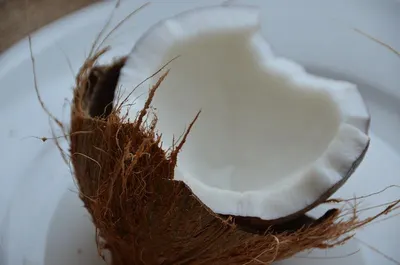
India is one of the world's leading origins for coconut-based processed foods, with Kerala, Tamil Nadu, Karnataka and Andhra Pradesh forming the main processing belt for virgin coconut oil, coconut milk and cream. TAYAL IN TRADE's catalogue maps directly onto that processing geography: virgin coconut oil and coconut milk/cream are typically cold-pressed or expeller-pressed from fresh Kerala/Tamil Nadu mature coconuts, and the coconut water SKUs are typically packed from tender coconut water sourced in the same coastal belt. The garment listings, in turn, draw on India's cotton textile clusters in Tirupur, Ludhiana and the NCR, where patiala salwars and cotton babywear are produced in volume for export. The combination places the supplier in a position to consolidate coconut F&B and cotton apparel shipments for buyers who source both categories from the Indian subcontinent.

Product Range and Specialties of TAYAL IN TRADE

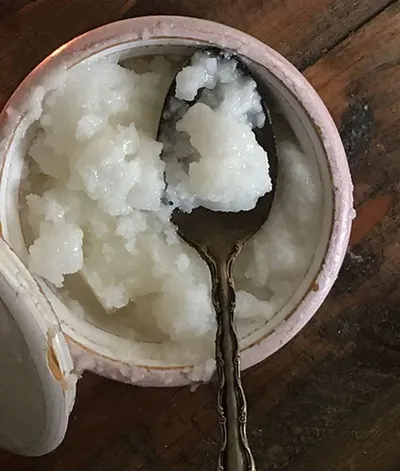
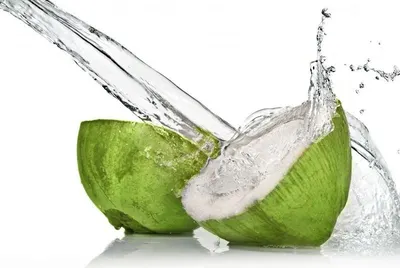
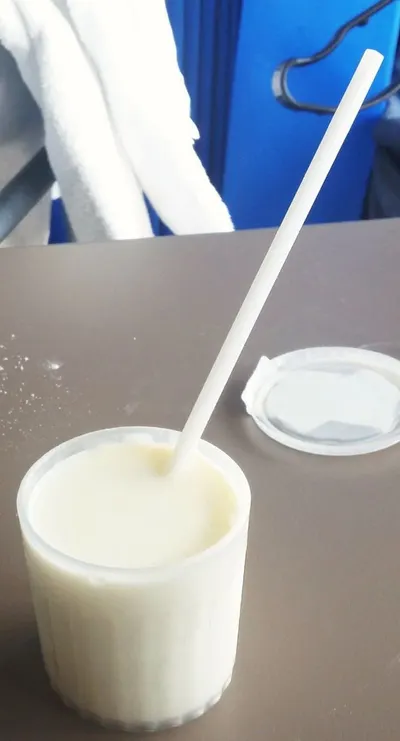
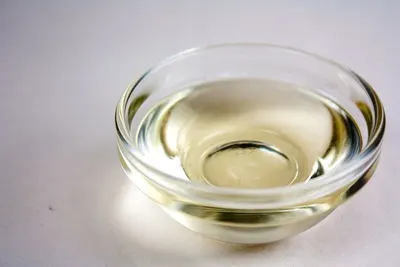
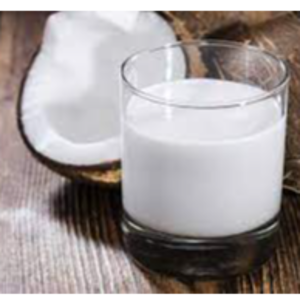
The coconut side of TAYAL IN TRADE's catalogue covers the full processed-coconut spectrum that Indian packers typically offer to overseas buyers. Virgin coconut oil (VCO) is normally traded in two grades: cold-pressed (often labelled extra virgin, free fatty acid below 0.1-0.2%, moisture under 0.1-0.2%) and refined bleached deodorised (RBD) VCO, packed in 200 ml, 500 ml, 1 L, 5 L, 20 L jerrycans and 25 kg drums. Coconut milk and coconut cream are typically traded at fat contents of around 17-19% for milk and 20-22%+ for cream, with Brix in the 6-9% range for unsweetened variants, packed in 400 ml cans, 1 L tetra paks or 20 kg bag-in-box aseptic bags. Cream of coconut is the sweetened, higher-Brix variant (commonly 25-35% fat, 50-65% Brix) used in piña colada and dessert applications, while coconut milkshake is a flavoured, sweetened RTD or powder blend. Coconut water is typically packed in 200 ml, 330 ml and 500 ml Tetra Pak or PET bottles, with Brix 4-6 and pH 4.5-5.5, often with fruit pieces added in the 'with fruits' variant.

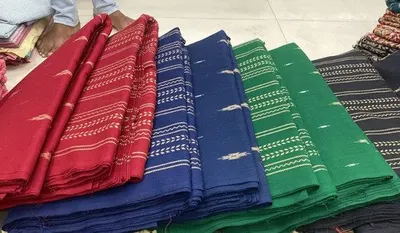
On the apparel side, the 100% premium cotton free-size patiala salwar is a loose, pleated traditional trouser produced in the Ludhiana/Tirupur cotton clusters, typically woven or knit at 120-180 GSM in 100% cotton. The baby clothes line falls under HS 6209.20 (babies' garments and clothing accessories, of cotton), the cotton-specific subheading of HS chapter 62, and is listed in 100% cotton, organic cotton, and cotton-polyester blend constructions - the three fabric families that dominate Indian export production of infantwear. Across both categories, the catalogue is small but covers the standard variants a B2B buyer would expect from an Indian multi-line trader.

Trade and Export Information - TAYAL IN TRADE

Coconut-based processed foods from India are typically exported under HS 1513 (coconut, palm kernel or babassu oil, including VCO) and HS 2008 / 2009 (fruits, nuts and vegetable preparations, covering coconut milk, cream and water), while the babywear falls under HS 6209.20. India's coconut product exports traditionally flow into the Gulf Cooperation Council (UAE, Saudi Arabia, Oman, Qatar), the broader Middle East, the United States, the European Union, the United Kingdom, Southeast Asia (Malaysia, Singapore, Indonesia, Thailand) and African markets, with the apparel side adding the EU, US and Middle East as the main destinations for Indian cotton baby garments. Indian VCO and coconut milk shipments to the EU are typically required to comply with EU Regulation 1169/2011 on food information, while shipments to the US fall under FDA 21 CFR labelling and FSVP rules, and Middle East shipments generally require GSO/SASO conformity for food labelling and shelf-life testing.

For the apparel SKUs, Indian baby garments under HS 6209.20 are usually exported against buyer-specified compliance: OEKO-TEX Standard 100 (Class I for babies), GOTS for organic cotton claims, and CPSIA compliance for the US market are the most common requirements. Shipping norms for the coconut SKUs are typically 20 ft FCL loads of 18-22 metric tonnes for canned coconut milk/cream and 18-20 MT for VCO in jerrycans/drums, with bag-in-box aseptic packs often loaded on pallets at 18-20 MT per 20 ft; the babywear is typically shipped in 20 ft or 40 ft containers at standard garment-pack densities, often on hangers or flat-packed in polybags inside export cartons. Indian exporters of these categories usually work on FOB, CIF and CFR Incoterms, with documentation including commercial invoice, packing list, certificate of origin (under the India-ASEAN, India-UAE CEPA or India-EU GSP frameworks where applicable), phytosanitary/health certificates for the food items, and SGS/Bureau Veritas pre-shipment inspection reports on request.

Sourcing from TAYAL IN TRADE - Buyer Guidance

Buyers sourcing coconut products from TAYAL IN TRADE should request the specific grade and specification sheet for each SKU: for VCO, the free fatty acid percentage, moisture content, peroxide value, lauric acid percentage (typically 45-52%) and the production method (cold-pressed vs RBD); for coconut milk/cream, the fat percentage, Brix, pH, shelf life and pack format (can / tetra / bag-in-box); and for coconut water, the Brix, pH, added-fruit declaration and pack size. Buyers should also ask for a Certificate of Analysis (COA) per batch, a food safety plan summary, and confirmation of the manufacturing and expiry dates, since coconut milk and VCO have limited shelf life once opened. For shipments into regulated markets, buyers should request HACCP/ISO 22000 documentation, FSSAI licensing (the Indian food safety licence) and any market-specific clearances such as FDA prior notice for the US or GSO registration for the Gulf.

For the apparel SKUs, buyers should request fabric GSM, fibre composition test report, shrinkage and colour-fastness results, and confirmation of compliance with OEKO-TEX Standard 100 (Class I for babywear), GOTS for organic cotton, and CPSIA for the US. Sample evaluation before bulk order is standard practice, and buyers should confirm MOQ per SKU, lead time from PO to ex-factory dispatch, and whether the supplier can consolidate coconut F&B and apparel SKUs in a single container. Verifying these documents, lab reports and references at the enquiry stage is the most reliable way to assess whether TAYAL IN TRADE's offering matches the buyer's specification and destination-market requirements.

Frequently Asked Questions About TAYAL IN TRADE

What product categories does TAYAL IN TRADE export?

The supplier exports 10 active SKUs across two categories: processed coconut products (virgin coconut oil, coconut milk, coconut cream, cream of coconut, coconut water, coconut water with fruits, and coconut milkshake) and readymade garments (100% cotton patiala salwar and baby clothes). The coconut line falls under HS chapters 15 and 20, while the baby clothes fall under HS 6209.20.

Which HS code applies to the baby clothes listed by TAYAL IN TRADE?

The baby clothes are listed under HS 6209.20, which covers babies' garments and clothing accessories of cotton within HS chapter 62 (articles of apparel, knitted). Buyers importing into markets that apply different national tariff lines should still confirm the 6-digit classification with their customs broker.

What specifications should I request for the virgin coconut oil?

Request the free fatty acid (typically below 0.2% for cold-pressed VCO), moisture content (usually under 0.2%), peroxide value, lauric acid percentage (commonly 45-52%), and whether the oil is cold-pressed or RBD. Also ask for the pack size (200 ml to 25 kg drum), shelf life, and a per-batch Certificate of Analysis.

What documents should I ask for when importing coconut milk and coconut water from India?

Ask for a Certificate of Analysis with fat percentage, Brix and pH, the FSSAI manufacturing licence, HACCP or ISO 22000 documentation, and a health/phytosanitary certificate where the destination market requires one. For US-bound shipments, confirm FDA prior notice and FSVP compliance; for Gulf destinations, confirm GSO/SASO registration.

What is the typical packaging for the coconut SKUs?

Coconut milk and cream are typically packed in 400 ml cans, 1 L tetra paks or 20 kg bag-in-box aseptic bags; cream of coconut in cans or PET bottles; coconut water in 200-500 ml Tetra Pak or PET; and virgin coconut oil in glass or PET bottles, 5 L jerrycans, or 25 kg drums. Container loads are usually 18-22 metric tonnes per 20 ft FCL for the canned and aseptic formats.

Which certifications should I request for the cotton baby clothes?

Buyers typically require OEKO-TEX Standard 100 Class I for infantwear, GOTS for any organic cotton claim, and CPSIA compliance for the US market. Also request fabric GSM, fibre composition, shrinkage and colour-fastness test reports, and confirm the fabric is 100% cotton, organic cotton, or cotton-polyester blend as per the listing.

What is the usual MOQ and lead time for these SKUs?

MOQ and lead time vary by SKU and pack format and should be confirmed directly with the supplier at quotation stage. Coconut F&B items are typically produced against confirmed orders with lead times of 2-6 weeks depending on pack size, while the cotton apparel items are usually made against orders with lead times of 4-8 weeks plus shipping.

Which Incoterms and shipping options are typical for an Indian exporter of these goods?

Indian exporters of coconut products and cotton apparel usually quote on FOB, CIF and CFR Incoterms, with 20 ft or 40 ft containers as standard. Coconut milk, cream and VCO are typically loaded at 18-22 MT per 20 ft FCL, while babywear and patiala salwar are flat-packed or hanger-packed in standard export cartons. Buyers should confirm the loading port, dispatch schedule and documentation set (commercial invoice, packing list, certificate of origin, health/phytosanitary certificate, and inspection report on request) before issuing a purchase order.


Other Suppliers in Coconut Water & Coconut Milk

Top Trusted Suppliers

Related Products in Coconut Water & Coconut Milk

Trending in Parent Category

More Suppliers in Parent Category

Related Products

Other Suppliers

EximNext
7.1K+ live requirements
Register Free🎁 Reach global buyers
Post Requirement
🌍 Trusted by 225K+ businesses in 200+ countries|
7.1K+ active requirements right now
✉️ [email protected]
|
Sell on EximNextPost Requirement
EximNext
AgricultureApparelConstructionElectronicFoodHomeIndustrialMineralsMiscellaneous
🔥 Deals|✨ AI Match|🏭 Suppliers|📋 Buy Leads|💰 Trade Finance
7.1K+ live RFQs·194.8K+ suppliers
🎁 Reach global buyers →
EximNext
EximNext
Register Free
🎁 Reach global buyers
Sign In
📋Post Requirement💬Get Quotes✨AI Match📋RFQ Marketplace
All Categories
Services & Tools
🏭Supplier Directory🔥Today's Deals💰Trade Finance
Sell on EximNext →
AboutContactBlogHelp
Agriculture & Food  ·  India
10
products listed

TAYAL IN TRADE

⚓ Harbor
Country flag , IndiaNew supplier / no reviews yet
🛡️
59/100
Trust Score

TAYAL IN TRADE Product Catalog

Showing 10 of 10 products
View all products →
Organic Mart Virgin Coconut Oil
⚓ Harbor
Organic Mart Virgin Coconut Oil
Contact
MOQ: 1 Unit
Coconut Milk
⚓ Harbor
Coconut Milk
Contact
MOQ: 1 Unit
Coconut Water With Fruits
⚓ Harbor
Coconut Water With Fruits
Contact
MOQ: 1 Unit
Cream Of Coconut
⚓ Harbor
Cream Of Coconut
Contact
MOQ: 1 Unit
Coconut Milkshake
⚓ Harbor
Coconut Milkshake
Contact
MOQ: 1 Unit
Coconut Cream
⚓ Harbor
Coconut Cream
Contact
MOQ: 1 Unit
Coconut Water
⚓ Harbor
Coconut Water
Contact
MOQ: 1 Unit
100% Premium cotton free size patiala salwar
⚓ Harbor
100% Premium cotton free size patiala salwar
Contact
MOQ: 1 Unit
Virgin Coconut Oil
⚓ Harbor
Virgin Coconut Oil
Contact
MOQ: 1 Unit
Baby Clothes
⚓ Harbor
Baby Clothes
Contact
MOQ: 1 Unit

About TAYAL IN TRADE - Coconut Products and Apparel Exporter in India

TAYAL IN TRADE is an India-based exporter operating with 10 active product listings that span two distinct categories: processed coconut products (8 SKUs) and readymade garments (2 SKUs). The coconut line covers virgin coconut oil, coconut milk, coconut cream, cream of coconut, coconut water, coconut water with fruits, and coconut milkshake, while the textile line covers cotton patiala salwar and baby clothes. The supplier's catalogue sits across HS chapter 15 (animal/vegetable fats and oils, covering the virgin coconut oil), HS chapter 20 (preparations of fruits, nuts and vegetables, covering the coconut water, milk, cream and milkshake), and HS chapter 62 (articles of apparel, knitted, covering the baby clothes under 6209.20). This mix of food and apparel under one Indian exporter is consistent with the multi-line trading model common among Indian merchant-exporters serving South and Southeast Asian, Middle Eastern and African B2B buyers.

India is one of the world's leading origins for coconut-based processed foods, with Kerala, Tamil Nadu, Karnataka and Andhra Pradesh forming the main processing belt for virgin coconut oil, coconut milk and cream. TAYAL IN TRADE's catalogue maps directly onto that processing geography: virgin coconut oil and coconut milk/cream are typically cold-pressed or expeller-pressed from fresh Kerala/Tamil Nadu mature coconuts, and the coconut water SKUs are typically packed from tender coconut water sourced in the same coastal belt. The garment listings, in turn, draw on India's cotton textile clusters in Tirupur, Ludhiana and the NCR, where patiala salwars and cotton babywear are produced in volume for export. The combination places the supplier in a position to consolidate coconut F&B and cotton apparel shipments for buyers who source both categories from the Indian subcontinent.

Product Range and Specialties of TAYAL IN TRADE

The coconut side of TAYAL IN TRADE's catalogue covers the full processed-coconut spectrum that Indian packers typically offer to overseas buyers. Virgin coconut oil (VCO) is normally traded in two grades: cold-pressed (often labelled extra virgin, free fatty acid below 0.1-0.2%, moisture under 0.1-0.2%) and refined bleached deodorised (RBD) VCO, packed in 200 ml, 500 ml, 1 L, 5 L, 20 L jerrycans and 25 kg drums. Coconut milk and coconut cream are typically traded at fat contents of around 17-19% for milk and 20-22%+ for cream, with Brix in the 6-9% range for unsweetened variants, packed in 400 ml cans, 1 L tetra paks or 20 kg bag-in-box aseptic bags. Cream of coconut is the sweetened, higher-Brix variant (commonly 25-35% fat, 50-65% Brix) used in piña colada and dessert applications, while coconut milkshake is a flavoured, sweetened RTD or powder blend. Coconut water is typically packed in 200 ml, 330 ml and 500 ml Tetra Pak or PET bottles, with Brix 4-6 and pH 4.5-5.5, often with fruit pieces added in the 'with fruits' variant.

On the apparel side, the 100% premium cotton free-size patiala salwar is a loose, pleated traditional trouser produced in the Ludhiana/Tirupur cotton clusters, typically woven or knit at 120-180 GSM in 100% cotton. The baby clothes line falls under HS 6209.20 (babies' garments and clothing accessories, of cotton), the cotton-specific subheading of HS chapter 62, and is listed in 100% cotton, organic cotton, and cotton-polyester blend constructions - the three fabric families that dominate Indian export production of infantwear. Across both categories, the catalogue is small but covers the standard variants a B2B buyer would expect from an Indian multi-line trader.

Trade and Export Information - TAYAL IN TRADE

Coconut-based processed foods from India are typically exported under HS 1513 (coconut, palm kernel or babassu oil, including VCO) and HS 2008 / 2009 (fruits, nuts and vegetable preparations, covering coconut milk, cream and water), while the babywear falls under HS 6209.20. India's coconut product exports traditionally flow into the Gulf Cooperation Council (UAE, Saudi Arabia, Oman, Qatar), the broader Middle East, the United States, the European Union, the United Kingdom, Southeast Asia (Malaysia, Singapore, Indonesia, Thailand) and African markets, with the apparel side adding the EU, US and Middle East as the main destinations for Indian cotton baby garments. Indian VCO and coconut milk shipments to the EU are typically required to comply with EU Regulation 1169/2011 on food information, while shipments to the US fall under FDA 21 CFR labelling and FSVP rules, and Middle East shipments generally require GSO/SASO conformity for food labelling and shelf-life testing.

For the apparel SKUs, Indian baby garments under HS 6209.20 are usually exported against buyer-specified compliance: OEKO-TEX Standard 100 (Class I for babies), GOTS for organic cotton claims, and CPSIA compliance for the US market are the most common requirements. Shipping norms for the coconut SKUs are typically 20 ft FCL loads of 18-22 metric tonnes for canned coconut milk/cream and 18-20 MT for VCO in jerrycans/drums, with bag-in-box aseptic packs often loaded on pallets at 18-20 MT per 20 ft; the babywear is typically shipped in 20 ft or 40 ft containers at standard garment-pack densities, often on hangers or flat-packed in polybags inside export cartons. Indian exporters of these categories usually work on FOB, CIF and CFR Incoterms, with documentation including commercial invoice, packing list, certificate of origin (under the India-ASEAN, India-UAE CEPA or India-EU GSP frameworks where applicable), phytosanitary/health certificates for the food items, and SGS/Bureau Veritas pre-shipment inspection reports on request.

Sourcing from TAYAL IN TRADE - Buyer Guidance

Buyers sourcing coconut products from TAYAL IN TRADE should request the specific grade and specification sheet for each SKU: for VCO, the free fatty acid percentage, moisture content, peroxide value, lauric acid percentage (typically 45-52%) and the production method (cold-pressed vs RBD); for coconut milk/cream, the fat percentage, Brix, pH, shelf life and pack format (can / tetra / bag-in-box); and for coconut water, the Brix, pH, added-fruit declaration and pack size. Buyers should also ask for a Certificate of Analysis (COA) per batch, a food safety plan summary, and confirmation of the manufacturing and expiry dates, since coconut milk and VCO have limited shelf life once opened. For shipments into regulated markets, buyers should request HACCP/ISO 22000 documentation, FSSAI licensing (the Indian food safety licence) and any market-specific clearances such as FDA prior notice for the US or GSO registration for the Gulf.

For the apparel SKUs, buyers should request fabric GSM, fibre composition test report, shrinkage and colour-fastness results, and confirmation of compliance with OEKO-TEX Standard 100 (Class I for babywear), GOTS for organic cotton, and CPSIA for the US. Sample evaluation before bulk order is standard practice, and buyers should confirm MOQ per SKU, lead time from PO to ex-factory dispatch, and whether the supplier can consolidate coconut F&B and apparel SKUs in a single container. Verifying these documents, lab reports and references at the enquiry stage is the most reliable way to assess whether TAYAL IN TRADE's offering matches the buyer's specification and destination-market requirements.

Frequently Asked Questions About TAYAL IN TRADE

What product categories does TAYAL IN TRADE export?

The supplier exports 10 active SKUs across two categories: processed coconut products (virgin coconut oil, coconut milk, coconut cream, cream of coconut, coconut water, coconut water with fruits, and coconut milkshake) and readymade garments (100% cotton patiala salwar and baby clothes). The coconut line falls under HS chapters 15 and 20, while the baby clothes fall under HS 6209.20.

Which HS code applies to the baby clothes listed by TAYAL IN TRADE?

The baby clothes are listed under HS 6209.20, which covers babies' garments and clothing accessories of cotton within HS chapter 62 (articles of apparel, knitted). Buyers importing into markets that apply different national tariff lines should still confirm the 6-digit classification with their customs broker.

What specifications should I request for the virgin coconut oil?

Request the free fatty acid (typically below 0.2% for cold-pressed VCO), moisture content (usually under 0.2%), peroxide value, lauric acid percentage (commonly 45-52%), and whether the oil is cold-pressed or RBD. Also ask for the pack size (200 ml to 25 kg drum), shelf life, and a per-batch Certificate of Analysis.

What documents should I ask for when importing coconut milk and coconut water from India?

Ask for a Certificate of Analysis with fat percentage, Brix and pH, the FSSAI manufacturing licence, HACCP or ISO 22000 documentation, and a health/phytosanitary certificate where the destination market requires one. For US-bound shipments, confirm FDA prior notice and FSVP compliance; for Gulf destinations, confirm GSO/SASO registration.

What is the typical packaging for the coconut SKUs?

Coconut milk and cream are typically packed in 400 ml cans, 1 L tetra paks or 20 kg bag-in-box aseptic bags; cream of coconut in cans or PET bottles; coconut water in 200-500 ml Tetra Pak or PET; and virgin coconut oil in glass or PET bottles, 5 L jerrycans, or 25 kg drums. Container loads are usually 18-22 metric tonnes per 20 ft FCL for the canned and aseptic formats.

Which certifications should I request for the cotton baby clothes?

Buyers typically require OEKO-TEX Standard 100 Class I for infantwear, GOTS for any organic cotton claim, and CPSIA compliance for the US market. Also request fabric GSM, fibre composition, shrinkage and colour-fastness test reports, and confirm the fabric is 100% cotton, organic cotton, or cotton-polyester blend as per the listing.

What is the usual MOQ and lead time for these SKUs?

MOQ and lead time vary by SKU and pack format and should be confirmed directly with the supplier at quotation stage. Coconut F&B items are typically produced against confirmed orders with lead times of 2-6 weeks depending on pack size, while the cotton apparel items are usually made against orders with lead times of 4-8 weeks plus shipping.

Which Incoterms and shipping options are typical for an Indian exporter of these goods?

Indian exporters of coconut products and cotton apparel usually quote on FOB, CIF and CFR Incoterms, with 20 ft or 40 ft containers as standard. Coconut milk, cream and VCO are typically loaded at 18-22 MT per 20 ft FCL, while babywear and patiala salwar are flat-packed or hanger-packed in standard export cartons. Buyers should confirm the loading port, dispatch schedule and documentation set (commercial invoice, packing list, certificate of origin, health/phytosanitary certificate, and inspection report on request) before issuing a purchase order.

About TAYAL IN TRADE - Coconut Products and Apparel Exporter in India

TAYAL IN TRADE is an India-based exporter operating with 10 active product listings that span two distinct categories: processed coconut products (8 SKUs) and readymade garments (2 SKUs). The coconut line covers virgin coconut oil, coconut milk, coconut cream, cream of coconut, coconut water, coconut water with fruits, and coconut milkshake, while the textile line covers cotton patiala salwar and baby clothes. The supplier's catalogue sits across HS chapter 15 (animal/vegetable fats and oils, covering the virgin coconut oil), HS chapter 20 (preparations of fruits, nuts and vegetables, covering the coconut water, milk, cream and milkshake), and HS chapter 62 (articles of apparel, knitted, covering the baby clothes under 6209.20). This mix of food and apparel under one Indian exporter is consistent with the multi-line trading model common among Indian merchant-exporters serving South and Southeast Asian, Middle Eastern and African B2B buyers.

India is one of the world's leading origins for coconut-based processed foods, with Kerala, Tamil Nadu, Karnataka and Andhra Pradesh forming the main processing belt for virgin coconut oil, coconut milk and cream. TAYAL IN TRADE's catalogue maps directly onto that processing geography: virgin coconut oil and coconut milk/cream are typically cold-pressed or expeller-pressed from fresh Kerala/Tamil Nadu mature coconuts, and the coconut water SKUs are typically packed from tender coconut water sourced in the same coastal belt. The garment listings, in turn, draw on India's cotton textile clusters in Tirupur, Ludhiana and the NCR, where patiala salwars and cotton babywear are produced in volume for export. The combination places the supplier in a position to consolidate coconut F&B and cotton apparel shipments for buyers who source both categories from the Indian subcontinent.

Product Range and Specialties of TAYAL IN TRADE

The coconut side of TAYAL IN TRADE's catalogue covers the full processed-coconut spectrum that Indian packers typically offer to overseas buyers. Virgin coconut oil (VCO) is normally traded in two grades: cold-pressed (often labelled extra virgin, free fatty acid below 0.1-0.2%, moisture under 0.1-0.2%) and refined bleached deodorised (RBD) VCO, packed in 200 ml, 500 ml, 1 L, 5 L, 20 L jerrycans and 25 kg drums. Coconut milk and coconut cream are typically traded at fat contents of around 17-19% for milk and 20-22%+ for cream, with Brix in the 6-9% range for unsweetened variants, packed in 400 ml cans, 1 L tetra paks or 20 kg bag-in-box aseptic bags. Cream of coconut is the sweetened, higher-Brix variant (commonly 25-35% fat, 50-65% Brix) used in piña colada and dessert applications, while coconut milkshake is a flavoured, sweetened RTD or powder blend. Coconut water is typically packed in 200 ml, 330 ml and 500 ml Tetra Pak or PET bottles, with Brix 4-6 and pH 4.5-5.5, often with fruit pieces added in the 'with fruits' variant.

On the apparel side, the 100% premium cotton free-size patiala salwar is a loose, pleated traditional trouser produced in the Ludhiana/Tirupur cotton clusters, typically woven or knit at 120-180 GSM in 100% cotton. The baby clothes line falls under HS 6209.20 (babies' garments and clothing accessories, of cotton), the cotton-specific subheading of HS chapter 62, and is listed in 100% cotton, organic cotton, and cotton-polyester blend constructions - the three fabric families that dominate Indian export production of infantwear. Across both categories, the catalogue is small but covers the standard variants a B2B buyer would expect from an Indian multi-line trader.

Trade and Export Information - TAYAL IN TRADE

Coconut-based processed foods from India are typically exported under HS 1513 (coconut, palm kernel or babassu oil, including VCO) and HS 2008 / 2009 (fruits, nuts and vegetable preparations, covering coconut milk, cream and water), while the babywear falls under HS 6209.20. India's coconut product exports traditionally flow into the Gulf Cooperation Council (UAE, Saudi Arabia, Oman, Qatar), the broader Middle East, the United States, the European Union, the United Kingdom, Southeast Asia (Malaysia, Singapore, Indonesia, Thailand) and African markets, with the apparel side adding the EU, US and Middle East as the main destinations for Indian cotton baby garments. Indian VCO and coconut milk shipments to the EU are typically required to comply with EU Regulation 1169/2011 on food information, while shipments to the US fall under FDA 21 CFR labelling and FSVP rules, and Middle East shipments generally require GSO/SASO conformity for food labelling and shelf-life testing.

For the apparel SKUs, Indian baby garments under HS 6209.20 are usually exported against buyer-specified compliance: OEKO-TEX Standard 100 (Class I for babies), GOTS for organic cotton claims, and CPSIA compliance for the US market are the most common requirements. Shipping norms for the coconut SKUs are typically 20 ft FCL loads of 18-22 metric tonnes for canned coconut milk/cream and 18-20 MT for VCO in jerrycans/drums, with bag-in-box aseptic packs often loaded on pallets at 18-20 MT per 20 ft; the babywear is typically shipped in 20 ft or 40 ft containers at standard garment-pack densities, often on hangers or flat-packed in polybags inside export cartons. Indian exporters of these categories usually work on FOB, CIF and CFR Incoterms, with documentation including commercial invoice, packing list, certificate of origin (under the India-ASEAN, India-UAE CEPA or India-EU GSP frameworks where applicable), phytosanitary/health certificates for the food items, and SGS/Bureau Veritas pre-shipment inspection reports on request.

Sourcing from TAYAL IN TRADE - Buyer Guidance

Buyers sourcing coconut products from TAYAL IN TRADE should request the specific grade and specification sheet for each SKU: for VCO, the free fatty acid percentage, moisture content, peroxide value, lauric acid percentage (typically 45-52%) and the production method (cold-pressed vs RBD); for coconut milk/cream, the fat percentage, Brix, pH, shelf life and pack format (can / tetra / bag-in-box); and for coconut water, the Brix, pH, added-fruit declaration and pack size. Buyers should also ask for a Certificate of Analysis (COA) per batch, a food safety plan summary, and confirmation of the manufacturing and expiry dates, since coconut milk and VCO have limited shelf life once opened. For shipments into regulated markets, buyers should request HACCP/ISO 22000 documentation, FSSAI licensing (the Indian food safety licence) and any market-specific clearances such as FDA prior notice for the US or GSO registration for the Gulf.

For the apparel SKUs, buyers should request fabric GSM, fibre composition test report, shrinkage and colour-fastness results, and confirmation of compliance with OEKO-TEX Standard 100 (Class I for babywear), GOTS for organic cotton, and CPSIA for the US. Sample evaluation before bulk order is standard practice, and buyers should confirm MOQ per SKU, lead time from PO to ex-factory dispatch, and whether the supplier can consolidate coconut F&B and apparel SKUs in a single container. Verifying these documents, lab reports and references at the enquiry stage is the most reliable way to assess whether TAYAL IN TRADE's offering matches the buyer's specification and destination-market requirements.

Frequently Asked Questions About TAYAL IN TRADE
What product categories does TAYAL IN TRADE export?
The supplier exports 10 active SKUs across two categories: processed coconut products (virgin coconut oil, coconut milk, coconut cream, cream of coconut, coconut water, coconut water with fruits, and coconut milkshake) and readymade garments (100% cotton patiala salwar and baby clothes). The coconut line falls under HS chapters 15 and 20, while the baby clothes fall under HS 6209.20.
Which HS code applies to the baby clothes listed by TAYAL IN TRADE?
The baby clothes are listed under HS 6209.20, which covers babies' garments and clothing accessories of cotton within HS chapter 62 (articles of apparel, knitted). Buyers importing into markets that apply different national tariff lines should still confirm the 6-digit classification with their customs broker.
What specifications should I request for the virgin coconut oil?
Request the free fatty acid (typically below 0.2% for cold-pressed VCO), moisture content (usually under 0.2%), peroxide value, lauric acid percentage (commonly 45-52%), and whether the oil is cold-pressed or RBD. Also ask for the pack size (200 ml to 25 kg drum), shelf life, and a per-batch Certificate of Analysis.
What documents should I ask for when importing coconut milk and coconut water from India?
Ask for a Certificate of Analysis with fat percentage, Brix and pH, the FSSAI manufacturing licence, HACCP or ISO 22000 documentation, and a health/phytosanitary certificate where the destination market requires one. For US-bound shipments, confirm FDA prior notice and FSVP compliance; for Gulf destinations, confirm GSO/SASO registration.
What is the typical packaging for the coconut SKUs?
Coconut milk and cream are typically packed in 400 ml cans, 1 L tetra paks or 20 kg bag-in-box aseptic bags; cream of coconut in cans or PET bottles; coconut water in 200-500 ml Tetra Pak or PET; and virgin coconut oil in glass or PET bottles, 5 L jerrycans, or 25 kg drums. Container loads are usually 18-22 metric tonnes per 20 ft FCL for the canned and aseptic formats.
Which certifications should I request for the cotton baby clothes?
Buyers typically require OEKO-TEX Standard 100 Class I for infantwear, GOTS for any organic cotton claim, and CPSIA compliance for the US market. Also request fabric GSM, fibre composition, shrinkage and colour-fastness test reports, and confirm the fabric is 100% cotton, organic cotton, or cotton-polyester blend as per the listing.
What is the usual MOQ and lead time for these SKUs?
MOQ and lead time vary by SKU and pack format and should be confirmed directly with the supplier at quotation stage. Coconut F&B items are typically produced against confirmed orders with lead times of 2-6 weeks depending on pack size, while the cotton apparel items are usually made against orders with lead times of 4-8 weeks plus shipping.
Which Incoterms and shipping options are typical for an Indian exporter of these goods?
Indian exporters of coconut products and cotton apparel usually quote on FOB, CIF and CFR Incoterms, with 20 ft or 40 ft containers as standard. Coconut milk, cream and VCO are typically loaded at 18-22 MT per 20 ft FCL, while babywear and patiala salwar are flat-packed or hanger-packed in standard export cartons. Buyers should confirm the loading port, dispatch schedule and documentation set (commercial invoice, packing list, certificate of origin, health/phytosanitary certificate, and inspection report on request) before issuing a purchase order.

TAYAL IN TRADE
Country flag India
⚓ HarborAgriculture & Food
59/100
Trust Score
10
Products
✓ Free to contact — no commission
✓ Escrow payment available
✓ Verified business identity
Compare more suppliers
Post a requirement — get 10 quotes free
Let verified suppliers compete for your business. Free, fast, no commitment.
Due Diligence
Verify this supplier's real shipping history.
Every shipment, every buyer, every port. Trade data that can't be faked.
Run due diligence →
Discover More

Related Suppliers & Products

Explore similar suppliers, related products and trending categories

Other Suppliers in Coconut Water & Coconut Milk

Top Trusted Suppliers

Related Products in Coconut Water & Coconut Milk

Trending in Parent Category

More Suppliers in Parent Category

Stay ahead in global trade
Weekly market insights & new supplier alerts.
EximNext
Exim Next is a leading global B2B marketplace, connecting over 220,000 registered suppliers and buyers across 200+ countries. As a trusted import export marketplace, it serves as the essential B2B portal for businesses worldwide, empowering them to expand their international reach. With Exim Next, businesses can trade smarter and grow faster.
SECURE PAYMENTS
VISAMastercardPayPalSWIFTL/CEscrow
Follow us
© 2026 EximNext
TAYAL IN TRADE, Supplier, India | EximNext