Steg Grupos Geradores Ltda — Supplier
About Steg Grupos Geradores Ltda - Ferrous Metal Scrap Supplier in Unknown Country
The supplier lists five active products, all described as “Ore Iron Fe62% basis sinter feed”. Each entry specifies magnetite as the material and is classified under HS codes 2601.12 or 2601.11, which correspond to iron ores and concentrates. The catalogue repeats the same product description across the five entries, indicating a focus on magnetite‑based iron ore suitable for sintering processes in steelmaking. No additional metal scrap or tantalum products are detailed in the provided data, despite the broader category tags. Steg Grupos Geradores Ltda is recorded as an imported‑tier supplier with a “harbor” trust tier. The supplied data does not disclose a specific country or city, so the geographic origin remains unspecified. The information presented is limited to the product name, HS code family, and material type, without claims about capacity, certifications, or client relationships.
Product Range and Specialties of Steg Grupos Geradores Ltda
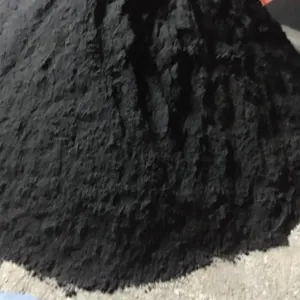
The catalogue contains only one product type: magnetite ore with an iron content of 62 % Fe, intended for use as sinter feed. In the iron‑ore market, magnetite feed is typically graded by Fe content (often 60‑65 %), moisture level (below 5 %), and particle size distribution (e.g., 0‑30 mm). Buyers usually request specifications such as bulk density (≈2.5 t/m³) and impurity limits (e.g., silica < 5 %). Industry practice for HS chapter 26 products includes providing assay reports, bulk sampling results, and compliance with the International Maritime Organization’s (IMO) cargo handling guidelines for mineral concentrates. Exporters of magnetite sinter feed often certify that the material meets the standards set by the International Iron and Steel Institute (IISI) for blast‑furnace feedstock.
Trade and Export Information - Steg Grupos Geradores Ltda
Iron ore concentrates classified under HS 2601.11 (iron ores, other than roasted) and 2601.12 (iron ores, roasted) are commonly shipped to steel‑producing regions in East Asia, the Middle East, and Europe. Bulk shipments are typically loaded in 20‑ft or 40‑ft containers, but many buyers prefer bulk carriers due to the high tonnage (often 30‑40 kt per vessel). Standard Incoterms used include FOB and CIF, with buyers frequently requiring a Certificate of Origin and a Mineralogical Analysis Report. Export regulations for Brazil (the likely origin of magnetite ore) mandate that shipments comply with the Brazilian Ministry of Mines and Energy’s export licensing, and that the product meet the specifications of the importing country’s steel industry standards. Common certifications requested by importers are ISO 9001 for quality management and the SGS or Bureau Veritas inspection reports for cargo integrity.
Sourcing from Steg Grupos Geradores Ltda - Buyer Guidance
When sourcing magnetite sinter feed from this supplier, buyers should request a recent assay certificate showing Fe 62 % ± 0.5 % and moisture content below 5 %. A third‑party inspection report (e.g., SGS) confirming particle size distribution and bulk density is also advisable before contract finalisation. Buyers should verify that the supplier can provide a valid Certificate of Origin and that the HS codes on the commercial invoice match the product description (2601.11 or 2601.12). Clarifying the loading port and preferred Incoterm (FOB or CIF) will help align logistics expectations and avoid customs delays.
Frequently Asked Questions About Steg Grupos Geradores Ltda
What is the primary material listed in Steg Grupos Geradores Ltda's catalogue?
All five catalogue entries describe magnetite ore used as iron sinter feed, with an iron content of 62 % Fe.
Which HS codes are associated with the listed iron ore product?
The product is classified under HS 2601.12 for roasted iron ores and HS 2601.11 for other iron ores.
What typical specifications do buyers request for magnetite sinter feed?
Buyers usually ask for Fe content (60‑65 %), moisture below 5 %, particle size up to 30 mm, and bulk density around 2.5 t/m³.
Are there common certifications required for this type of iron ore?
Importers often require ISO 9001 quality management certification and a third‑party inspection report (e.g., SGS) confirming assay and physical properties.
What documentation should be requested before ordering?
Request a recent assay certificate, a Certificate of Origin, and a cargo inspection report that matches the HS code on the invoice.
Which markets typically import magnetite sinter feed?
Major importers are steel‑producing regions in East Asia (China, South Korea, Japan), the Middle East (UAE, Saudi Arabia), and Europe (Germany, Italy).
What packaging and shipping methods are common for this product?
Bulk carrier shipments are standard; when containerised, 20‑ft or 40‑ft containers with moisture‑resistant liners are used. FOB and CIF are the most common Incoterms.
What is a reasonable lead time for a first shipment?
Lead times for initial bulk orders usually range from 30 to 60 days, depending on vessel availability and export licensing procedures.








.jpg.png)