Hubei Tress Technology Co., Ltd. — Verified Supplier
About Hubei Tress Technology Co., Ltd. - DC, AC Inverters & Converters Supplier in China
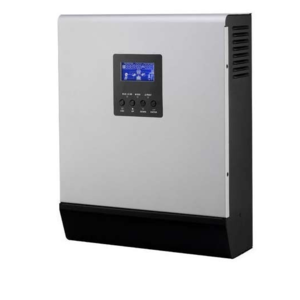
Based in Hubei province, China, Hubei Tress Technology Co., Ltd. lists five active products in its catalogue. The company focuses on DC and AC inverters and converters, a segment that falls under the HS chapter 85 for electrical machinery. Its product list includes a 10 kW solar inverter, a 1.5 kW PV inverter, a CEC‑certified PV inverter, an AS4777‑compliant solar inverter, and a generic solar inverter that is classified under HS code 8504.40. All items are described as incorporating aluminum alloy housings, copper windings and silicon semiconductor components, matching the typical material composition for grid‑connected converters.
The catalogue groups the models by power rating and compliance standard, reflecting common market segmentation for residential and small‑commercial solar projects. The presence of a CEC‑type inverter indicates alignment with the California Energy Commission requirements, while the AS4777 reference points to Australian grid standards. The generic solar inverter entry shares the same HS code, suggesting it belongs to the same static converter family despite differing model names.
Product Range and Specialties of Hubei Tress Technology Co., Ltd.
The five listed inverters cover power outputs from 1.5 kW up to 10 kW, a range commonly used for rooftop and small‑scale solar installations. In the industry, such inverters typically achieve efficiencies between 96 % and 98 % and comply with IEC 62109‑1 safety standards, as well as grid‑interconnection criteria like IEC 61727 or regional standards such as CEC (California) and AS4777 (Australia). Materials are usually aluminum alloy enclosures for lightweight durability, copper windings for low loss, and silicon‑based power semiconductor devices, which match the supplier’s product description. Buyers often select inverters based on maximum power point tracking (MPPT) channels, input voltage range, and communication protocols (e.g., RS485, Modbus).
Typical grade specifications for solar inverters include a total harmonic distortion (THD) below 5 % and a power factor close to unity. Temperature operating ranges often span - 25 °C to +60 °C, and certifications such as UL 1741, CE marking and ISO 9001 are frequently required for export markets. While the supplier’s catalogue does not list these certifications, they represent standard expectations for the product class.
Trade and Export Information - Hubei Tress Technology Co., Ltd.
China is a major exporter of solar inverters, and products classified under HS code 8504.40 are routinely shipped to Europe, North America, India, and Southeast Asia. Importers in these regions usually request IEC 62109 safety certification, UL 1741 compliance for the United States, and CE marking for the European Union. Anti‑dumping duties may apply on certain inverter categories, so proper HS code declaration is essential. Containers of 20 ft or 40 ft are the norm, with units packed in wooden crates or reinforced pallets to protect the aluminum housing during sea freight. Common Incoterms include FOB Shanghai or CIF destination port, depending on buyer preference.
Export logistics from China often involve pre‑shipment inspection by agencies such as SGS or Bureau Veritas to verify compliance with the declared specifications. Buyers should also be aware of local grid standards that may require additional testing, for example, voltage ride‑through capability for European markets. The supplier’s target markets are not specified, so exporters typically align with the global demand patterns for residential and commercial PV inverter solutions.
Sourcing from Hubei Tress Technology Co., Ltd. - Buyer Guidance
When sourcing from Hubei Tress Technology Co., Ltd., buyers should request the latest IEC 62109‑1 safety test report, as well as any regional certification copies (UL 1741, CEC, AS4777) that correspond to the specific inverter model. A performance data sheet showing efficiency curves, MPPT range, input voltage tolerance and warranty terms (commonly 5 - 10 years) helps verify suitability for the intended project.
It is advisable to obtain a sample unit before committing to large volumes, and to confirm packaging details such as crate dimensions and pallet configuration. Verify that the HS code 8504.40 is correctly applied on commercial invoices and that the material description matches the aluminum alloy and copper winding composition stated in the catalogue. Typical minimum order quantities for solar inverters range from 50 to 200 units, with lead times of 30‑45 days from order confirmation, though exact figures should be negotiated with the supplier.
Frequently Asked Questions About Hubei Tress Technology Co., Ltd.
What power ratings are available from this supplier?
The catalogue lists inverters at 1.5 kW, a CEC‑type model, an AS4777‑type model and a 10 kW unit, covering typical residential to small‑commercial applications.
Which HS code applies to the solar inverters?
All listed solar inverters fall under HS code 8504.40, which covers static converters and inverters for electricity generation.
What material construction is used for the inverters?
Each inverter is described as having an aluminum alloy housing, copper windings and silicon semiconductor components, standard materials for durable grid‑connected converters.
What certifications should a buyer request?
Buyers should ask for IEC 62109 safety certification, and depending on the target market, UL 1741 (USA), CE marking (EU), CEC (California) or AS4777 (Australia) compliance documents.
How are the inverters typically packaged for shipment?
Inverters are usually packed in reinforced wooden crates or on pallets, suitable for loading into 20 ft or 40 ft containers for sea freight.
What are common lead times and minimum order quantities?
Lead times of 30‑45 days are common for Chinese inverter manufacturers, with minimum orders often ranging from 50 to 200 units depending on model and packaging.
Are test reports or performance data available?
Suppliers of solar inverters typically provide efficiency charts, MPPT range tables and IEC test reports; buyers should request these documents before placing an order.
Which markets import these types of inverters?
Major importers include the United States, European Union countries, India, Japan and Australia, all of which have specific grid‑interconnection standards that the inverters must meet.




 , China