Shenzhen Vikli Power Source Ltd — Verified Supplier
About Shenzhen Vikli Power Source Ltd - Batteries & Chargers Supplier in China
China‑based Shenzhen Vikli Power Source Ltd lists 124 active SKUs across four top categories: Batteries & Chargers, Battery Testers & Chargers, Solar Power Equipments, and Street Lights & Lamps. The catalogue is dominated by lithium‑ion and lithium‑iron‑phosphate (LiFePO4) storage solutions, ranging from small 200 mAh cells to high‑capacity modules such as 100 Ah / 3.2 V packs and 400 Ah / 24 V batteries. Product titles reference standard voltage families (3.2 V, 3.7 V, 9.6 V, 48 V, 96 V) and capacities from 1 Ah up to 300 Ah, indicating suitability for solar storage, EV auxiliary power and portable electronics. While the facts do not provide HS codes, batteries of this type are classified under HS Chapter 85, which covers electrical machinery and equipment, including primary and secondary cells.
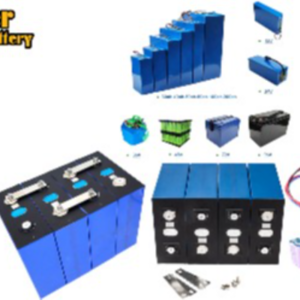
The list also includes specialized items such as a 3.7 V 4000 mAh LED light battery, GPS tracker cells, and Li‑polymer packs, reflecting a breadth of form factors (prismatic, cylindrical, pouch). Several entries mention built‑in battery management systems (BMS) for solar modules, a common requirement for safety and cycle‑life control. No certifications are stated in the supplied data, so any compliance claims must be verified by the buyer.
Product Range and Specialties of Shenzhen Vikli Power Source Ltd
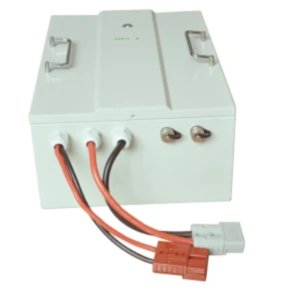
The catalogue comprises LiFePO4 modules (e.g., 70 Ah / 48 V, 96 V / 90 Ah) and lithium‑ion cells (3.7 V / 4000 mAh, 420 mAh GPS cells). In the industry, LiFePO4 batteries are typically rated to 2 C discharge, have a thermal stability up to 180 °C, and meet IEC 62619 for safety. Lithium‑ion cells for portable devices often conform to IEC 62133 and are supplied with a nominal voltage of 3.6‑3.7 V and capacities between 500 mAh and 5000 mAh. Prismatic packs for solar storage usually feature a BMS, voltage tolerance of ±0.05 V per cell, and are shipped in anti‑static wooden crates or reinforced cardboard boxes suitable for 20‑ft or 40‑ft containers.
Trade and Export Information - Shenzhen Vikli Power Source Ltd
Exporters of lithium batteries from China normally target markets in Southeast Asia, Europe, North America and the Middle East, where renewable‑energy installations and electric‑vehicle fleets drive demand for stationary and mobile storage. HS Chapter 85 (specifically sub‑heading 8507 for electric accumulators) governs customs duty rates and requires importers to provide safety test reports, such as UN 38.3, IEC 62133 or IEC 62619, depending on the battery chemistry. Typical certifications requested by buyers include CE marking for EU markets, UL 2054 for the United States, and ISO 9001 quality‑management systems for the supplier. Shipments are frequently packed in 20 ft containers with up to 10 tonnes of battery modules, using wooden pallets with anti‑static liners, and are shipped under Incoterms CIF or FOB, with special handling for hazardous classification under UN 3480 (Lithium ion batteries).
Sourcing from Shenzhen Vikli Power Source Ltd - Buyer Guidance
When sourcing from this supplier, buyers should request a copy of the latest UN 38.3 test report and the specific IEC safety standard applicable to each chemistry (IEC 62133 for lithium‑ion, IEC 62619 for LiFePO4). Verify the nominal voltage, capacity (Ah), and discharge current ratings against the quoted specifications, and ask for a datasheet that includes cycle‑life, operating temperature range, and BMS features if applicable. Samples of representative modules (e.g., a 48 V 70 Ah pack) are advisable before bulk orders, and the supplier should provide a Certificate of Conformity or CE declaration for EU shipments. Confirm packaging details - anti‑static inner bags, moisture‑proof outer cartons, and palletization - to ensure compliance with carrier and customs regulations.
Frequently Asked Questions About Shenzhen Vikli Power Source Ltd
What battery chemistries are listed in Shenzhen Vikli's catalogue?
The catalogue lists lithium‑ion (Li‑ion) cells and lithium‑iron‑phosphate (LiFePO4) batteries, covering both single‑cell formats (3.2 V, 3.7 V) and multi‑cell packs (48 V, 96 V).
Which voltage families are most common among the listed products?
Typical voltage families are 3.2 V (LiFePO4 single cells), 3.7 V (Li‑ion cylindrical cells), 9.6 V, 48 V and 96 V for prismatic or modular packs used in solar storage and EV applications.
What capacity range do the supplier's battery packs cover?
Capacities range from 200 mAh up to 400 Ah per pack, with larger modules such as 100 Ah / 3.2 V and 300 Ah / 3.2 V cells noted in the list.
Are battery management systems (BMS) included with any of the products?
Yes, several solar‑module batteries (e.g., LiFePO4 battery for solar system) are described as having an integrated BMS, which is standard for safety and balancing in larger packs.
What certifications should a buyer request for these batteries?
Buyers should ask for UN 38.3 test reports, IEC 62133 (Li‑ion) or IEC 62619 (LiFePO4) compliance, and region‑specific marks such as CE for Europe or UL for the United States.
What are typical packaging and shipping methods for these battery modules?
Industry practice is to pack batteries in anti‑static bags inside reinforced cardboard boxes, placed on wooden pallets with moisture‑proof liners, and ship in 20‑ft or 40‑ft containers under CIF or FOB terms, observing hazardous‑material regulations for UN 3480.
How can a buyer verify the performance specifications before placing a large order?
Request a datasheet that lists nominal voltage, capacity (Ah), continuous discharge current, cycle‑life, operating temperature range, and BMS parameters; arrange for a functional sample test of a representative pack.
Which markets typically import lithium storage batteries from China?
Key import markets include the European Union, the United States, Southeast Asian countries, and Middle‑East nations that are expanding renewable‑energy and electric‑vehicle infrastructure.




 , China