Hangzhou New Asia International Co., Ltd — Supplier
About Hangzhou New Asia International Co., Ltd - Coaxial Cables Supplier in China
Hangzhou New Asia International Co., Ltd is located in China and currently lists six distinct cable products in its catalogue. The portfolio comprises four coaxial cable variants - a generic coaxial cable, RG6, RG59, and RG7 - together with two unshielded twisted pair Ethernet cables, Cat5 and Cat6. The Cat5 UTP cable is recorded with HS code 8544.49 and is manufactured from solid bare copper with a purity of 99.9 %. All six items fall under the broader HS heading 8544, which covers flexible electrical conductors and cables. No additional HS codes or material specifications are provided for the other products in the source data.
The supplier’s top category is identified as Coaxial Cables, reflecting the emphasis on the four coaxial variants. The two UTP cables are listed alongside, expanding the range into data networking solutions. No certifications, production capacities, or client references are disclosed in the supplied information. The product list reflects typical cable types used in telecommunications, video distribution, and LAN installations. These six entries constitute the complete active range reported for this supplier.
Product Range and Specialties of Hangzhou New Asia International Co., Ltd
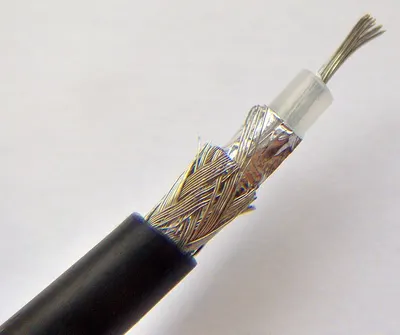
The catalogue offers a generic coaxial cable and three impedance‑specific variants - RG6, RG59, and RG7 - which are standard in video and broadband applications. RG6 and RG59 typically have a characteristic impedance of 75 Ω, a solid copper or copper‑clad steel conductor, and a foil‑plus‑braid shield to limit signal loss. RG7 is a higher‑performance coaxial cable often used for long‑distance RF transmission, featuring a low‑loss dielectric and tighter shielding. The two UTP products are identified as Cat5 and Cat6 cables, with the Cat5 entry specifying solid bare copper (Cu 99.9 %) as the conductor material. Cat6 cables generally use 23‑AWG solid copper conductors and support higher frequencies than Cat5.
In the industry, coaxial cables are commonly graded by impedance (50 Ω or 75 Ω), shielding type (braid, foil, or double‑shield), and dielectric loss, with IEC 60332 fire‑rating and IEC 60228 conductor class applied. Cat5 and Cat6 Ethernet cables are manufactured to TIA/EIA‑568 standards, with Category 5e supporting up to 100 MHz and Category 6 up to 250 MHz bandwidth. Typical performance metrics include attenuation of 2 dB/100 m at 100 MHz for Cat5e and 0.9 dB/100 m for Cat6, as well as return loss better than 20 dB for coaxial lines. Buyers often request material test reports confirming copper purity and compliance with RoHS limits for lead and cadmium.
Trade and Export Information - Hangzhou New Asia International Co., Ltd
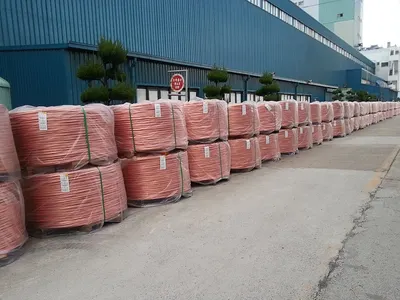
Chinese cable manufacturers such as this supplier export primarily to North America, Europe, and Southeast Asia, where telecommunications and data‑center projects drive demand. The HS heading 8544 covers flexible electrical conductors, with sub‑headings like 8544.49 used for Category 5 UTP cables and other specific codes for coaxial variants (e.g., 8544.10 for insulated coaxial cables). Importers commonly require RoHS, REACH, CE, and UL fire‑rating certifications, together with ISO 9001 quality‑management documentation. Standard packaging involves 1000‑ft (305 m) reels placed in cardboard boxes, palletised, and loaded into 20‑ft containers that can accommodate roughly 20‑25 tons of cable. Freight terms such as FOB Hangzhou port or CIF destination are typical in transactions for these products.
Customs authorities may request test reports for attenuation, VSWR, flame resistance, and material safety data sheets before clearance. The Chinese export regime for cables emphasizes compliance with the GB standards, which align closely with international IEC and TIA specifications. Buyers should verify that the supplier can provide the necessary certificates and that the HS codes on the commercial invoice match the product description. Logistics providers often schedule shipments on a weekly basis, allowing for consolidated loading to achieve economies of scale.
Sourcing from Hangzhou New Asia International Co., Ltd - Buyer Guidance
When sourcing from this supplier, buyers should request a full product data sheet that lists conductor size, impedance, shielding type, temperature rating, and recommended installation practices. For the Cat5 UTP cable, a copper purity certificate and RoHS compliance statement are essential, given the listed material of solid bare copper (Cu 99.9 %). Coaxial cable orders should be accompanied by test reports showing attenuation at 100 MHz, return loss, and IEC 60332 fire‑rating results. Verifying that the HS code on the invoice matches the product (e.g., 8544.49 for Cat5) helps avoid customs delays. It is prudent to ask for a pre‑shipment sample to confirm dimensions, connector compatibility, and performance before committing to full volume.
Minimum order quantities are often set at one 1000‑ft reel for UTP cables and a few hundred meters for specialty coaxial types, though exact figures should be confirmed with the supplier. Lead times of 30‑45 days are typical for Chinese cable manufacturers, assuming all required test reports and certifications are in place. Payment terms frequently involve a letter of credit or T/T after shipment, aligned with standard international trade practice. Buyers should also confirm packaging details, such as reel labeling and pallet dimensions, to ensure smooth handling upon arrival.
Frequently Asked Questions About Hangzhou New Asia International Co., Ltd
What types of coaxial cables are listed in the catalogue?
The catalogue lists a generic coaxial cable and three impedance‑specific variants: RG6, RG59, and RG7. Each variant is commonly used for different RF and video distribution applications.
What are the typical specifications for RG6 and RG59 cables?
RG6 and RG59 are 75 Ω impedance coaxial cables built with solid copper conductors, an aluminum or copper braid shield, and a PVC jacket. Typical attenuation is about 6.5 dB per 100 m at 100 MHz for RG6 and 8 dB per 100 m for RG59, with a temperature rating of - 20 °C to 70 °C.
Which product includes an HS code and material description?
The Cat5 UTP cable is listed with HS code 8544.49 and is made from solid bare copper with a purity of 99.9 %. No HS codes are provided for the other products in the supplied data.
What standards are normally applied to Cat5 and Cat6 UTP cables?
Cat5 and Cat6 cables are manufactured to meet TIA/EIA‑568 specifications. Cat5e supports up to 100 MHz bandwidth, while Cat6 supports up to 250 MHz, using 24‑AWG (Cat5) or 23‑AWG (Cat6) solid copper conductors and RJ‑45 connectors.
Which certifications should a buyer request for these cable products?
Buyers typically request RoHS compliance, CE marking, UL or CSA fire‑rating reports, and an ISO 9001 quality‑management certificate from the supplier. These documents demonstrate conformity with safety, environmental, and quality standards.
What packaging formats are common for bulk cable shipments?
Cables are usually wound on 1000‑ft (305 m) reels, placed in cardboard boxes, stacked on wooden pallets, and loaded into 20‑ft containers that can carry 20‑25 tons of product. This format facilitates handling and protects the cable during sea freight.
What are typical lead times and minimum order quantities for Chinese cable exporters?
Lead times of 30‑45 days from order confirmation are common, with minimum order quantities ranging from one 1000‑ft reel for UTP cables to a few hundred meters for specialty coaxial variants. Exact quantities should be confirmed with the supplier before placing an order.




 , China