EEMB Co., Ltd — Verified Supplier
About EEMB Co., Ltd - Batteries & Chargers Supplier in China
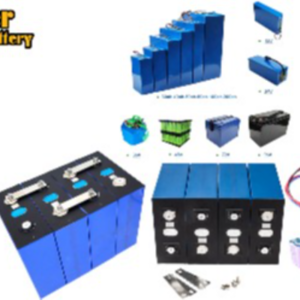
EEMB Co., Ltd operates out of China and currently lists five active battery products in its catalogue. The catalogue includes a lithium thionyl chloride primary cell, a lithium manganese dioxide primary cell, a LIR18650 lithium‑ion rechargeable cell, a lithium polymer battery offered with various terminal configurations, and a standard lithium polymer battery. Each entry is recorded under the broader HS‑code family for primary batteries, typically falling under HS chapter 85, heading 8507 for electric accumulators. The supplier is classified as an imported tier with a harbor trust tier, indicating that it is sourced through established trade channels.
The listed products cover both primary (non‑rechargeable) and secondary (rechargeable) chemistries, reflecting common market segments for industrial, medical and consumer electronics applications. The lithium thionyl chloride and lithium manganese dioxide cells are typically specified for long‑term storage and low‑self‑discharge performance, while the LIR18650 and lithium polymer formats are used where higher energy density and rechargeable capability are required. No additional product specifications such as capacity or voltage are provided in the source data, but the catalogue’s five‑product count defines the current scope of EEMB’s offering.
Product Range and Specialties of EEMB Co., Ltd
EEMB’s catalogue contains two primary lithium chemistries - thionyl chloride and manganese dioxide - both of which are commonly supplied in voltage ranges of 3.0 V to 3.6 V with capacities from 0.5 Ah to several amp‑hours depending on cell size. The LIR18650 li‑ion battery follows the widely adopted 18650 form factor, typically offering 3.6 V nominal voltage and capacities between 1500 mAh and 3500 mAh. Lithium polymer batteries listed by EEMB are offered with a variety of terminal types, a format that allows flexible shape and thickness; standard specifications include 3.7 V nominal voltage, capacity ranges of 500 mAh to 5000 mAh, and discharge rates expressed in C‑rating. Industry standards for these products often reference IEC 62133 for safety, UN 38.3 for transport, and RoHS compliance for restricted substances. Buyers normally encounter grade designations such as “high‑drain” or “low‑self‑discharge” for primary cells and “high‑capacity” or “high‑rate” for rechargeable formats.
Trade and Export Information - EEMB Co., Ltd
China is a major exporter of lithium battery cells, with primary destinations in North America, the European Union, and Southeast Asia. Products in the HS‑code 8507 family are subject to customs inspections that verify compliance with safety standards such as UN 38.3, especially for air freight, and may require documentation of CE marking or UL certification for market entry in Europe and the United States. Export logistics commonly employ IATA‑approved packaging, with batteries shipped in inner packs of 10 units per box and outer cartons sized for 20‑ft or 40‑ft containers, depending on order volume. Incoterms such as FOB Shanghai or CIF Los Angeles are typical for these goods, and freight forwarders often request a Material Safety Data Sheet (MSDS) and a test report confirming compliance with IEC 62133 before loading.
Sourcing from EEMB Co., Ltd - Buyer Guidance
When sourcing lithium batteries from EEMB, buyers should request the latest UN 38.3 test report, IEC 62133 compliance certificate, and any applicable CE or UL declarations to confirm safety and market acceptance. A sample batch with full specification sheets - including nominal voltage, capacity (mAh), discharge rate (C‑rating), operating temperature range, and terminal configuration - helps verify that the product meets the intended application requirements. Verification of the supplier’s RoHS statement and a signed declaration of conformity is advisable before finalizing large orders, as these documents are routinely required by import regulators in Europe and North America.
Frequently Asked Questions About EEMB Co., Ltd
What battery chemistries are listed in EEMB’s catalogue?
EEMB lists lithium thionyl chloride, lithium manganese dioxide, lithium‑ion (18650 format), and lithium polymer batteries, covering both primary and secondary chemistries.
How many battery products does EEMB currently offer?
The supplier’s active product count is five distinct battery types.
Which HS‑code family applies to EEMB’s batteries?
All listed batteries fall under HS chapter 85, heading 8507 for electric accumulators.
What safety standards are typically required for these batteries?
Buyers usually require UN 38.3 transport testing, IEC 62133 safety certification, and market‑specific marks such as CE or UL.
What documentation should a buyer request before purchase?
Typical documents include a UN 38.3 test report, IEC 62133 certificate, RoHS compliance statement, and a Material Safety Data Sheet.
What are common packaging and shipping practices for lithium batteries from China?
Batteries are packed in inner boxes of 10 units, placed in outer cartons suitable for 20‑ft or 40‑ft containers, and shipped under IATA‑approved dangerous‑goods packaging using Incoterms like FOB Shanghai or CIF Los Angeles.




 , China