Mekong River — Verified Supplier
About Mekong River - Processed Fruit Products Supplier in Viet Nam
Mekong River is based in Viet Nam and lists 20 active products. The company’s catalogue focuses on coconut‑derived items, primarily various forms of Nata de Coco and related coconut jelly products. Listed items include whole‑sheet raw Nata de Coco, cube‑shaped jelly, Nata de Coco in syrup, and dried desiccated coconut, as well as a few non‑coconut items such as aloe‑vera dice in syrup and bio‑cellulose face masks. All products fall under the processed fruit and vegetable categories defined in the supplier’s top categories.
The supplier also offers raw dried sea moss and bio‑cellulose masks derived from coconut water, expanding the portfolio beyond traditional coconut jelly. No specific certifications are stated in the provided data, and the catalogue does not include HS codes. The product list reflects a focus on ready‑to‑use confectionery and food‑grade ingredients suitable for further processing by food manufacturers.
Product Range and Specialties of Mekong River
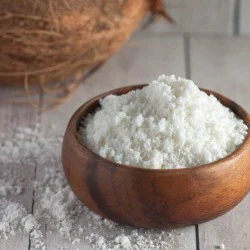
The catalogue contains multiple formats of Nata de Coco: raw sheets, cube‑shaped jelly, star‑heart cubes, and syrup‑preserved jelly, together with desiccated coconut high‑fat extrafine grade. In the coconut‑jelly market, food‑grade Nata de Coco is typically required to have moisture between 10 % and 15 %, gel firmness measured at 20‑30 % compression, and a pH of 5.5‑6.5. Desiccated coconut of the extrafine grade usually carries a fat content above 70 %, moisture below 5 % and particle size under 250 µm. Buyers also encounter related items such as aloe‑vera dice in syrup and dried Irish sea moss, which are subject to similar moisture and microbial limits for dried fruit‑type products.
Trade and Export Information - Mekong River
Vietnam is a major exporter of coconut‑derived food products, with shipments directed to Europe, North America, the Middle East and Southeast Asian markets. Exporters of processed coconut jelly normally work under HS Chapter 20, sub‑heading 2008.99 for prepared fruit and vegetable products, and they often provide documentation such as ISO 22000 or HACCP audit reports, certificates of origin and laboratory analyses to satisfy import regulations. Common Incoterms are FOB Ho Chi Minh City or CIF to the destination port, and a full 20‑ft container can accommodate roughly 1 000 kg of bulk jelly, while a 40‑ft container holds about 2 000 kg. Typical buyers include food manufacturers, beverage producers and confectionery companies that require consistent texture and microbiological safety.
Sourcing from Mekong River - Buyer Guidance
When sourcing Nata de Coco from this supplier, buyers should request a product specification sheet that details moisture, pH, gel firmness and microbial limits. A recent laboratory test report, HACCP or ISO 22000 audit summary, and a certificate of origin are standard documents for customs clearance and quality verification. It is advisable to obtain a physical sample of the raw sheet or syrup‑preserved jelly to assess texture and flavor before confirming larger volumes, and to confirm the minimum order quantity and lead time, which are usually expressed in metric tonnes and a 30‑45 day production window after order acceptance.
Frequently Asked Questions About Mekong River
What types of Nata de Coco does Mekong River supply?
The catalogue lists raw Nata de Coco sheets, cube‑shaped jelly, star‑heart cube shapes and Nata de Coco preserved in syrup. Each format is produced from fresh coconut water and is offered in multiple size ranges.
Are there standard quality parameters for the coconut jelly?
Buyers typically require moisture content between 10 % and 15 %, gel firmness measured at 20‑30 % compression and a pH of 5.5‑6.5. Food‑grade Nata de Coco must also meet microbial limits of ≤10³ CFU/g for total plate count and absence of E. coli.
Which certifications should a buyer request for these food products?
For Vietnamese coconut food products, buyers usually ask for ISO 22000 or HACCP audit reports, a Certificate of Origin and a recent laboratory analysis confirming moisture, fat and microbial levels. If the product is destined for the EU or US, FDA or EU food‑safety compliance documentation may be required.
What packaging formats are available for the jelly products?
The supplier provides the jelly in sealed PET jars, bulk syrup‑filled pouches and vacuum‑packed frozen sheets. Desiccated coconut is supplied in food‑grade polypropylene bags ranging from 10 kg to 25 kg.
What are typical shipment terms and container capacities?
Export shipments are commonly arranged on a FOB basis from Ho Chi Minh City, with full‑container loads of a 20‑ft container (≈1 000 kg) or a 40‑ft container (≈2 000 kg) for bulk jelly. Smaller orders are packed in cartons suitable for air freight.
How can a new buyer obtain a sample before placing a larger order?
Mekong River can dispatch a 1 kg sample of raw sheet or a 250 g jar of syrup‑preserved jelly after receipt of a prepaid shipping fee. Sample preparation typically requires 5‑7 days.
Are non‑coconut items such as aloe‑vera dice or sea moss covered by the same quality system?
The aloe‑vera dice in syrup and dried Irish sea moss are listed under the same supplier but follow separate food‑grade specifications, typically requiring moisture below 12 % and compliance with the same HACCP framework.
What HS‑code family do the coconut jelly products belong to?
Processed coconut jelly and related food preparations are generally classified under HS Chapter 20, sub‑heading 2008.99 (other prepared or preserved fruit, nuts and other edible parts of plants). Buyers should verify the exact code with customs authorities.




 , Viet Nam