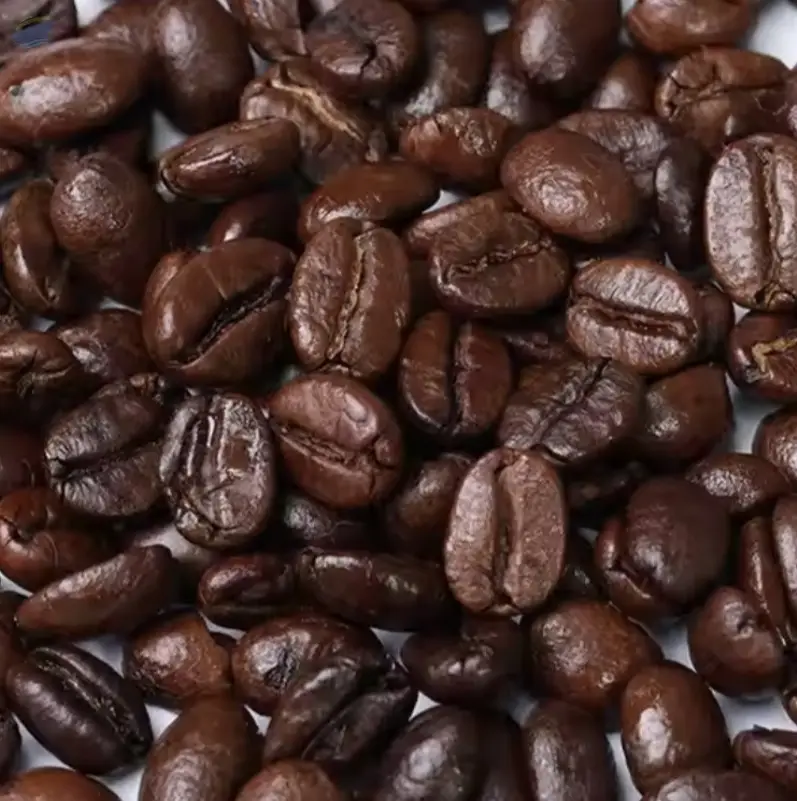
Kumbakonam Filter Coffee — Manufacturer & Wholesale Supplier
About Kumbakonam Filter Coffee - Coffee and Tea Powder Supplier in India
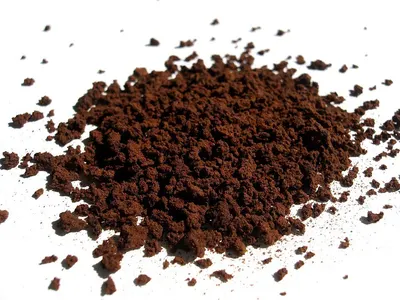
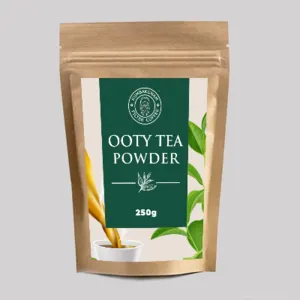
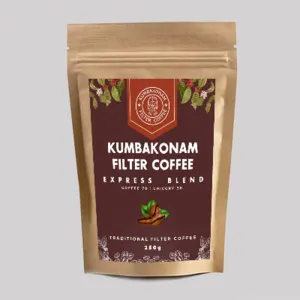
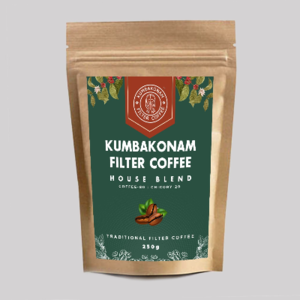
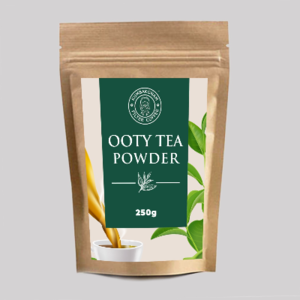
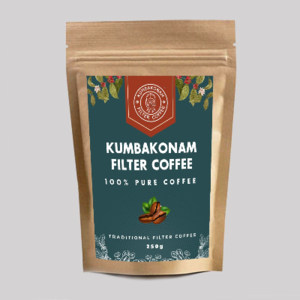
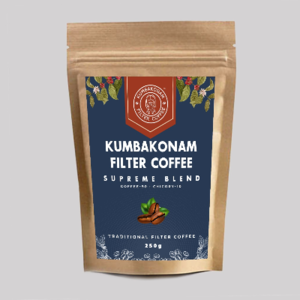
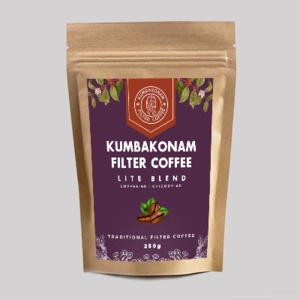
Kumbakonam Filter Coffee is an India-based supplier registered in Chennai, Tamil Nadu, with an active catalogue of 7 SKUs concentrated in the coffee and tea powder segment. The product list covers five coffee powder blends under HS code 0901.21 (roasted, not decaffeinated coffee) and two Ooty black tea powder SKUs under HS code 0902.40 (black fermented tea in packings under 3 kg). The coffee line is built around the traditional South Indian filter coffee format, combining roasted Coffea arabica and Coffea robusta with chicory (Cichorium intybus) in graded ratios, while the tea line sources from the Nilgiri (Ooty) growing region of the Western Ghats. All listed SKUs are packed in 250 g units, indicating a retail-format rather than bulk industrial offering. The supplier's category footprint spans roasted coffee blends (HS 0901.21), black tea (HS 0902.40), and adjacent powder lines including cocoa, milk, mineral, cobalt and robusta references in its category profile. Within the catalogue, the coffee-to-chicory ratios vary across five blends (60:40, 70:30, 80:20, 90:10 and 100% pure), giving buyers a structured ladder from a high-chicory South Indian filter coffee profile to a pure roasted coffee product. The tea SKUs are positioned as Nilgiri-origin black tea in 250 g consumer packs. The combined catalogue therefore targets the South Asian diaspora retail market and the broader specialty tea and coffee segment rather than the green bean or bulk tea auction trade.
Product Range and Specialties of Kumbakonam Filter Coffee
The Kumbakonam Filter Coffee catalogue is built on two HS code families: HS 0901.21 for roasted coffee and HS 0902.40 for black tea in small retail packings. Within HS 0901.21, the five blends follow the conventional South Indian filter coffee formulation, where chicory root is roasted, ground and blended with coffee to deepen body, reduce bitterness and stretch yield; ratios of 60:40 and 70:30 (coffee:chicory) are the traditional Tamil Nadu strengths, while 80:20, 90:10 and 100% pure move toward a more coffee-forward cup. Buyers sourcing in this category typically look for bean origin disclosure (Arabica vs Robusta share), roast profile (light, medium, dark), grind size calibrated to a filter or drip brewer, moisture content below roughly 5%, and water-soluble extract levels in the 20-30% range. For the tea side, the two Ooty Tea Powder SKUs sit under HS 0902.40, which covers black tea (fermented) in immediate packings of 3 kg or less. Nilgiri teas from the Ooty belt are classified by grade - whole leaf grades such as Broken Orange Pekoe (BOP), Fannings (BOPF) and Dust grades (PD, RD, SRD, SFD) - and by liquor character, with the region known for bright, fragrant, medium-bodied cups. Industry buyers typically request CTC (Crush, Tear, Curl) versus orthodox processing details, moisture below 7-8%, total ash below 8%, and water-soluble ash figures aligned with ISO 3720 for black tea. Across both categories, the 250 g pack format signals a consumer-retail focus, so buyers in food service, HoReCa, or specialty retail should confirm whether bulk or institutional packing (1 kg, 5 kg, 25 kg) is available outside the listed SKUs.
Trade and Export Information - Kumbakonam Filter Coffee
India is the world's fourth-largest coffee producer and a significant exporter of both roasted coffee and black tea, with Karnataka, Kerala and Tamil Nadu dominating coffee output and the Nilgiri hills in Tamil Nadu being one of the country's principal tea regions alongside Assam and Darjeeling. Roasted coffee falls under HS chapter 09, subheading 0901.21, and black tea under 0902.40; both are subject to food safety regulations in the destination market, most commonly the EU Regulation 1881/2006 contaminant limits, the US FDA Food Safety Modernization Act (FSMA) preventive controls, and FSSAI standards for the Indian domestic market. Goods in this category typically require a phytosanitary certificate for the tea side, a health certificate, and a certificate of origin; many importing jurisdictions also require pre-shipment inspection by bodies such as SGS, Bureau Veritas or Intertek for microbial and pesticide residue testing. The principal import markets for Indian roasted coffee blends and South Indian filter coffee are the Gulf Cooperation Council (UAE, Saudi Arabia, Kuwait, Qatar), the United Kingdom, the United States, Canada, Australia, Singapore, Malaysia and the European Union, driven by the South Asian diaspora and the broader specialty coffee segment. For Nilgiri black tea, key destinations include the UK, Russia, the UAE, the US, Germany, Iran, Pakistan and Egypt, with auction and direct-trade channels in cities such as London (through brokers), Dubai, and Cochin. Standard shipping for 250 g consumer packs is by corrugated master cartons on pallets, typically in 20 ft or 40 ft dry containers, with Incoterms commonly quoted as FOB Chennai or CIF destination port. Buyers should confirm whether shipments carry the India Tea Board export licence and, for coffee, the Coffee Board of India registration, both of which are typical for lawful export of these categories from India.
Sourcing from Kumbakonam Filter Coffee - Buyer Guidance
Sourcing from Kumbakonam Filter Coffee should start with a clear specification sheet: for coffee, confirm the exact coffee-to-chicory ratio (60:40, 70:30, 80:20, 90:10 or 100% pure), the Arabica/Robusta split, roast level, grind size, moisture content (target under 5%) and shelf life; for the Ooty tea SKUs, confirm whether the leaf grade is orthodox or CTC, the dust/fannings fraction, moisture (target under 7-8%), and conformance with ISO 3720 black tea standards. Request a pre-shipment sample of 250 g from the exact production batch, together with a Certificate of Analysis covering moisture, ash, water-soluble solids, caffeine, ochratoxin A, and pesticide residue, plus a microbiological report for total plate count, coliforms, yeast and mould. For export readiness, ask for copies of the FSSAI manufacturing licence, the Coffee Board of India registration (for coffee SKUs), the Tea Board export licence (for tea SKUs), HACCP or ISO 22000 documentation if held, and a Health Certificate issued by the relevant Indian authority. Confirm the 250 g retail pack format, inner liner material (typically metallised polyester or food-grade LDPE), master carton configuration, palletisation, and whether 20 ft or 40 ft container loading is offered. Clarify Incoterms (FOB Chennai or CIF are typical for this trade), lead time from confirmed purchase order, and the minimum order quantity, since the listed SKUs are consumer-format and an MOQ at carton or pallet level is standard. Finally, verify that the supplier can provide lot traceability from green bean or tea leaf intake through roasting, blending and packing, which is a basic requirement under FSMA and EU food law for any cross-border shipment of these categories.
Frequently Asked Questions About Kumbakonam Filter Coffee
What product categories does Kumbakonam Filter Coffee supply?
The active catalogue lists 7 SKUs: five roasted coffee powder blends under HS 0901.21 (ratios of 60:40, 70:30, 80:20, 90:10 and 100% pure, all in 250 g packs) and two Ooty black tea powders under HS 0902.40 (250 g). The category profile also references cocoa, milk, mineral, cobalt and robusta powder lines, but these are not represented as discrete SKUs in the current catalogue.
Which HS codes apply to the coffee and tea products?
Roasted coffee blends (Coffee Powder 60:40, 70:30, 80:20, 90:10 and 100% Pure) are classified under HS 0901.21 (Coffee, roasted, not decaffeinated). The Ooty Tea Powder SKUs fall under HS 0902.40 (Black tea, fermented, in immediate packings of 3 kg or less). The second Ooty Tea Powder SKU has no HS code recorded in the catalogue and should be confirmed directly with the supplier.
What coffee-to-chicory ratios are available?
Five blends are listed: 60:40, 70:30, 80:20, 90:10 and 100% Pure Coffee (no chicory). The 60:40 and 70:30 ratios are the traditional South Indian filter coffee strengths, while the 80:20, 90:10 and 100% blends move toward a more coffee-forward cup with less chicory body.
Which documents and certifications should a buyer request?
Request an FSSAI manufacturing licence, Coffee Board of India registration for the coffee SKUs, Tea Board export licence for the tea SKUs, a Certificate of Analysis covering moisture, ash, water-soluble solids, caffeine and ochratoxin A, and a microbiological test report. HACCP or ISO 22000 food safety certification should be requested if held, and a Health Certificate plus Certificate of Origin are standard for export shipments.
What is the pack size and how are the goods shipped?
All seven listed SKUs are packed in 250 g units, which is a consumer-retail format. Export shipments are typically packed in corrugated master cartons on pallets, loaded into 20 ft or 40 ft dry containers, and quoted on Incoterms such as FOB Chennai or CIF destination port. Confirm the inner liner material (metallised polyester or food-grade LDPE are typical) and master carton configuration with the supplier before ordering.
Which regions typically import South Indian filter coffee and Nilgiri tea?
South Indian filter coffee blends are commonly exported to the Gulf Cooperation Council countries (UAE, Saudi Arabia, Kuwait, Qatar), the United Kingdom, the United States, Canada, Australia, Singapore and Malaysia. Nilgiri black tea from the Ooty belt typically reaches the UK, Russia, the UAE, the United States, Germany, Iran, Pakistan and Egypt through both auction and direct-trade channels.
How should a buyer verify quality before placing an order?
Ask for a pre-shipment sample of 250 g from the actual production batch, along with the Certificate of Analysis and microbiological report. For coffee, confirm Arabica/Robusta split, roast level, grind size and moisture content below 5%; for tea, confirm orthodox or CTC processing, leaf grade, moisture below 7-8%, and conformance with ISO 3720 black tea standards. Lot-level traceability from green bean or tea leaf intake through roasting and packing is a standard buyer requirement under FSMA and EU food law.
What is the typical MOQ and lead time for these SKUs?
Because the listed SKUs are 250 g consumer packs, MOQ is typically set at the carton or pallet level rather than per piece, and full-container loads in 20 ft or 40 ft units are common for export. Lead time depends on roasting and blending cycles plus destination port transit; confirm both the production lead time from confirmed purchase order and the shipping schedule from Chennai directly with the supplier.





 Chennai, India