Feathers Trade Systems — Verified Supplier
About Feathers Trade Systems - Packaging Bags Supplier in Bangladesh
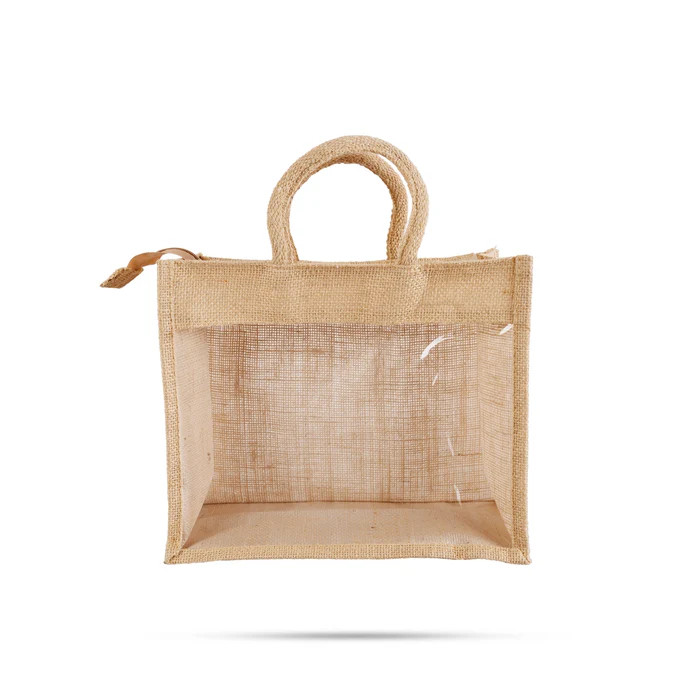
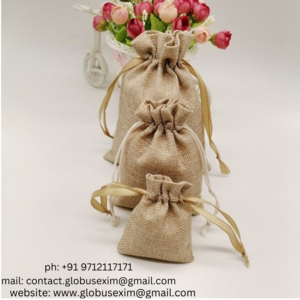
Feathers Trade Systems operates from Bangladesh and lists eight active products across its catalogue. The company focuses on net bags and packaging bags made primarily from jute and related natural fibers. Its catalogue includes standard B‑twill jute bags, heavy‑cees jute bags, new light jute bags, geo‑jute/sail cover, jute yarns CB, hessian cloth, carpet backing cloth, and coffee bags. Each product is identified under the broader category of jute and natural‑fibre packaging solutions.
The eight items cover both bulk bag formats and specialty textiles. Standard B‑twill jute bags are typically used for agricultural produce, while heavy‑cees jute bags serve higher load applications. Hessian cloth and carpet backing cloth are supplied as raw textile sheets for further processing. Coffee bags are sized for commodity coffee export, and geo‑jute is marketed for protective covering in construction. Jute yarns CB are offered for weaving or knitting applications.
Product Range and Specialties of Feathers Trade Systems
The catalogue lists standard B‑twill jute bags, heavy‑cees jute bags, new light jute bags, geo‑jute/sail cover, Jute yarns CB, hessian cloth, carpet backing cloth, and coffee bags. In the jute bag segment, industry grades range from 150‑200 g/m² for light bags to 350‑500 g/m² for heavy‑duty bags, with typical tensile strength of 15‑20 MPa and moisture content below 12 %. Hessian cloth is commonly supplied in plain‑weave weights of 250‑350 g/m², while carpet backing cloth is a heavier backing material of 500‑650 g/m² designed for dimensional stability. Coffee bags are usually multi‑layer structures combining a jute outer shell with a polyethylene inner liner, sized to hold 60 kg of roasted beans. Jute yarns CB are sold in skein counts of 30‑50 tex for textile manufacturing.
Trade and Export Information - Feathers Trade Systems
Bangladesh ranks among the top global exporters of jute and jute‑based packaging, supplying Europe, the United States, the Middle East, and Southeast Asia. Export shipments are typically loaded in 20‑ft or 40‑ft containers, with bag products stacked in cardboard cartons and bulk cloths wound on pallets. Buyers often require ISO 9001 quality‑management certification, FSC or PEFC forest‑product certification, and a phytosanitary certificate for raw jute to meet import regulations. HS‑chapter 63 (textiles) and chapter 96 (packaging) are the usual tariff classifications for these items, and customs authorities may request laboratory test reports for tensile strength, moisture content, and contaminant limits. Bangladesh’s jute industry follows the Bangladesh Standards (BDS) for fiber grade and weave density, which aligns with international specifications.
Sourcing from Feathers Trade Systems - Buyer Guidance
When sourcing jute bags or textiles from this supplier, request sample swatches that show fabric weight, weave count, and tensile test results to verify compliance with the grades mentioned above. Ask for a copy of the supplier’s ISO 9001 certificate, any FSC/PEFC documentation, and a phytosanitary certificate if raw jute is involved, as these documents are routinely checked by importers. Verify the packing list details the container size, bag dimensions, and quantity per carton to ensure accurate logistics planning. Confirm that the commercial invoice includes the correct HS codes and country of origin statements to avoid customs delays.
Frequently Asked Questions About Feathers Trade Systems
What types of jute bags does Feathers Trade Systems offer?
They list standard B‑twill jute bags, heavy‑cees jute bags, new light jute bags, and geo‑jute/sail cover bags, each supplied in common dimensions such as 40 × 60 cm to 80 × 120 cm with fabric weights between 300 g/m² and 500 g/m².
Which certifications should a buyer verify for the jute products?
Buyers should request ISO 9001 quality‑management certification, any FSC or PEFC forest‑product certification, and a phytosanitary certificate for raw jute material, as these are commonly required for import compliance.
What are the typical specifications for hessian cloth and carpet backing cloth?
Hessian cloth is usually supplied as a plain‑weave fabric of 250‑350 g/m² and 12‑15 mm thickness, while carpet backing cloth is a heavier material of 500‑650 g/m² designed for dimensional stability in flooring applications.
How are coffee bags configured for export?
Coffee bags are typically multi‑layer polyethylene‑lined jute bags, sized around 45 × 65 cm, with a capacity of 60 kg per bag, and are often shipped in 20‑ft containers holding up to 200 bags per container.
What packaging and shipping terms are common for these products?
Products are usually packed in cardboard cartons or bulk bundles, sealed with polyethylene film, and shipped under FOB or CIF terms. Standard container loads are 20‑ft or 40‑ft containers depending on volume.
What documentation is needed for customs clearance?
A commercial invoice, packing list, certificate of origin, and any required phytosanitary or quality test certificates should accompany the shipment to satisfy customs in typical importing regions such as the EU, United States, and Middle East.
What is the typical minimum order quantity (MOQ) and lead time?
MOQ varies by product; jute bags often start at 1,000 pieces per size, while bulk textiles like hessian cloth may be ordered by the metric ton. Lead times are generally 30‑45 days from order confirmation, subject to production scheduling.




 , Bangladesh