Resham Textiles — Supplier
About Resham Textiles - Apparel Supplier in India
Resham Textiles is based in Ahmedabad, Gujarat, India and currently showcases seven active garment products in its catalogue. The supplier groups its offerings under categories such as Beach Wear, Dance Costume, Traditional & Ethnic Wear, Jackets, Vest & Coats, Indo‑Western and Ladies Kurti. All items are produced in the Indian textile hub of Gujarat, a region noted for silk processing and hand‑embroidery. The focus is on silk and silk‑blend fabrics for women's apparel, reflecting the listed categories.
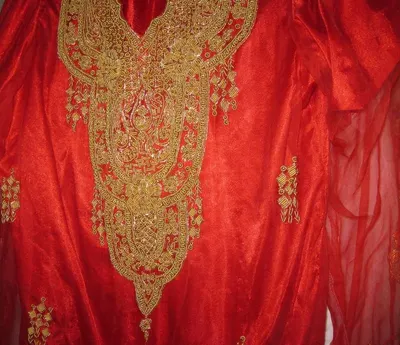
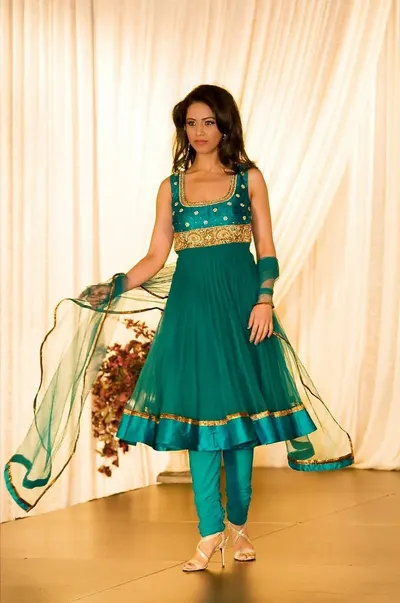
The product list includes 3‑piece suits made of silk, Indo‑Western dresses and 3‑piece kurtis both classified under HS code 6204.43.90 and cut from silk, lehengas (HS 6211.43) using silk or art silk with embroidery, Anarkali suits (HS 6204.19) in cotton, silk blend or georgette, Sharara suits (HS 6204.42) in cotton‑silk blend, and gowns (HS 6204.49) in silk, chiffon or premium polyester blend. Each entry specifies material composition, enabling buyers to match requirements such as fabric weight, blend ratio or embroidery style.
Product Range and Specialties of Resham Textiles
Resham Textiles’ catalogue comprises seven silk‑based garments, each linked to a specific HS code ranging from 6204.19 to 6211.43. In the Indian apparel sector, silk fabrics are commonly graded from 6A (high sheen) to 3A (premium) and are supplied in weights between 30‑70 gsm for chiffon and 120‑180 gsm for silk satins used in gowns and suits. Georgette typically appears at 18‑24 gsm, while cotton‑silk blends often target a 150‑200 gsm range for structured suits such as Sharara and Anarkali styles. Buyers also encounter standard construction details including double‑stitched seams, reinforced armholes and hand‑finished embroidery, which are typical for high‑end Indian ethnic wear.
Industry practice for the listed HS chapters (6204‑clothing, 6211‑other women's garments) includes compliance with colour‑fastness to washing (ISO 105‑C06) and to light (ISO 105‑B02). Exporters frequently obtain OEKO‑TX Standard 100 or GOTS certification for organic silk, and many provide ISO 9001 quality‑management documentation. These standards help buyers verify fabric purity, dye safety and consistent stitching quality across the product range.
Trade and Export Information - Resham Textiles
India is a major exporter of silk‑based women’s apparel, with the majority of shipments destined for the European Union, the United States, the Middle East and neighbouring South Asian markets. The HS‑4 codes 6204 and 6211 cover most of Resham Textiles’ garments and are subject to routine customs inspections for textile composition, labelling and country‑of‑origin marking. Typical export documentation includes a commercial invoice, packing list, certificate of origin and, where applicable, a GOTS or OEKO‑TX certificate. Buyers often request a pre‑shipment inspection report (PSI) issued by a recognized third‑party agency.
Logistically, garments of the listed weight class are packed in poly‑bags within double‑wall cartons, allowing approximately 1,200 to 1,500 pieces per 20‑ft container depending on fabric weight. Indian exporters commonly use FOB Ahmedabad or CIF major ports such as Mundra, with freight forwarding handled by standard container lines. Seasonal peaks occur before major Indian festivals and international fashion weeks, influencing lead times and container availability.
Sourcing from Resham Textiles - Buyer Guidance
When sourcing from Resham Textiles, buyers should request swatch samples for each fabric blend (silk, cotton‑silk, georgette, chiffon) and verify the GSM and colour‑fastness test reports against the product specification. Confirmation of the HS code on the commercial invoice should match the catalogue entry to avoid customs delays. For organic claims, ask for a current GOTS certificate; for general silk quality, an OEKO‑TX Standard 100 report provides assurance of restricted substance compliance.
Typical minimum order quantities for Indian ethnic wear range from 300 to 500 pieces per style, with lead times of 30‑45 days after sample approval. Buyers should clarify packaging requirements - whether garments are to be shipped folded in individual poly‑bags or as bulk packs - and confirm the incoterm (FOB or CIF) before finalising the purchase order. Verifying the supplier’s export licence and any applicable export duties for the HS codes listed helps prevent unexpected charges.
Frequently Asked Questions About Resham Textiles
What garment categories does Resham Textiles list in its catalogue?
The catalogue includes 3‑piece suits, Indo‑Western dresses, 3‑piece kurtis, lehengas, Anarkali suits, Sharara suits and gowns, each described with material composition and HS code.
Which HS codes are associated with the listed products?
Indo‑Western dresses and 3‑piece kurtis use HS 6204.43.90, lehengas use HS 6211.43, Anarkali suits are under HS 6204.19, Sharara suits HS 6204.42 and gowns HS 6204.49.
What materials are used in Resham Textiles’ products?
Materials include pure silk, silk blends with cotton or polyester, art silk with embroidery, georgette, chiffon and premium polyester blends, depending on the garment type.
Which certifications should a buyer request for these silk garments?
Buyers should ask for GOTS certification for organic silk, OEKO‑TX Standard 100 for restricted substances, and ISO 9001 for quality‑management where available.
What is a typical minimum order quantity and lead time?
Minimum order quantities usually start at 300‑500 pieces per style, with production lead times of roughly 30‑45 days after sample approval.
How are the garments packaged for export?
Standard export packaging consists of individual poly‑bagged garments placed inside double‑wall cartons, allowing about 1,200‑1,500 pieces per 20‑ft container depending on fabric weight.
What documentation is required for customs clearance?
Customs typically requires a commercial invoice, packing list, certificate of origin and, when applicable, a GOTS or OEKO‑TX certificate, along with any pre‑shipment inspection reports.
Which markets commonly import Indian silk apparel like those offered by Resham Textiles?
Key import markets include the European Union, the United States, the Gulf Cooperation Council countries and regional South Asian buyers, all of which follow the HS‑4 codes 6204 and 6211 for clothing.




 Ahmedabad, India