Mecantil Contiental Sas — Supplier
About Mecantil Contiental Sas - Food Additives Supplier in Colombia
Colombia hosts Mecantil Contiental Sas, a catalog that currently lists six distinct food‑related items. The supplier’s portfolio spans the categories Food Additives, Food Chemicals and Fresh Seaweed, with products that include Carrageenan, Polidextrose Powder (HS 3505.10), Fructo‑Oligosaccharides FOS - GoFos, Polydextrose Powder, a blend named Eliminate LAD (HS 2918.15) and Vinegar. Each entry is recorded under the supplier’s “harbor” trust tier, indicating that the catalogue data is verified through a third‑party logistics channel. The active product count of six reflects the range of raw and processed ingredients that can be shipped from Colombian production or aggregation points. No additional manufacturing or client details are supplied in the source data.
Product Range and Specialties of Mecantil Contiental Sas
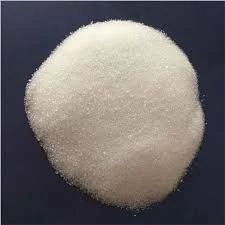
The catalogue lists Carrageenan, a seaweed‑derived hydrocolloid commonly graded by gel strength (e.g., low, medium, high) and identified in the EU as food additive E 407. Polidextrose and Polydextrose powders are synthetic glucose polymers classified under HS 3505.10; they typically meet food‑grade purity specifications of 99 %+ and are offered in particle‑size ranges of 150‑300 µm for beverage or bakery applications. Fructo‑Oligosaccharides (FOS) are marketed as prebiotic fibers with degree of polymerisation between 2 and 10 and purity levels of 95‑99 %, often sold under the trade name GoFos. The Eliminate LAD blend combines potassium lactate, potassium acetate and sodium diacetate, a food‑preservative composition that usually exceeds 99 % purity and aligns with HACCP‑approved usage levels. Vinegar in the list is a food‑grade acetic acid solution, typically ranging from 5 % to 20 % acidity and packaged for bulk distribution. While the supplier’s own grading is not disclosed, these industry benchmarks illustrate the specifications buyers normally evaluate for each product type.
Trade and Export Information - Mecantil Contiental Sas
Colombia is a recognized exporter of food additives and seaweed‑derived ingredients, supplying North America, the European Union and Southeast Asian markets. Export shipments of Carrageenan, Polydextrose and other hydrocolloids are normally declared under HS chapters 13 (vegetable products) and 35 (chemical products), with customs documentation requiring a Certificate of Origin and, where applicable, a Food Safety Certificate complying with FDA or EU regulations. Buyers frequently request ISO 22000, HACCP or GMP certifications to confirm that the processing environment meets international food‑safety standards. Standard bulk packaging includes 25 kg polypropylene bags for powders and 1 L or 5 L PET containers for vinegar, loaded into 20‑ft or 40‑ft containers under CIF or FOB Incoterms. Colombian export authorities also conduct phytosanitary inspections for seaweed‑derived products such as Carrageenan to ensure compliance with EU phytosanitary requirements.
Sourcing from Mecantil Contiental Sas - Buyer Guidance
When sourcing from Mecantil Contiental Sas, buyers should request a current Certificate of Analysis for each powder, confirming purity, moisture content and particle‑size distribution. For the Eliminate LAD blend, a detailed specification sheet that lists the exact percentages of potassium lactate, potassium acetate and sodium diacetate is essential, together with a safety data sheet (SDS) meeting GHS criteria. Samples are typically provided in 500 g or 1 kg quantities; confirming the sample matches the declared HS code and material description helps verify catalogue accuracy. Verify that the supplier can furnish any required certifications - such as ISO 22000, HACCP or a USDA/EFSA import permit - before finalising a purchase order, and confirm packaging dimensions to plan container loading efficiently.
Frequently Asked Questions About Mecantil Contiental Sas
What HS codes are associated with the products listed by Mecantil Contiental Sas?
Polidextrose Powder is listed under HS 3505.10, while the Eliminate LAD blend carries HS 2918.15. Other items such as Carrageenan, Fructo‑Oligosaccharides, Polydextrose and Vinegar are not assigned HS codes in the catalogue, so buyers should verify the appropriate chapter (e.g., 1302 for Carrageenan, 2106 for FOS, 2209 for Vinegar) during customs filing.
Which material specifications are provided for the Polidextrose Powder?
The catalogue notes that Polidextrose is a synthetic glucose polymer, food‑grade. Industry practice expects a minimum purity of 99 % and a moisture level below 5 %, with particle sizes typically between 150 µm and 300 µm for easy dissolution.
What certifications should a buyer request for the food‑additive products?
Buyers usually request a Certificate of Analysis, an ISO 22000 or HACCP compliance certificate, and where applicable a USDA or EU food‑safety approval. An SDS meeting GHS labeling requirements is also standard for chemical blends such as Eliminate LAD.
How is Vinegar typically packaged for bulk export?
Bulk vinegar is commonly shipped in food‑grade PET bottles ranging from 1 L to 5 L, or in 25 kg bulk bags for industrial use. The product’s acidity is usually stated on the label, and the shipment is packed in 20‑ft or 40‑ft containers with proper segregation from non‑food chemicals.
What are typical minimum order quantities (MOQ) for powders like Polydextrose or Fructo‑Oligosaccharides?
Suppliers often set MOQs between 500 kg and 1 ton for bulk food powders, though smaller trial quantities of 100 kg may be arranged after a sample evaluation and confirmation of specifications.
Which regions import Colombian food additives most frequently?
The United States, the European Union (especially Germany, Spain and the Netherlands) and Asian markets such as Japan, South Korea and Singapore are the primary import destinations for Colombian food‑additive products.
What documentation is needed to clear customs for the Eliminate LAD blend?
Customs clearance typically requires the commercial invoice, packing list, Certificate of Origin, the HS 2918.15 declaration, and a safety data sheet that outlines the chemical composition and hazard classifications of the potassium lactate/acetate/diacetate blend.




 , Colombia