Qingdao Hugeasia Industry Co., Ltd. — Supplier
About Qingdao Hugeasia Industry Co., Ltd. - Float Glass Supplier in China
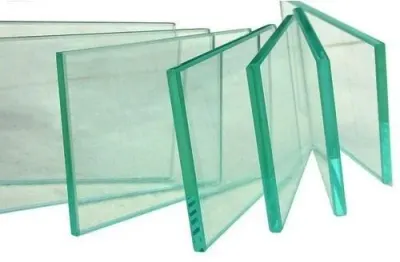
Qingdao Hugeasia Industry Co., Ltd. is based in China and currently lists five active glass products in its catalogue. The catalogue is organized under three main categories: Float Glass, Reflective Glass, and Other Type Of Glass. Products offered include Ultra Clear Float Glass, Tinted Float Glass, Clear Float Glass, Reflective Glass and Low‑E Glass. Each product is classified within the HS Chapter 70 series that covers glass and glassware. The supplier is recorded as an imported tier with a harbor trust tier, indicating its role in cross‑border trade.
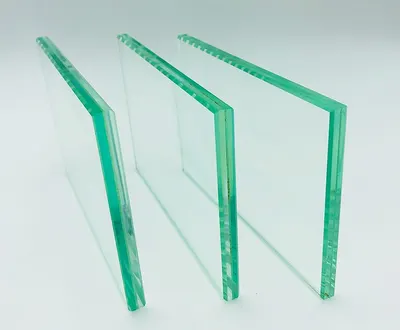
The Ultra Clear Float Glass and Clear Float Glass are standard float‑glass sheets commonly produced in thicknesses from 2 mm to 12 mm and meet ASTM C1036 or EN 572 flat‑glass specifications. Tinted Float Glass adds color pigments while maintaining the same dimensional tolerances as standard float glass. Reflective Glass is treated with a metallic coating to provide solar‑control properties, and Low‑E Glass incorporates a thin‑film coating that reduces emissivity for energy‑efficient glazing. All items are supplied in bulk packs suitable for container loading.
Product Range and Specialties of Qingdao Hugeasia Industry Co., Ltd.
The supplier’s catalogue lists five distinct glass types: Ultra Clear Float Glass, Tinted Float Glass, Clear Float Glass, Reflective Glass and Low‑E Glass. Float glass products are typically supplied in standard widths of 1 m to 2 m and lengths of 2 m to 6 m, with thickness options ranging from 2 mm up to 12 mm. Industry practice for clear and ultra‑clear float glass targets optical transmittance above 90 % and surface defect limits of fewer than 2 mm² per square meter, as defined by ASTM C1036. Tinted glass is produced with iron or copper pigments to achieve specific color grades, commonly referenced by the DIN 4‑10 tint scale. Reflective glass incorporates a sputtered metallic layer that yields a visible reflectance of 30‑50 % in the visible spectrum, while Low‑E glass adds a microscopically thin low‑emissivity coating that typically achieves emissivity values below 0.25.
Buyers of these glass products often require compliance with additional standards such as ISO 9001 for quality management, CE marking for European markets, and local building code requirements that specify wind load resistance and impact testing (e.g., ANSI Z97.1). For solar‑control applications, Low‑E and Reflective glass are evaluated for solar heat gain coefficient (SHGC) values, usually ranging from 0.25 to 0.55 depending on coating type. The catalogue does not list HS codes per item, but all fall under HS 7010 (flat glass) or HS 7011 (glassware of a kind).
Trade and Export Information - Qingdao Hugeasia Industry Co., Ltd.
China is a leading exporter of flat glass, with the majority of shipments classified under HS 7010 and HS 7011. Major destination regions include the Asia‑Pacific (especially Southeast Asia and South Korea), the Middle East, and Europe, where the construction, automotive and renewable‑energy sectors import large volumes for façades, windows and photovoltaic module backsheets. Export logistics typically use 20‑ft or 40‑ft containers, each capable of carrying 10‑12 metric tons of glass sheets protected by wooden edge frames and foam cushioning. Buyers usually request inspection reports under the CIQ (China Inspection and Quarantine) system, and may also require pre‑shipment certificates such as the SGS test report for optical and mechanical properties.
Common certifications requested for Chinese glass exporters include ISO 9001, ISO 14001 (environmental management) and, where applicable, CE conformity for EU markets. Importers often arrange for a third‑party laboratory test to verify thickness tolerance (±0.15 mm), surface flatness (≤0.5 mm per 2 m), and breakage rates (typically less than 0.5 % per container). The supplier’s ‘harbor’ trust tier suggests that it participates in standard customs clearance procedures and may have established relationships with major ports such as Qingdao Port, facilitating smoother freight handling.
Sourcing from Qingdao Hugeasia Industry Co., Ltd. - Buyer Guidance
When sourcing glass from this supplier, buyers should request a product data sheet that lists thickness, dimensions, transmittance, reflectance and coating specifications for each glass type. A recent laboratory test report confirming compliance with ASTM C1036 (for float glass) or relevant EN standards is also advisable before finalizing an order.
Samples of the reflective and Low‑E coatings are usually provided on small‑size sheets (e.g., 300 mm × 300 mm) to allow verification of visual appearance, reflectance and emissivity. Verify that the supplier can supply the required packaging - typically wooden crates with edge protection and moisture‑absorbing packets - and confirm the container loading plan to ensure the breakage rate stays within typical industry limits (under 0.5 %).
Frequently Asked Questions About Qingdao Hugeasia Industry Co., Ltd.
What glass thicknesses are available for the Ultra Clear Float Glass?
The Ultra Clear Float Glass is offered in standard thicknesses from 2 mm up to 12 mm, matching the common range defined by ASTM C1036 for flat glass.
Does the supplier provide Low‑E glass with specific emissivity values?
Low‑E glass is supplied with a thin‑film coating that typically achieves an emissivity of 0.20‑0.25; buyers should request the coating data sheet to confirm the exact value for a given batch.
Which HS codes cover the glass products in this catalogue?
All listed items fall under the HS Chapter 70 series, most commonly HS 7010 for flat glass sheets and HS 7011 for specially coated glass products.
What certifications should a buyer ask for when importing these glass products?
Buyers should request ISO 9001 quality‑management certification, any CE conformity documentation for EU markets, and a pre‑shipment test report covering thickness tolerance, transmittance and breakage rate.
How are the glass sheets packaged for overseas shipment?
Standard packaging uses wooden crates with edge protectors, foam or cardboard padding, and moisture‑absorbing packets; crates are loaded in 20‑ft or 40‑ft containers to optimize space while limiting breakage.
What are the typical lead times for orders of Reflective Glass?
Lead times for reflective glass generally range from 25 to 35 working days, depending on coating thickness, order size and any required pre‑shipment testing.
Which markets commonly import Chinese float and reflective glass?
Key import markets include Southeast Asian countries, the Middle East, and European nations, where the glass is used for building façades, automotive glazing and solar‑panel backsheets.
What documentation is needed for customs clearance of glass shipments from China?
Customs clearance usually requires a commercial invoice, packing list, certificate of origin, CIQ inspection certificate and any applicable product test reports.




 , China