Piteks Tekstil — Supplier

About Piteks Tekstil - Jersey Supplier in Turkey

Turkey‑based Piteks Tekstil lists five active textile products in its catalogue. The offerings include single jersey, single jersey with lycra, towel, velvet and a fabric named Welsoft, covering the top categories of jersey, towels, knitted and woven fabrics, and agriculture. Each product is classified under the textile HS chapters that typically range from 59 to 61, which cover knitted and woven fabrics respectively. The supplier’s catalogue reflects a focus on both plain and blended knit structures, as indicated by the inclusion of lycra‑enhanced jersey.

The five products represent a mix of apparel‑grade and home‑textile applications. Single jersey fabrics are commonly used for t‑shirts and sportswear, while towel fabrics target hospitality and consumer markets. Velvet and Welsoft are positioned in the higher‑end woven segment, often specified by pile height and GSM. The product set aligns with Turkey’s strong export orientation in cotton‑based knits and woven textiles.

Product Range and Specialties of Piteks Tekstil

Piteks Tekstil’s catalogue contains single jersey, a lycra‑blended jersey, towel, velvet and the Welsoft fabric. In the broader industry, single jersey is typically produced in cotton or cotton‑polyester blends with a weight of 140‑180 g/m² and a stretch of 2‑5 % for plain variants. Lycra‑blended jersey usually incorporates 2‑5 % elastane, raising stretch to 10‑15 % while maintaining a similar GSM range. Towels are generally supplied in 300‑600 g/m² with a loop density of 12‑18 loops per cm², and they often meet absorbency standards such as ISO 105‑B02. Velvet fabrics are characterized by a pile height of 1‑3 mm and a GSM of 250‑400, while woven fabrics like Welsoft may be specified by thread count and finish type.

Trade and Export Information - Piteks Tekstil

Turkey ranks among the top global exporters of knitted and woven textiles, with the EU, the United States and the Middle East accounting for the majority of shipments. Products such as single jersey and lycra‑blended jersey fall under HS code 59.12 (knitted cotton fabrics) or 59.13 (knitted synthetic fabrics), while towels are classified under HS 63.10 (towel fabrics). Velvet and other woven fabrics are usually recorded under HS 58.01 (woven cotton fabrics) or 58.02 (woven synthetic fabrics). Export logistics commonly use 20‑foot and 40‑foot containers, with typical loading of 20‑25 kg per cubic meter for bulk textile rolls.

Buyers of Turkish knit and woven goods frequently request compliance with standards such as Oeko‑Tex Standard 100, ISO 9001 quality management and, for organic cotton, GOTS certification. Inspection agencies often perform pre‑shipment checks for GSM, colorfastness (ISO 105‑B02) and dimensional stability. Incoterms like FOB or CIF are standard for textile shipments, and documentation normally includes a commercial invoice, packing list, certificate of origin and any requested test reports.

Sourcing from Piteks Tekstil - Buyer Guidance

When sourcing from Piteks Tekstil, buyers should request a fabric swatch that includes GSM, fiber composition and stretch percentage for jersey items, and pile height and absorbency data for towels. Verify that the supplier can provide Oeko‑Tex or comparable test reports, as well as a certificate of origin to satisfy customs duties for the target market. It is advisable to confirm the minimum order quantity, which for bulk fabric rolls typically starts at one 20‑ft container (approximately 1,200 kg) unless otherwise negotiated.

Before confirming an order, obtain a pre‑production sample and request a lab report confirming compliance with applicable standards such as ISO 105 colourfastness or ISO 9073 for woven fabrics. Ensure that packaging details (e.g., 25 kg bales or rolled in 1.5 m widths) match the logistics plan, and clarify the Incoterm (FOB Istanbul Port is common for Turkish textile exporters).

Frequently Asked Questions About Piteks Tekstil

What types of jersey fabrics does Piteks Tekstil offer?

The catalogue lists plain single jersey and single jersey blended with lycra. Both are knit structures typically produced in 140‑180 g/m² weight, with the lycra version containing 2‑5 % elastane for added stretch.

Are towel specifications provided in the product details?

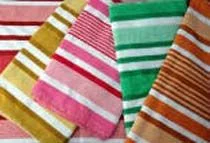
Towel is listed as a separate product and is normally supplied in 300‑600 g/m² weight with a loop density of 12‑18 loops per cm². Buyers should request absorbency test results, such as ISO 105‑B02, to confirm performance.

What is the composition of the velvet fabric?

Velvet is offered as a woven fabric; industry practice is to produce it in cotton or cotton‑polyester blends with a pile height of 1‑3 mm and GSM around 250‑400. Confirmation of fiber ratio and pile characteristics should be obtained from the supplier.

Does Piteks Tekstil hold any certifications?

The supplied facts do not list any certifications. Buyers are advised to ask for Oeko‑Tex Standard 100, ISO 9001 or any other relevant certificates before placing an order.

What HS codes are relevant for these textile products?

Typical HS codes for the listed items are 59.12/59.13 for single jersey, 59.13 for lycra‑blended jersey, 63.10 for towel fabrics, and 58.01/58.02 for woven fabrics such as velvet and Welsoft.

What are the usual minimum order quantities and packaging?

For bulk fabric shipments, the minimum order is often one 20‑ft container, roughly 1,200 kg of rolled fabric. Products are commonly packed in 25 kg bales or rolled on 1.5 m wide tubes, sealed with shrink‑wrap.

Which markets import Turkish knit and woven fabrics?

The European Union, the United States and Gulf Cooperation Council countries are the primary import destinations for Turkish knits and woven textiles, driven by demand for apparel, home textiles and technical fabrics.

What documentation should be requested for customs clearance?

Standard documentation includes a commercial invoice, packing list, certificate of origin, and any requested test reports (e.g., GSM, colourfastness). If the buyer requires specific certifications, those documents should be supplied alongside the shipment.


Featured Products from this Supplier

Other Suppliers in Primary Category

Top Trusted Suppliers

Related Products

Trending in Parent Category

More Suppliers in Category

Related Products

Other Suppliers

EximNext
7.1K+ live requirements
Register Free🎁 Reach global buyers
Post Requirement
🌍 Trusted by 225K+ businesses in 200+ countries|
7.1K+ active requirements right now
✉️ [email protected]
|
Sell on EximNextPost Requirement
EximNext
AgricultureApparelConstructionElectronicFoodHomeIndustrialMineralsMiscellaneous
🔥 Deals|✨ AI Match|🏭 Suppliers|📋 Buy Leads|💰 Trade Finance
7.1K+ live RFQs·194.8K+ suppliers
🎁 Reach global buyers →
EximNext
EximNext
Register Free
🎁 Reach global buyers
Sign In
📋Post Requirement💬Get Quotes✨AI Match📋RFQ Marketplace
All Categories
Services & Tools
🏭Supplier Directory🔥Today's Deals💰Trade Finance
Sell on EximNext →
AboutContactBlogHelp
Apparel & Home  ·  Turkey
5
products listed

Piteks Tekstil

⚓ Harbor
Country flag , TurkeyNew supplier / no reviews yet
🛡️
54/100
Trust Score

Piteks Tekstil Product Catalog

Showing 5 of 5 products
View all products →
Single jersey
⚓ Harbor
Single jersey
Contact
MOQ: 1 Unit
Towel
⚓ Harbor
Towel
Contact
MOQ: 1 Unit
Velvet
⚓ Harbor
Velvet
Contact
MOQ: 1 Unit
Welsoft
⚓ Harbor
Welsoft
Contact
MOQ: 1 Unit
Single jersey with lycra
⚓ Harbor
Single jersey with lycra
Contact
MOQ: 1 Unit

About Piteks Tekstil - Jersey Supplier in Turkey

Turkey‑based Piteks Tekstil lists five active textile products in its catalogue. The offerings include single jersey, single jersey with lycra, towel, velvet and a fabric named Welsoft, covering the top categories of jersey, towels, knitted and woven fabrics, and agriculture. Each product is classified under the textile HS chapters that typically range from 59 to 61, which cover knitted and woven fabrics respectively. The supplier’s catalogue reflects a focus on both plain and blended knit structures, as indicated by the inclusion of lycra‑enhanced jersey.

The five products represent a mix of apparel‑grade and home‑textile applications. Single jersey fabrics are commonly used for t‑shirts and sportswear, while towel fabrics target hospitality and consumer markets. Velvet and Welsoft are positioned in the higher‑end woven segment, often specified by pile height and GSM. The product set aligns with Turkey’s strong export orientation in cotton‑based knits and woven textiles.

Product Range and Specialties of Piteks Tekstil

Piteks Tekstil’s catalogue contains single jersey, a lycra‑blended jersey, towel, velvet and the Welsoft fabric. In the broader industry, single jersey is typically produced in cotton or cotton‑polyester blends with a weight of 140‑180 g/m² and a stretch of 2‑5 % for plain variants. Lycra‑blended jersey usually incorporates 2‑5 % elastane, raising stretch to 10‑15 % while maintaining a similar GSM range. Towels are generally supplied in 300‑600 g/m² with a loop density of 12‑18 loops per cm², and they often meet absorbency standards such as ISO 105‑B02. Velvet fabrics are characterized by a pile height of 1‑3 mm and a GSM of 250‑400, while woven fabrics like Welsoft may be specified by thread count and finish type.

Trade and Export Information - Piteks Tekstil

Turkey ranks among the top global exporters of knitted and woven textiles, with the EU, the United States and the Middle East accounting for the majority of shipments. Products such as single jersey and lycra‑blended jersey fall under HS code 59.12 (knitted cotton fabrics) or 59.13 (knitted synthetic fabrics), while towels are classified under HS 63.10 (towel fabrics). Velvet and other woven fabrics are usually recorded under HS 58.01 (woven cotton fabrics) or 58.02 (woven synthetic fabrics). Export logistics commonly use 20‑foot and 40‑foot containers, with typical loading of 20‑25 kg per cubic meter for bulk textile rolls.

Buyers of Turkish knit and woven goods frequently request compliance with standards such as Oeko‑Tex Standard 100, ISO 9001 quality management and, for organic cotton, GOTS certification. Inspection agencies often perform pre‑shipment checks for GSM, colorfastness (ISO 105‑B02) and dimensional stability. Incoterms like FOB or CIF are standard for textile shipments, and documentation normally includes a commercial invoice, packing list, certificate of origin and any requested test reports.

Sourcing from Piteks Tekstil - Buyer Guidance

When sourcing from Piteks Tekstil, buyers should request a fabric swatch that includes GSM, fiber composition and stretch percentage for jersey items, and pile height and absorbency data for towels. Verify that the supplier can provide Oeko‑Tex or comparable test reports, as well as a certificate of origin to satisfy customs duties for the target market. It is advisable to confirm the minimum order quantity, which for bulk fabric rolls typically starts at one 20‑ft container (approximately 1,200 kg) unless otherwise negotiated.

Before confirming an order, obtain a pre‑production sample and request a lab report confirming compliance with applicable standards such as ISO 105 colourfastness or ISO 9073 for woven fabrics. Ensure that packaging details (e.g., 25 kg bales or rolled in 1.5 m widths) match the logistics plan, and clarify the Incoterm (FOB Istanbul Port is common for Turkish textile exporters).

Frequently Asked Questions About Piteks Tekstil

What types of jersey fabrics does Piteks Tekstil offer?

The catalogue lists plain single jersey and single jersey blended with lycra. Both are knit structures typically produced in 140‑180 g/m² weight, with the lycra version containing 2‑5 % elastane for added stretch.

Are towel specifications provided in the product details?

Towel is listed as a separate product and is normally supplied in 300‑600 g/m² weight with a loop density of 12‑18 loops per cm². Buyers should request absorbency test results, such as ISO 105‑B02, to confirm performance.

What is the composition of the velvet fabric?

Velvet is offered as a woven fabric; industry practice is to produce it in cotton or cotton‑polyester blends with a pile height of 1‑3 mm and GSM around 250‑400. Confirmation of fiber ratio and pile characteristics should be obtained from the supplier.

Does Piteks Tekstil hold any certifications?

The supplied facts do not list any certifications. Buyers are advised to ask for Oeko‑Tex Standard 100, ISO 9001 or any other relevant certificates before placing an order.

What HS codes are relevant for these textile products?

Typical HS codes for the listed items are 59.12/59.13 for single jersey, 59.13 for lycra‑blended jersey, 63.10 for towel fabrics, and 58.01/58.02 for woven fabrics such as velvet and Welsoft.

What are the usual minimum order quantities and packaging?

For bulk fabric shipments, the minimum order is often one 20‑ft container, roughly 1,200 kg of rolled fabric. Products are commonly packed in 25 kg bales or rolled on 1.5 m wide tubes, sealed with shrink‑wrap.

Which markets import Turkish knit and woven fabrics?

The European Union, the United States and Gulf Cooperation Council countries are the primary import destinations for Turkish knits and woven textiles, driven by demand for apparel, home textiles and technical fabrics.

What documentation should be requested for customs clearance?

Standard documentation includes a commercial invoice, packing list, certificate of origin, and any requested test reports (e.g., GSM, colourfastness). If the buyer requires specific certifications, those documents should be supplied alongside the shipment.

About Piteks Tekstil - Jersey Supplier in Turkey

Turkey‑based Piteks Tekstil lists five active textile products in its catalogue. The offerings include single jersey, single jersey with lycra, towel, velvet and a fabric named Welsoft, covering the top categories of jersey, towels, knitted and woven fabrics, and agriculture. Each product is classified under the textile HS chapters that typically range from 59 to 61, which cover knitted and woven fabrics respectively. The supplier’s catalogue reflects a focus on both plain and blended knit structures, as indicated by the inclusion of lycra‑enhanced jersey.

The five products represent a mix of apparel‑grade and home‑textile applications. Single jersey fabrics are commonly used for t‑shirts and sportswear, while towel fabrics target hospitality and consumer markets. Velvet and Welsoft are positioned in the higher‑end woven segment, often specified by pile height and GSM. The product set aligns with Turkey’s strong export orientation in cotton‑based knits and woven textiles.

Product Range and Specialties of Piteks Tekstil

Piteks Tekstil’s catalogue contains single jersey, a lycra‑blended jersey, towel, velvet and the Welsoft fabric. In the broader industry, single jersey is typically produced in cotton or cotton‑polyester blends with a weight of 140‑180 g/m² and a stretch of 2‑5 % for plain variants. Lycra‑blended jersey usually incorporates 2‑5 % elastane, raising stretch to 10‑15 % while maintaining a similar GSM range. Towels are generally supplied in 300‑600 g/m² with a loop density of 12‑18 loops per cm², and they often meet absorbency standards such as ISO 105‑B02. Velvet fabrics are characterized by a pile height of 1‑3 mm and a GSM of 250‑400, while woven fabrics like Welsoft may be specified by thread count and finish type.

Trade and Export Information - Piteks Tekstil

Turkey ranks among the top global exporters of knitted and woven textiles, with the EU, the United States and the Middle East accounting for the majority of shipments. Products such as single jersey and lycra‑blended jersey fall under HS code 59.12 (knitted cotton fabrics) or 59.13 (knitted synthetic fabrics), while towels are classified under HS 63.10 (towel fabrics). Velvet and other woven fabrics are usually recorded under HS 58.01 (woven cotton fabrics) or 58.02 (woven synthetic fabrics). Export logistics commonly use 20‑foot and 40‑foot containers, with typical loading of 20‑25 kg per cubic meter for bulk textile rolls.

Buyers of Turkish knit and woven goods frequently request compliance with standards such as Oeko‑Tex Standard 100, ISO 9001 quality management and, for organic cotton, GOTS certification. Inspection agencies often perform pre‑shipment checks for GSM, colorfastness (ISO 105‑B02) and dimensional stability. Incoterms like FOB or CIF are standard for textile shipments, and documentation normally includes a commercial invoice, packing list, certificate of origin and any requested test reports.

Sourcing from Piteks Tekstil - Buyer Guidance

When sourcing from Piteks Tekstil, buyers should request a fabric swatch that includes GSM, fiber composition and stretch percentage for jersey items, and pile height and absorbency data for towels. Verify that the supplier can provide Oeko‑Tex or comparable test reports, as well as a certificate of origin to satisfy customs duties for the target market. It is advisable to confirm the minimum order quantity, which for bulk fabric rolls typically starts at one 20‑ft container (approximately 1,200 kg) unless otherwise negotiated.

Before confirming an order, obtain a pre‑production sample and request a lab report confirming compliance with applicable standards such as ISO 105 colourfastness or ISO 9073 for woven fabrics. Ensure that packaging details (e.g., 25 kg bales or rolled in 1.5 m widths) match the logistics plan, and clarify the Incoterm (FOB Istanbul Port is common for Turkish textile exporters).

Frequently Asked Questions About Piteks Tekstil
What types of jersey fabrics does Piteks Tekstil offer?
The catalogue lists plain single jersey and single jersey blended with lycra. Both are knit structures typically produced in 140‑180 g/m² weight, with the lycra version containing 2‑5 % elastane for added stretch.
Are towel specifications provided in the product details?
Towel is listed as a separate product and is normally supplied in 300‑600 g/m² weight with a loop density of 12‑18 loops per cm². Buyers should request absorbency test results, such as ISO 105‑B02, to confirm performance.
What is the composition of the velvet fabric?
Velvet is offered as a woven fabric; industry practice is to produce it in cotton or cotton‑polyester blends with a pile height of 1‑3 mm and GSM around 250‑400. Confirmation of fiber ratio and pile characteristics should be obtained from the supplier.
Does Piteks Tekstil hold any certifications?
The supplied facts do not list any certifications. Buyers are advised to ask for Oeko‑Tex Standard 100, ISO 9001 or any other relevant certificates before placing an order.
What HS codes are relevant for these textile products?
Typical HS codes for the listed items are 59.12/59.13 for single jersey, 59.13 for lycra‑blended jersey, 63.10 for towel fabrics, and 58.01/58.02 for woven fabrics such as velvet and Welsoft.
What are the usual minimum order quantities and packaging?
For bulk fabric shipments, the minimum order is often one 20‑ft container, roughly 1,200 kg of rolled fabric. Products are commonly packed in 25 kg bales or rolled on 1.5 m wide tubes, sealed with shrink‑wrap.
Which markets import Turkish knit and woven fabrics?
The European Union, the United States and Gulf Cooperation Council countries are the primary import destinations for Turkish knits and woven textiles, driven by demand for apparel, home textiles and technical fabrics.
What documentation should be requested for customs clearance?
Standard documentation includes a commercial invoice, packing list, certificate of origin, and any requested test reports (e.g., GSM, colourfastness). If the buyer requires specific certifications, those documents should be supplied alongside the shipment.

Piteks Tekstil
Country flag Turkey
⚓ HarborApparel & Home
54/100
Trust Score
5
Products
✓ Free to contact — no commission
✓ Escrow payment available
✓ Verified business identity
Compare more suppliers
Post a requirement — get 10 quotes free
Let verified suppliers compete for your business. Free, fast, no commitment.
Due Diligence
Verify this supplier's real shipping history.
Every shipment, every buyer, every port. Trade data that can't be faked.
Run due diligence →
Discover More

Related Suppliers & Products

Explore similar suppliers, related products and trending categories

Featured Products from this Supplier

Other Suppliers in Primary Category

Top Trusted Suppliers

Related Products

Trending in Parent Category

More Suppliers in Category

Stay ahead in global trade
Weekly market insights & new supplier alerts.
EximNext
Exim Next is a leading global B2B marketplace, connecting over 220,000 registered suppliers and buyers across 200+ countries. As a trusted import export marketplace, it serves as the essential B2B portal for businesses worldwide, empowering them to expand their international reach. With Exim Next, businesses can trade smarter and grow faster.
SECURE PAYMENTS
VISAMastercardPayPalSWIFTL/CEscrow
Follow us
© 2026 EximNext