Njord Seafoods — Verified Supplier
About Njord Seafoods - Frozen Seafood Supplier in India
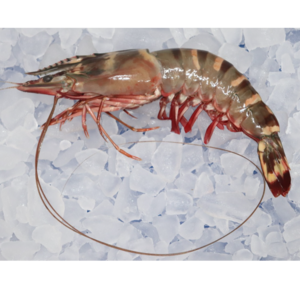
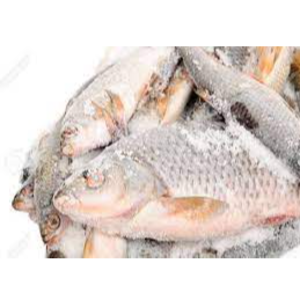
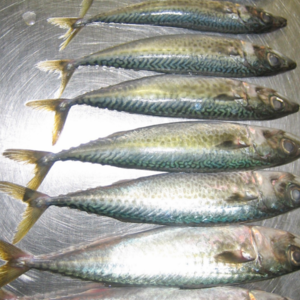
India hosts Njord Seafoods, which currently lists five active frozen seafood products in its catalogue. The supplier’s portfolio covers King fish, a general frozen fish assortment, grouper, mackerel and rock lobster, each presented as fully frozen whole or fillet forms. All items are classified under the frozen seafood segment, and the catalogue does not provide HS‑code details. The product count of five matches the number of distinct frozen species offered for export. Njord Seafoods is identified with a "harbor" trust tier in the source data, indicating a mid‑level verification status.
Product Range and Specialties of Njord Seafoods
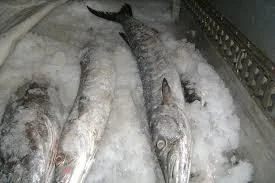
The catalogue enumerates five frozen products: King Fish - Frozen, Frozen Fish (generic assortment), Grouper Frozen, Mackerel Frozen and Rock Lobster Frozen. Each product is supplied as a frozen commodity, typically packed in insulated cartons or bulk boxes suitable for container loading.
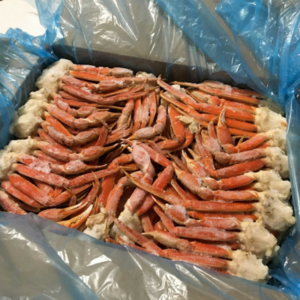
In the broader frozen seafood market, King fish is commonly sold in whole fillets weighing 500‑800 g, frozen at - 18 °C or lower, and often glazed with a 2‑mm ice coating to limit moisture loss. Generic frozen fish assortments usually adhere to a moisture content of 70 % ± 2 % and are graded by visual appearance and flesh firmness. Grouper fillets are frequently graded “A” when the flesh is white, firm and free of off‑odors, with typical sizes of 300‑600 g per piece. Mackerel is often offered as whole frozen fish, with a standard length of 25‑35 cm and a typical ice glaze of 1‑2 mm. Rock lobster (often referred to as rock or spiny lobster) is exported whole, with average live weight of 500‑900 g, and is usually vacuum‑sealed to preserve shell integrity. These industry specifications help buyers align the supplier’s offerings with market expectations.
Trade and Export Information - Njord Seafoods
Frozen seafood from India is regularly shipped to the European Union, the United States, the Middle East and Southeast Asian markets. Buyers in these regions typically require compliance with HACCP, BRC Global Standard for Food Safety or ISO 22000, and a health certificate issued by the Indian export authority. Standard export packaging includes insulated cartons, polyethylene liners and, for bulk shipments, 20‑ft or 40‑ft refrigerated containers (reefers) with temperature monitoring devices. Common Incoterms for Indian frozen seafood are FOB (Port of Nhava Sheva) or CIF to major ports such as Rotterdam, New York and Dubai. Export documentation frequently includes a phytosanitary certificate, a certificate of origin and a declaration of freezer temperature compliance.
Sourcing from Njord Seafoods - Buyer Guidance
When sourcing frozen seafood from Njord Seafoods, buyers should request a product specification sheet that details size, weight, ice glaze thickness and freezer temperature history. Laboratory test reports for microbiological limits (e.g., total viable count, coliforms, Listeria) and chemical residues (e.g., histamine for scombroid species) are standard verification items. Buyers are advised to confirm the presence of HACCP or BRC certification, or to obtain a copy of the supplier’s audit report before placing a first order. Verification of packaging integrity, such as seal strength of vacuum bags and insulation performance of cartons, further reduces the risk of thawing during transit.
Frequently Asked Questions About Njord Seafoods
What frozen seafood products does Njord Seafoods list in its catalogue?
The catalogue lists five frozen items: King Fish, a generic frozen fish assortment, Grouper, Mackerel and Rock Lobster, each supplied as fully frozen whole or fillet forms.
Are HS‑code numbers provided for the products?
The source data does not include HS‑code numbers for any of the listed frozen seafood items.
Which certifications are commonly required for Indian frozen seafood exports?
Typical certifications include HACCP, BRC Global Standard for Food Safety, ISO 22000 and a health certificate issued by Indian authorities; buyers should request proof of these before ordering.
What is the usual packaging format for the frozen products?
Products are generally packed in insulated cartons with polyethylene liners; bulk orders are loaded into 20‑ft or 40‑ft refrigerated containers equipped with temperature loggers.
What documentation should a buyer ask for before confirming an order?
Buyers should ask for a product specification sheet, microbiological and residue test reports, the supplier’s HACCP/BRC audit report, a health certificate and a certificate of origin.
What are typical minimum order quantities (MOQ) and lead times for frozen seafood from India?
MOQs commonly start at one 20‑ft container (approximately 10‑12 tons), with lead times ranging from 15 to 30 days depending on product availability and shipping terms.
Which markets typically import frozen King fish and grouper from India?
European Union ports, the United States and Middle Eastern countries are the main import destinations for frozen King fish and grouper sourced from India.
How is product quality verified for frozen lobster shipments?
Quality is verified through weight checks, shell integrity inspection, vacuum‑seal integrity tests and laboratory analysis for microbial limits before loading the cargo.




 , India