Cangzhou Oubeiruike Instrument And Equipment Co., Ltd — Verified Suppliers
About Cangzhou Oubeiruike Instrument And Equipment Co., Ltd - Civil Engineering Testing Equipment Supplier in United States
Cangzhou Oubeiruike Instrument And Equipment Co., Ltd is registered as a civil and materials testing instrument supplier based in Cangzhou, with the listed origin country recorded as the United States and an active catalogue of 6 products grouped under 8 top-level categories spanning soil testing and surveying instruments, electric meter testing equipment, VTM test kits, electronic testers, electric testers, rapid test kits, soil conditioners, and earthmoving machinery, equipment and spare parts. The catalogue is concentrated almost entirely in HS chapter 9024.80, the tariff line covering machines and appliances for testing the mechanical properties of materials (for example metals, concrete, asphalt, soil and bitumen), with one item, the Soil Non-Nuclear Density Gauge, classified under HS 9031.80 for measuring or checking instruments not elsewhere specified. Five of the six listed items are constructed in steel, which is the conventional material for load frames, proving rings, penetration needles and compaction hammers used in civil engineering laboratories and on construction sites. The product mix is consistent with a supplier serving geotechnical, highway and structural materials laboratories rather than general process instrumentation. Compaction and CBR apparatus, asphalt penetrometers, concrete test hammers, direct shear machines and non-nuclear density gauges are the standard bench and field instruments specified by AASHTO, ASTM and EN standards for road, pavement and foundation works. The supplier states involvement in projects with universities, polytechnics and road development authorities, which is the typical buyer profile for this equipment class: civil engineering faculties, third-party materials testing laboratories, and government highway and infrastructure agencies that run acceptance and quality control tests on soils, aggregates, cement-bound materials and bituminous mixes.
Product Range and Specialties of Cangzhou Oubeiruike Instrument And Equipment Co., Ltd
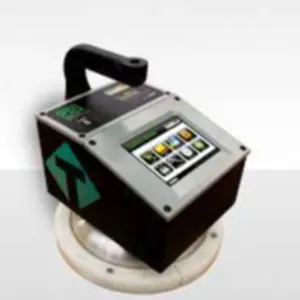
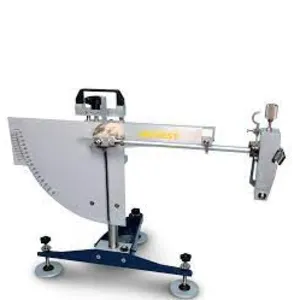
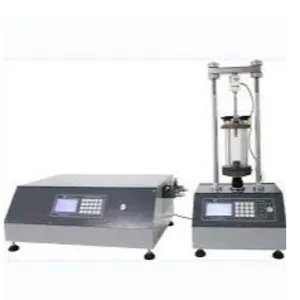
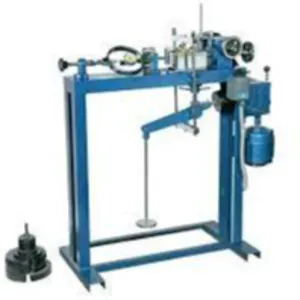
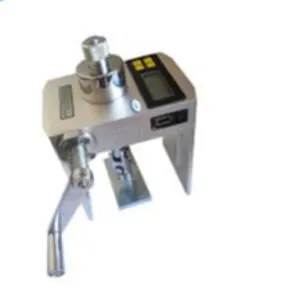
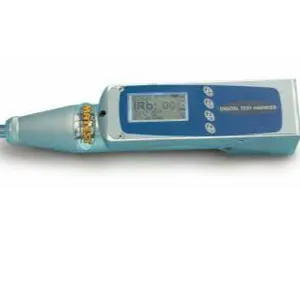
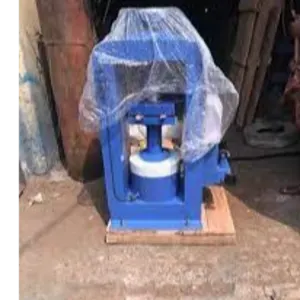
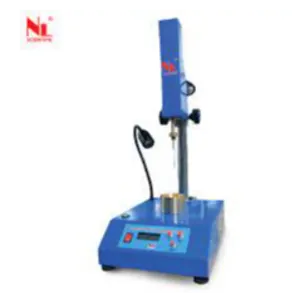
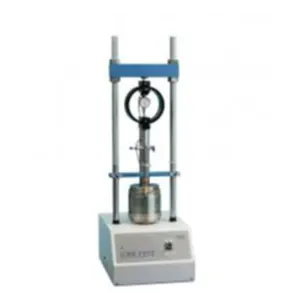
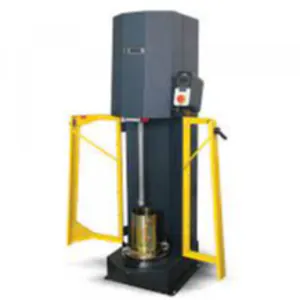
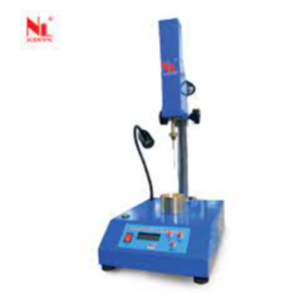
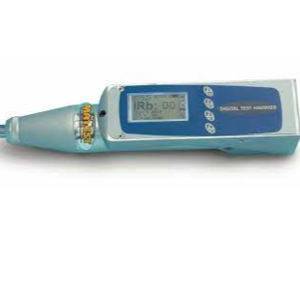
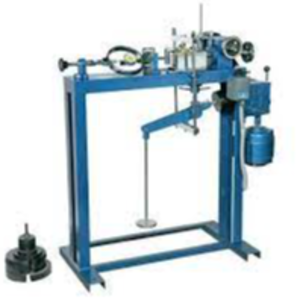
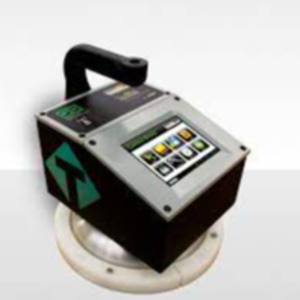
The 6-item catalogue covers the core geotechnical and pavement testing chain: the Automatic Proctor CBR Soil Compactor and the Updated CBR Loading Testing Machine With Sensor 50KN (both HS 9024.80) address compaction and California Bearing Ratio testing of soils and unbound road bases, while the Advance Digital Asphalt Penetrometer (HS 9024.80) is used to grade bitumen by penetration depth in 1/10 mm units per EN 1426 / ASTM D5. The Digital Concrete Test Hammer (HS 9024.80) provides a non-destructive estimate of in-place concrete compressive strength, typically in the 10 to 70 MPa range, and the Single Direct Shear Testing Machine (HS 9024.80) determines peak and residual shear strength parameters of cohesive soils under ASTM D3080 or BS 1377 conditions. The Soil Non-Nuclear Density Gauge (HS 9031.80) is the field alternative to the nuclear density gauge for measuring in-place wet density and moisture of compacted soil layers, avoiding radioactive source licensing. Buyers in this category typically expect equipment to be referenced against specific test methods: CBR per ASTM D1883 or AASHTO T193, Marshall stability and flow on bituminous mixes per ASTM D6927, concrete rebound hammer readings per ASTM C805, and direct shear per ASTM D3080. Common accessories in this segment are proving rings, load cells of 5 kN, 10 kN, 30 kN and 50 kN capacity, penetration needles of 100 g mass, compaction moulds of 100 mm and 150 mm diameter, and digital readouts with RS-232 or USB output. Steel fabrication with powder-coated or galvanised frames, calibrated load measurement, and traceability to a national standards body (NIST, NPL, PTB or equivalents) are the usual specification points buyers compare when shortlisting suppliers in HS 9024.80.
Trade and Export Information - Cangzhou Oubeiruike Instrument And Equipment Co., Ltd
Civil engineering testing instruments under HS 9024.80 and HS 9031.80 are typically imported by national road and highway authorities, state departments of transport, geotechnical consultants, ready-mix concrete producers, asphalt plant operators, third-party materials testing laboratories, and university civil engineering departments. Major importing regions for this category include the Gulf Cooperation Council states (Saudi Arabia, UAE, Qatar, Oman), Southeast Asia (Indonesia, Vietnam, the Philippines, Malaysia), Sub-Saharan Africa (Nigeria, Kenya, Ethiopia, Tanzania), and South Asia (Bangladesh, Sri Lanka, Nepal), where road construction, airport runway works and large housing programmes drive recurring demand for soil, aggregate and bitumen test apparatus. China is one of the established exporting origins for laboratory-grade civil testing equipment, with Cangzhou and other Hebei industrial clusters known for fabrication of compression machines, CBR apparatus and asphalt testing gear supplied both domestically and to overseas laboratories. For this product class, buyers usually request documentation tied to the instrument's intended test method: a calibration certificate traceable to a recognised national metrology institute, a factory acceptance test report, and conformity to ASTM, AASHTO, BS or EN standards relevant to the test (for example EN 13286-7 for CBR, EN 12697-34 for Marshall, ASTM D6951 for the soil non-nuclear density gauge). Sea freight is the standard mode, with wooden crating typical for load frames and proving rings; instruments weighing above 200 kg, such as automatic compactors, are usually palletised and shipped LCL or FCL in 20 ft containers depending on order size. Electrical items in this category are normally supplied for 220 V / 50 Hz or 110 V / 60 Hz depending on destination, and buyers should confirm voltage, plug type and any local conformity assessment (for example SONCAP for Nigeria, GCC conformity for Gulf states, or PVoC for East Africa) before shipment. Incoterms commonly used for laboratory instruments are EXW, FOB, CFR and CIF, with CIP increasingly used for door-delivered projects.
Sourcing from Cangzhou Oubeiruike Instrument And Equipment Co., Ltd - Buyer Guidance
Before placing an order, a buyer should request the full technical datasheet for each instrument and confirm the exact test standard it is built to, since one machine can be offered to ASTM, AASHTO, BS or EN versions with different mould sizes, rammer weights and drop heights. For the CBR and compaction apparatus, confirm whether the compactor is automatic or hand-operated, the mould diameter (typically 150 mm for CBR, 100 mm or 150 mm for Proctor), and the load ring or load cell capacity with the latest calibration certificate traceable to NIST, NPL or an equivalent body. For the Digital Concrete Test Hammer, ask for the impact energy (standard 2.207 J), the supplied calibration anvil, and the printed or digital readout range, usually 10 to 70 MPa compressive strength equivalent. For the Advance Digital Asphalt Penetrometer, confirm the penetration range (commonly 0 to 500 penetration units, 0.1 mm resolution), the needle weight of 100 g, the sample container dimensions, and whether a timing device and thermometer conforming to EN 1426 / ASTM D5 are included. For the Single Direct Shear Machine, request the maximum horizontal shear force (commonly 10 kN to 50 kN), the shear box size (typically 60 mm or 100 mm square), and the speed range, which should cover 0.0001 to 10 mm/min for strain-controlled tests. For the Soil Non-Nuclear Density Gauge, ask for the measurement depth (commonly 50 mm to 300 mm), the reported accuracy versus nuclear gauge correlation, the battery life, and any required operator training. Across the catalogue, buyers should also confirm the voltage and frequency, the warranty terms, the lead time, and the availability of spare parts such as proving rings, penetration needles, compaction hammers and shear box components, since these consumables are what keep the equipment in service between calibration cycles.
Frequently Asked Questions About Cangzhou Oubeiruike Instrument And Equipment Co., Ltd
What product categories does Cangzhou Oubeiruike Instrument And Equipment Co., Ltd supply?
The active catalogue lists 6 products across 8 top-level categories, focused on civil engineering materials testing: soil testing and surveying instruments, electric and electronic testers, VTM and rapid test kits, soil conditioners, and earthmoving machinery equipment and spare parts. Five items fall under HS 9024.80 (machines for testing mechanical properties of materials) and one, the Soil Non-Nuclear Density Gauge, under HS 9031.80.
Which standards do these testing instruments typically comply with?
Instruments in this category are normally referenced to ASTM, AASHTO, BS or EN test methods: CBR per ASTM D1883 / AASHTO T193 / EN 13286-7, asphalt penetration per ASTM D5 / EN 1426, concrete rebound hammer per ASTM C805, direct shear per ASTM D3080, and soil density per ASTM D6951 for non-nuclear gauges. Buyers should request the specific standard build for each item before ordering.
What documents should be requested with the equipment?
Request a calibration certificate traceable to a national metrology institute (NIST, NPL, PTB or equivalent), a factory test report, the operating and maintenance manual, and a packing list. For destination-country customs, ask for a commercial invoice, packing list, certificate of origin, and any required conformity documents such as SONCAP, GCC conformity or PVoC depending on the market.
What are typical MOQ and lead times for laboratory testing instruments?
These instruments are capital equipment rather than consumables, so MOQ is usually 1 unit per item, with mixed container shipments of 3 to 6 different machines common for new laboratories. Lead time is typically 15 to 45 working days ex-works depending on configuration and calibration workload, and should be confirmed in writing with the order.
How are the instruments packed and shipped?
Standard packing is export wooden crate or plywood case with foam or bubble protection for sensitive parts such as load cells, proving rings and digital readouts. Sea freight is the default mode, with 20 ft containers used for full laboratory outfitting and LCL for single or small orders; instruments are normally quoted on EXW, FOB, CFR, CIF or CIP Incoterms.
Which spare parts and consumables should be ordered with the machine?
Common spares include proving rings or load cells of matching capacity, penetration needles (100 g) for the asphalt penetrometer, compaction moulds (100 mm and 150 mm), CBR plunger and surcharge weights, shear box assemblies, and replacement digital transducers. Ordering a 1- to 2-year spare-parts kit at the time of purchase is standard practice for laboratories running continuous QA work.
Can the voltage and plug type be specified for the destination country?
Yes. Laboratory instruments in this category are usually built for either 220 V / 50 Hz or 110 V / 60 Hz, and the plug standard should be specified with the order. Buyers in 110 V markets (parts of the Americas, Japan, Saudi Arabia) and 230 V markets (most of Africa, Asia and Europe) should confirm the configuration before shipment to avoid on-arrival rewiring.
Does the supplier offer installation and training?
Installation, commissioning and operator training are commonly offered either on-site or remotely for civil testing equipment, and the scope (video guidance, on-site engineer, or full installation) should be agreed in the proforma invoice. For the Soil Non-Nuclear Density Gauge, ask specifically whether operator certification or correlation testing against a nuclear gauge is included.




 Cangzhou, United States