Xinxiang Dayong Vibration Equipment Co., Ltd. — Verified Supplier
About Xinxiang Dayong Vibration Equipment Co., Ltd. - Construction Equipment & Machinery Supplier in China
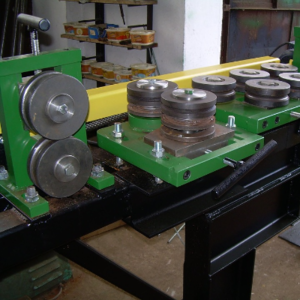
China hosts Xinxiang Dayong Vibration Equipment Co., Ltd., which currently lists five active products in its catalogue. The company’s portfolio falls under the Construction Equipment & Machinery segment and includes a Dy stainless steel automatic construction roller, a stable stainless steel vibrator screen, a small‑volume high‑efficiency vibrating screen, a large‑capacity high‑efficiency linear vibration unit, and a 450 L liquid vibrating screen. All items are described as stainless‑steel constructions designed for material handling and compaction tasks in construction and processing sites. The product titles indicate a focus on vibration‑based separation and consolidation technologies, covering both solid and liquid media handling.
The listed equipment aligns with standard industry classifications for construction rollers (often HS 8426), vibrating screens (HS 8425), and linear vibrators (HS 8425). Typical specifications for such machines include vibration frequencies between 15 Hz and 30 Hz, amplitudes of 2 mm to 5 mm, and screen mesh sizes ranging from 0.5 mm to 5 mm. Capacity ratings for small screens usually span 5 - 20 t/h, while large‑capacity units can handle 50 - 200 t/h. Stainless‑steel grades commonly used are 304 or 316, providing corrosion resistance for outdoor and wet‑process environments.
Product Range and Specialties of Xinxiang Dayong Vibration Equipment Co., Ltd.
The catalogue presents five distinct machines: an automatic construction roller built from stainless steel, a stainless‑steel vibrator screen, a compact high‑efficiency vibrating screen, a high‑capacity linear vibration system, and a 450‑liter liquid vibrating screen. In the broader market, construction rollers are typically rated by compaction force (e.g., 80 - 150 kN) and drum width (600 - 1200 mm). Vibrator screens are classified by deck size (often 1 × 2 m to 2 × 4 m) and mesh aperture, with high‑efficiency models achieving over 95 % particle separation efficiency. Linear vibration devices are measured by travel length (1 - 3 m) and power consumption (10 - 30 kW). Liquid vibrating screens are designed for slurry processing, with typical feed rates of 0.5 - 2 m³/h and mesh configurations that prevent clogging.
Industry practice for stainless‑steel vibrating equipment includes using 304 / 316 grades, surface finishes of 0.8 µm Ra or better, and compliance with ISO 9001 quality management. Screen decks often incorporate modular panels for easy replacement, and mesh materials range from stainless steel to polyurethane depending on material abrasiveness. For rollers, tread patterns are selected to meet ASTM D6957 compaction standards, and hydraulic or pneumatic actuation is common. These technical norms provide buyers with performance baselines when evaluating the supplier’s offerings.
Trade and Export Information - Xinxiang Dayong Vibration Equipment Co., Ltd.
China is a leading exporter of construction machinery, and its vibration equipment typically falls under HS Chapter 84 (machinery). The HS codes most relevant to Xinxiang Dayong’s portfolio are 8425 for vibrating screens and 8426 for rollers and linear vibrators. Export shipments are frequently destined for infrastructure projects in Southeast Asia, the Middle East, Africa, and South America, where rapid construction and material processing demand robust vibration solutions. Buyers in the European Union often require CE marking and conformity with EN 12420 for vibrating screens, while North American purchasers look for compliance with ANSI/ASME standards and UL certifications.
Logistically, these machines are usually packed in wooden crates, secured on 20‑ft or 40‑ft containers, and shipped under FOB or CIF terms. Weight per unit can range from 1 t for small screens to 8 t for large linear vibration units, influencing container load planning. Typical export documentation includes a commercial invoice, packing list, bill of lading, and, where required, a Certificate of Origin. Import regulators may request test reports such as vibration frequency curves, noise level measurements (dB(A)), and material certification for stainless‑steel grades.
Sourcing from Xinxiang Dayong Vibration Equipment Co., Ltd. - Buyer Guidance
When sourcing from Xinxiang Dayong, buyers should request a detailed product data sheet that lists vibration frequency, amplitude, power consumption, stainless‑steel grade, and capacity figures. Independent test reports covering noise emission, durability under continuous operation, and mesh opening tolerances are standard documents that help verify performance claims. Certifications commonly demanded include CE marking for EU markets, ISO 9001 quality system certification, and, where applicable, ISO 14001 environmental management certification; these should be confirmed before order confirmation.
Typical minimum order quantities are one unit per machine type, reflecting the bespoke nature of vibration equipment. Lead times reported by Chinese manufacturers for similar machinery range from 30 to 60 days after receipt of a confirmed purchase order and required documentation. Buyers are advised to arrange a pre‑shipment inspection by a third‑party agency to verify material grade, dimensional compliance, and functional testing results.
Frequently Asked Questions About Xinxiang Dayong Vibration Equipment Co., Ltd.
What types of vibration equipment does Xinxiang Dayong list in its catalogue?
The catalogue includes a stainless‑steel automatic construction roller, a stable stainless‑steel vibrator screen, a small‑volume high‑efficiency vibrating screen, a large‑capacity high‑efficiency linear vibration unit, and a 450‑liter liquid vibrating screen.
Which HS codes are applicable to the listed products?
The construction roller and linear vibration unit are generally classified under HS 8426, while the vibrator and vibrating screens fall under HS 8425. Exact sub‑heading depends on machine capacity and design.
What material grade is used for the equipment frames?
All listed machines are described as stainless‑steel constructions, typically supplied in grades 304 or 316 for corrosion resistance in outdoor and wet environments.
What certifications should a buyer request before purchasing?
Buyers should request CE marking for EU compliance, ISO 9001 quality management certification, and any relevant test reports such as vibration frequency curves and noise level measurements.
What are the typical capacity ranges for the vibrating screens?
Small‑volume screens usually handle 5 - 20 tons per hour, while the large‑capacity linear vibration unit can process 50 - 200 tons per hour depending on feed material.
How are the machines packaged for export?
Machines are typically crated in reinforced wooden boxes, secured on pallets, and loaded into 20‑ft or 40‑ft containers. Weight limits and dimensions are managed to comply with container specifications.
What lead time can a buyer expect for these products?
Lead times commonly range from 30 to 60 days after order confirmation, subject to the availability of required certifications and any custom configuration.
Is a pre‑shipment inspection recommended?
Yes, a third‑party pre‑shipment inspection is advisable to verify material grade, dimensional accuracy, and functional performance before the goods are loaded for shipment.




 , China






.jpg.png)