Taizhou Tengnuo Mould Co., Ltd. — Supplier
About Taizhou Tengnuo Mould Co., Ltd. - Plastic Processing Machinery Supplier in China
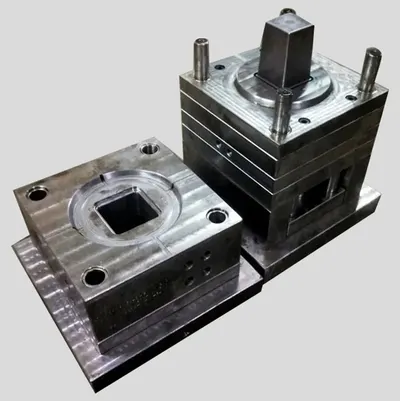
Taizhou Tengnuo Mould Co., Ltd. is a China-based supplier operating from Taizhou, Zhejiang, a coastal prefecture-level city in the Yangtze River Delta that hosts one of the country's densest clusters of plastic product and mould-making enterprises. The supplier lists 5 active products, all of which sit within a single category - Plastic Processing Machinery - and all of which are moulds rather than finished plastic goods. The catalogue covers thin wall moulds, bucket moulds, IML (in-mould labelling) pail moulds, food container moulds, and take away container moulds, indicating a manufacturing focus on rigid packaging tooling rather than consumer or industrial plastic components. The product mix points to a supplier serving converters who produce disposable and reusable rigid plastic packaging, particularly for food service and industrial pail applications. Thin wall moulds and IML pail moulds are typically used in high-cavitation, short-cycle injection moulding of polypropylene (PP) packaging, while food container and take away container moulds address the polypropylene and polyethylene (PE) food-contact packaging segment. Moulds in this category are generally classified under HS code 8480.71 (moulds for injection or compression moulding of plastics) for international customs purposes, although the exact subheading depends on the mould type and material of construction. Buyers reviewing this supplier should note that the catalogue is narrow but technically focused on rigid plastic packaging tooling.
Product Range and Specialties of Taizhou Tengnuo Mould Co., Ltd.
The supplier's catalogue of 5 products is concentrated entirely on plastic injection moulds for rigid packaging. Thin wall moulds are designed for high-speed, high-cavitation production of lightweight PP containers, commonly with cycle times under 6 seconds and cavity counts ranging from 4 to 32 or more depending on part size. Bucket moulds and IML pail moulds target the industrial and consumer pail segment, typically in sizes from 1 litre to 25 litres, with IML variants allowing pre-printed polypropylene labels to be fused into the bucket wall during moulding for decoration and branding. Food container moulds and take away container moulds address the food-service packaging market, producing hinged clamshells, deli containers, and lidded trays in PP, random copolymer PP (PP-RCP), or polyethylene terephthalate (PET) where clarity is required. In the broader mould-making industry, buyers in this category typically evaluate tooling against specifications such as mould steel grade (P20, 2738, H13, S136, or NAK80), cavity and core hardness (typically 30-36 HRC for P20/2738, 48-52 HRC for H13), runner type (cold runner versus hot runner systems such as Synventive, Mold-Masters, or Husky), shot life expectancy (commonly 1 million to 5 million cycles for thin wall packaging moulds), and surface finish grades (SPI/SPE finish standards A1 to D3). Standard mould lead times in the Chinese mould-making industry for multi-cavity packaging tooling range from 45 to 90 days depending on cavitation and complexity, and trial shots (T0/T1 samples) are typically provided before final acceptance. Buyers should also expect to see mould flow analysis reports, 2D and 3D mould drawings, and material certificates for steel and hot runner components as part of normal supplier documentation.
Trade and Export Information - Taizhou Tengnuo Mould Co., Ltd.
Plastic injection moulds for rigid packaging are a globally traded capital good, with Chinese mould-makers in Taizhou, Huangyan, and the wider Zhejiang cluster exporting a significant share of the world's packaging tooling. The principal importing regions for moulds in this category are Southeast Asia (Vietnam, Indonesia, Thailand, Malaysia, the Philippines), South Asia (India, Bangladesh, Pakistan), the Middle East and North Africa (Egypt, Turkey, Saudi Arabia, the UAE), Sub-Saharan Africa (Nigeria, Kenya, South Africa), Eastern Europe, and Latin America (Mexico, Brazil, Colombia, Argentina). These regions typically import moulds to serve domestic food packaging, dairy, paint, and chemical pail converters who would otherwise face higher tooling costs from European or Japanese mould-makers. Relevant customs classifications for moulds in this category fall under HS heading 8480 (moulding boxes for metal foundry, mould bases, moulding patterns, moulds for metals, metal carbides, glass, mineral materials, rubber or plastics). Specifically, moulds for plastics are typically declared under HS subheading 8480.71, while other mould types may fall under 8480.41, 8480.50, or 8480.79 depending on the material being moulded. Industry-standard certifications and documents commonly requested by buyers of plastic packaging moulds include ISO 9001 quality management certification, CE marking where the mould is part of a CE-marked machine assembly, material certificates (mill certificates) for mould steel, hot runner controller documentation, and DDP or CIP Incoterms for cross-border shipments. Moulds are typically crated in wooden export cases conforming to ISPM 15 (heat-treated and stamped timber) and shipped by sea freight in 20 ft or 40 ft containers, with sea freight from Ningbo or Shanghai being the standard logistics route for Taizhou-based mould exporters. Payment terms in this trade segment are commonly 30% deposit by T/T with 70% balance against mould trial video or upon shipment, although irrevocable L/C at sight is also used for larger orders.
Sourcing from Taizhou Tengnuo Mould Co., Ltd. - Buyer Guidance
Buyers sourcing thin wall, bucket, IML pail, food container, or take away container moulds from a Chinese supplier should request a defined technical package before placing an order. Key documents to request include the mould steel grade and hardness certification, hot runner brand and model specification, cavity count and cycle time target, mould weight and footprint for installation planning, and a 3D mould design review (typically in STEP, IGES, or X_T format). Buyers should also ask for a mould flow analysis report, a detailed itemised cost breakdown separating steel, hot runner, CNC machining, EDM, polishing, assembly, and trial-shot costs, and a written warranty period (industry standard is typically 1 year or 1 million shots, whichever comes first). It is also standard practice to request T0 or T1 trial samples shipped by courier before final balance payment. Verification steps that help de-risk an order include confirming the supplier's ISO 9001 certification status, requesting references from existing customers in similar packaging segments, and arranging a third-party pre-shipment inspection (commonly through SGS, Bureau Veritas, TÜV, or AsiaInspection) to verify mould dimensions, steel grade, hardness testing, hot runner wiring, and trial-shot part quality. Buyers should also confirm whether the mould will be designed for a specific injection moulding machine (such as Haitian, Engel, Arburg, Sumitomo, or Yizumi) and verify tie-bar spacing, clamping force requirements, and ejection stroke compatibility. For food-contact packaging moulds, buyers should request confirmation that mould steel and any surface treatments comply with food-contact regulations in the destination market, such as EU Regulation (EU) No 1935/2004, US FDA 21 CFR, or equivalent national standards. A supplier's responsiveness on technical documentation, willingness to share mould flow simulations, and clarity on after-sales support are practical signals of engineering capability in this category.
Frequently Asked Questions About Taizhou Tengnuo Mould Co., Ltd.
What types of moulds does Taizhou Tengnuo Mould Co., Ltd. manufacture?
The supplier manufactures 5 active products, all plastic injection moulds for rigid packaging: thin wall moulds, bucket moulds, IML pail moulds, food container moulds, and take away container moulds. These are tooling products, not finished plastic goods, and are typically classified under HS subheading 8480.71 for customs purposes.
Which industries typically use the moulds listed in this supplier's catalogue?
Buyers in the food packaging, dairy, paint, chemicals, and food-service disposables sectors typically source these mould types. Thin wall and take away container moulds serve PP and PET food packaging converters, while bucket and IML pail moulds serve industrial packaging producers in sizes from 1 litre to 25 litres.
What certifications should buyers request from a Chinese mould supplier?
Buyers should request ISO 9001 quality management certification, mill certificates for mould steel (such as P20, 2738, H13, or S136), and confirmation that any food-contact moulds meet destination-market regulations such as EU 1935/2004 or US FDA 21 CFR. CE marking is relevant if the mould is integrated into a CE-marked machine assembly.
What is the typical lead time for a multi-cavity packaging mould from China?
Standard lead times for multi-cavity plastic packaging moulds from Chinese mould-makers typically range from 45 to 90 days, depending on cavity count, mould complexity, and hot runner specification. Buyers should confirm a written delivery schedule and request T0 or T1 trial samples before final acceptance.
What documents should accompany a mould shipment?
A complete mould shipment typically includes the mould itself in an ISPM 15-compliant wooden export case, 2D and 3D drawings, mould flow analysis report, steel and hot runner material certificates, hot runner controller manual, spare parts list, and a mould trial video showing acceptable part production at the agreed cycle time.
What is the standard warranty on a plastic injection mould?
Industry standard warranty on plastic injection moulds is typically 1 year or 1 million shots, whichever occurs first, covering defects in steel, machining, and hot runner components under normal operating conditions. Warranty terms should always be confirmed in writing before order placement.
What packaging and shipping methods are used for mould exports from Taizhou?
Moulds are typically crated in heat-treated wooden cases conforming to ISPM 15 standards and shipped by sea freight, most commonly from Ningbo or Shanghai ports. Smaller moulds or sample moulds may be shipped by air freight, and shipping terms are usually negotiated as FOB, CIF, or DDP depending on buyer preference.
What payment terms are standard for mould orders from Chinese suppliers?
The most common payment structure in this trade segment is 30% deposit by T/T upon order confirmation with 70% balance paid against mould trial video or upon shipment. Irrevocable L/C at sight is also used, particularly for larger tooling orders, and buyers should confirm payment milestones in a formal proforma invoice.




 , China