Shenzhen Oubel Technology Co., Ltd. — Supplier
About Shenzhen Oubel Technology Co., Ltd. - PCB and Welding Machinery Supplier in China
Shenzhen, located in Guangdong Province of China, is the base of Shenzhen Oubel Technology Co., Ltd. The company currently lists six distinct products in its catalogue. Its top categories are printed circuit board (PCB) handling equipment, agricultural solutions, and welding & wire mesh machinery. The product portfolio includes both consumables for electronic assembly and mechanical conveyance systems for PCB production lines. The supplier is classified as an imported tier with a harbor trust rating in the platform’s assessment. No additional company history or financial data are provided.
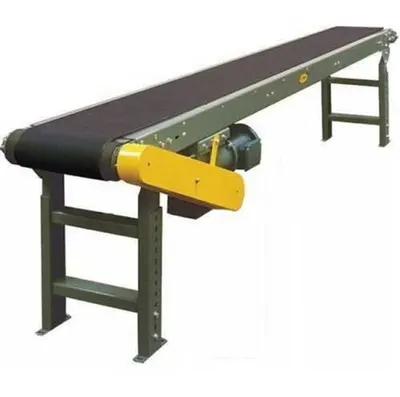
The listed items comprise a solder paste formulation used for surface‑mount technology, four types of PCB conveyors (buffer, NG/OK, reject, and general conveyor), a welding soldering machine, and a PCB magazine loader for automated component feeding. In international trade, such electronic consumables typically fall under HS Chapter 85 (electrical machinery and equipment) while the conveyor and welding machinery are classified under HS Chapter 84 (machinery). The solder paste is commonly measured by metal content (e.g., 60 % Sn‑Ag‑Cu) and particle size distribution in line with IPC‑J‑STD‑006. PCB conveyor systems are usually specified by belt width, load capacity in kg per meter, and motor power ranging from 0.5 kW to 5 kW. Welding soldering machines for PCB assembly are often rated by voltage (220‑240 V) and have safety certifications such as CE or UL. The catalogue does not include explicit HS codes, so standard chapter references are provided for context.
Product Range and Specialties of Shenzhen Oubel Technology Co., Ltd.
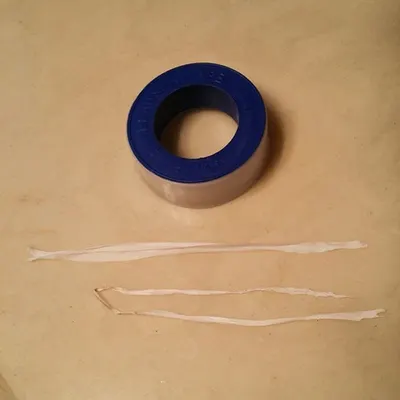
The catalogue lists a solder paste, four distinct PCB conveyor models (buffer, NG/OK, reject, and standard conveyor), a welding soldering machine, and a PCB magazine loader. Solder paste for surface‑mount technology is typically formulated with a tin‑silver‑copper alloy, particle sizes between 20‑40 µm, and a flux type that meets IPC‑J‑STD‑006. PCB conveyors are usually built with stainless‑steel frames, polyester or PVC belts, and motor drives that support load capacities from 30 kg to 200 kg per meter; control panels often comply with IEC 60204. Welding soldering machines for PCB assembly generally operate at 220‑240 V, provide adjustable temperature ranges up to 450 °C, and incorporate safety interlocks required by IEC 60974. The magazine loader is designed to hold reels or trays of PCB panels, with typical dimensions of 600 mm × 400 mm × 200 mm and a load capacity of up to 150 kg.
Beyond the listed items, Chinese exporters in the PCB equipment sector frequently offer additional variants such as automated optical inspection (AOI) stations, reflow ovens, and pick‑and‑place machines. Buyers often look for IEC‑type safety certifications, CE marking for European markets, and RoHS compliance for electronic consumables. Standard quality grades include ISO 9001‑based quality management and, for solder paste, compliance with ASTM B658 for metal purity.
Trade and Export Information - Shenzhen Oubel Technology Co., Ltd.
China is a global supplier of PCB manufacturing equipment and electronic consumables, with major export destinations in North America, Western Europe, and Southeast Asia. HS Chapter 85 covers solder paste and related electronic materials, while HS Chapter 84 applies to the conveyor and welding machinery; customs authorities commonly request a commercial invoice, packing list, and a test report confirming compliance with IEC or ISO standards. Importers typically require CE or UL certification for electrical safety, RoHS statements for lead‑free compliance, and, for solder paste, an analysis report showing metal content and flux classification. Shipping of the conveyors and welding machine is usually in 20‑ft or 40‑ft containers, palletized on wooden or Euro pallets, with moisture‑resistant wrapping to protect metal surfaces during transit. Chinese exporters often work under FOB Shenzhen or CIF destination ports, and buyers should verify the supplier’s export license and any required export‑control documentation for dual‑use machinery.
Typical buyers of PCB handling equipment include contract electronics manufacturers, original equipment manufacturers (OEMs), and large‑scale assembly lines. These industries value consistent product specifications, traceable quality records, and pre‑shipment inspection reports such as SGS or Bureau Veritas. While the supplier’s target markets are not explicitly listed, the product mix aligns with the demand patterns of the aforementioned regions and sectors.
Sourcing from Shenzhen Oubel Technology Co., Ltd. - Buyer Guidance
When sourcing solder paste from Shenzhen Oubel, request a material safety data sheet (MSDS), a batch test report confirming IPC‑J‑STD‑006 compliance, and evidence of RoHS conformity. For the conveyor systems and welding soldering machine, ask for a CE declaration, an IEC‑type safety test report, and dimensional drawings that show belt width, load capacity, and motor power. Verify the supplier’s export documentation, including a valid Chinese export license and any applicable dual‑use control certificates before confirming the order. Samples of the solder paste and a short‑run prototype of the conveyor are advisable to assess flow characteristics and mechanical reliability before full‑scale procurement.
Frequently Asked Questions About Shenzhen Oubel Technology Co., Ltd.
What specifications should I check for the solder paste offered by Shenzhen Oubel?
Confirm the alloy composition (e.g., Sn‑Ag‑Cu 60/40/0), particle size range (typically 20‑40 µm), and that the product complies with IPC‑J‑STD‑006. Request an MSDS and a recent batch analysis report to verify metal content and flux type.
How can I obtain a sample of the PCB buffer conveyor?
Contact the supplier to arrange a functional prototype or a limited‑quantity unit. Ask for dimensional drawings, belt material specifications, and a test report indicating load capacity and motor power.
Which certifications are commonly required for PCB handling equipment imported from China?
Buyers usually request CE marking for European safety, UL or CSA for North American markets, and an ISO 9001 quality management certificate. RoHS compliance is also standard for electronic consumables such as solder paste.
What HS code is typically used for the welding soldering machine when filing customs?
The machine falls under HS Chapter 84, specifically the subheading 8479 for machines and mechanical appliances having individual functions, not specified elsewhere. The exact 6‑digit code may vary by exact function and power rating.
What packaging format is standard for the PCB magazine loader?
The loader is normally packed on a Euro pallet, wrapped in stretch film, and placed in a wooden crate sized to protect the 600 mm × 400 mm × 200 mm dimensions. Moisture‑resistant liners are often added for overseas shipments.
What lead time should I expect for the PCB conveyor models?
Typical production lead times for standard conveyor frames range from 30 to 45 days after receipt of a purchase order, assuming no custom engineering changes. Lead time may extend if special belt materials or control panels are requested.
Are there any import restrictions for solder paste into the European Union?
EU customs require proof of RoHS compliance and a safety data sheet. Additionally, the product must meet REACH registration requirements for any hazardous substances present in the flux.




 , China



.jpg.png)