PKS BRASIL — Suppliers
About PKS BRASIL - Meat & Poultry Supplier in Brazil
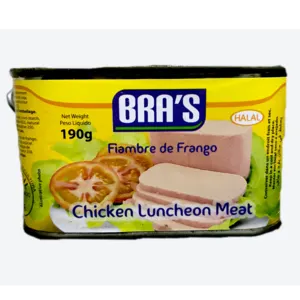
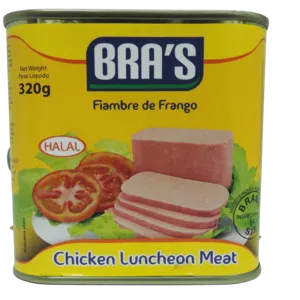
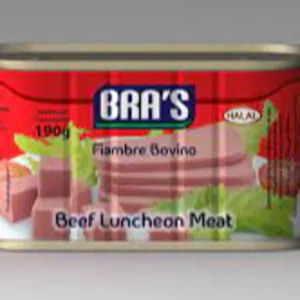
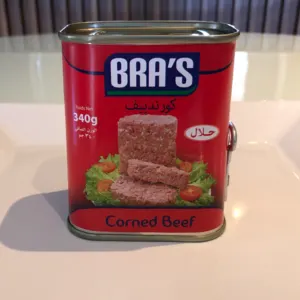
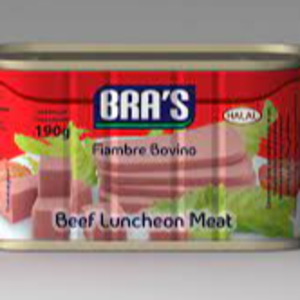
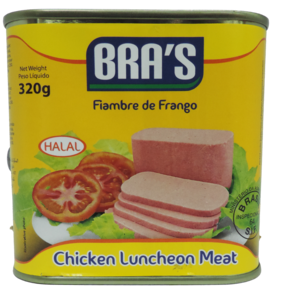
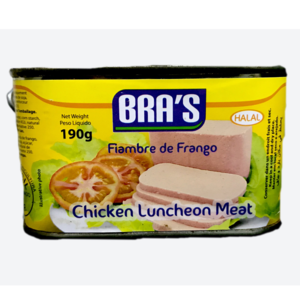
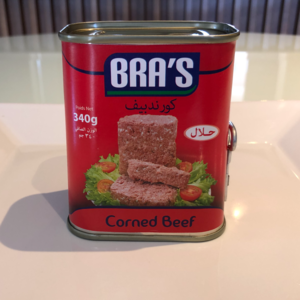
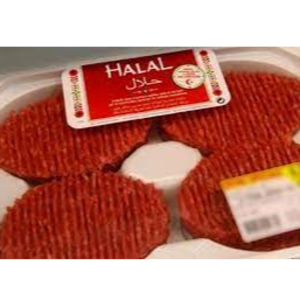
PKS BRASIL operates in Rio Grande do Sul, Brazil and lists five active canned meat products. The catalogue includes two variants of canned corned beef (340 g and 198 g), two beef luncheon meat formats (320 g and 190 g), and two chicken luncheon meat formats (320 g and 190 g). All items fall under HS chapter 16, with the beef‑based cans classified under HS 1602.50 and the chicken‑based cans under HS 1602.32. The products are described as processed meat preserved with salt, spices and standard food‑grade preservatives. The supplier’s tier is marked as “organic” and it holds a Halal certification.
The five products belong to broader categories such as Canned Beef, Canned Chicken, Meat & Poultry and Canned Meat as indicated in the supplier’s top categories. Each master case contains 24 individual cans, matching the product naming convention (e.g., “Canned Corned Beef 24/340g”). The listing reflects a focus on ready‑to‑eat, shelf‑stable meat items that comply with standard food safety inspections. The catalogue does not include fresh cuts, only processed, canned formats.
Product Range and Specialties of PKS BRASIL
PKS BRASIL’s catalogue comprises canned corned beef (340 g and 198 g) and beef luncheon meats (320 g and 190 g) classified under HS 1602.50, as well as chicken luncheon meats (320 g and 190 g) under HS 1602.32. In the industry, canned bovine products are typically produced to meet Codex Alimentarius specifications for moisture (≤ 60 %), salt content (≤ 2 % w/w) and microbial limits (e.g., < 10 CFU/g E. coli). Chicken canned products follow similar Codex limits and often require a minimum of 70 % protein content.
Standard packaging for these goods uses tinplate cans with internal linings, sealed in master cartons of 24 cans, which are then palletized for ocean freight. Common grades of canned meat include “Class A” for uniform texture and “Class B” for lower visual standards but still meeting safety criteria. Buyers frequently request specifications such as pH (typically 5.5 - 6.5), water activity below 0.95, and shelf life of 12‑24 months at ambient temperature.
Trade and Export Information - PKS BRASIL
Brazil is a major exporter of shelf‑stable meat products, with the South‑East and South regions, including Rio Grande do Sul, supplying most canned meat volumes. Export shipments of HS 1602.xx items are commonly destined for the Middle East, North Africa, and Southeast Asian markets, where Halal‑certified meat is in demand. Logistics usually involve 20‑ft containers holding approximately 1,200 kg of product, equivalent to about 3,500 cans, loaded on pallets with standard Euro‑pallet dimensions.
Importers typically require Halal certification, ISO 22000 or HACCP audit reports, and a Certificate of Origin for customs clearance. Additional documents may include a sanitary inspection certificate and, where applicable, a BRC Global Standard for Food Safety audit. Standard Incoterms such as FOB Rio Grande do Sul or CIF destination ports are used, and the cans must comply with the EU’s Regulation (EC) No 178/2002 on food safety and the US FDA’s Food Safety Modernization Act requirements for imported processed meat.
Sourcing from PKS BRASIL - Buyer Guidance
Buyers should request the supplier’s Halal certificate together with the latest HACCP plan and any ISO 22000 audit reports before placing an order. Sample analysis should cover microbial limits (e.g., Salmonella < 1 CFU/g), moisture content, pH, and label compliance with the destination country’s nutritional labeling rules. Verification of the HS code, net weight per can (e.g., 340 g) and the total net weight per master case (8.16 kg for the 24 × 340 g pack) helps confirm shipping calculations.
Typical minimum order quantities range from one 20‑ft container (≈ 3,500 cans) to larger bulk shipments, with lead times of 30‑45 days for production and packaging. Buyers should also confirm the type of can lining (tin‑plated steel vs. aluminum) and the presence of a BPA‑free internal coating, especially for markets with strict food‑contact material regulations.
Frequently Asked Questions About PKS BRASIL
What HS codes are used for PKS BRASIL’s canned meat products?
The beef‑based canned products (corned beef and beef luncheon meat) are classified under HS 1602.50, while the chicken luncheon meats are classified under HS 1602.32.
Which certifications does PKS BRASIL hold for its meat products?
The supplier holds a Halal certification as stated in its profile. Buyers should also request HACCP, ISO 22000 or BRC audit reports, which are commonly required for imported processed meat.
What are the typical packaging specifications for the listed products?
Each product is packed in tinplate cans of 340 g or 198 g for corned beef and 320 g or 190 g for luncheon meats, with 24 cans per master carton. Master cartons are stacked on Euro‑pallets for ocean freight.
What quality parameters are standard for canned corned beef and luncheon meats?
Industry standards usually require moisture content ≤ 60 %, salt content ≤ 2 % w/w, pH between 5.5 and 6.5, and microbial limits such as < 10 CFU/g for E. coli and absence of Salmonella in 25 g.
What documents should a buyer request before ordering?
Buyers should obtain the Halal certificate, HACCP or ISO 22000 audit report, a sanitary inspection certificate, and a Certificate of Origin. Test reports covering moisture, pH, and microbial analysis are also advisable.
What is the typical lead time and minimum order quantity for these canned meats?
Standard lead time is 30‑45 days from order confirmation. Minimum shipments are usually one 20‑ft container, which can hold roughly 3,500 cans (about 1,200 kg).
Which markets commonly import Brazilian canned meat products?
Major import destinations include countries in the Middle East, North Africa, Southeast Asia and the European Union, where demand for Halal‑certified, shelf‑stable meat is strong.




 , Brazil