Hebei Xinguang Machinery Imp & Exp Co., Ltd. — Supplier
About Hebei Xinguang Machinery Imp & Exp Co., Ltd. - Packaging Machinery Supplier in China
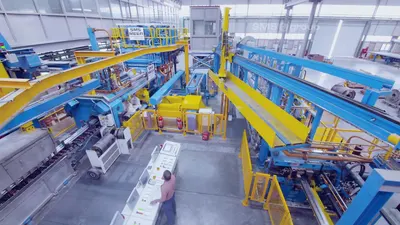
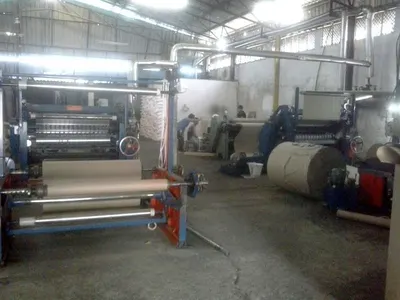
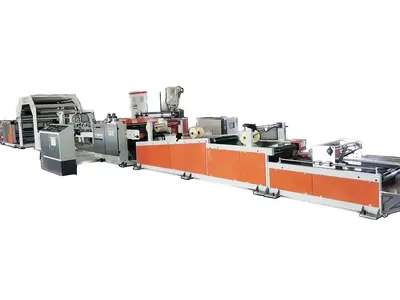
Based in China, Hebei Xinguang Machinery Imp & Exp Co., Ltd. lists five active products in its catalogue. The company classifies its offerings under Packaging Machinery, Industrial Machinery, and Agriculture, with a primary focus on equipment for corrugated board production. The product count reflects a targeted portfolio rather than a broad line of unrelated machinery. All listed items are production lines designed for converting paper into corrugated cardboard, a core segment of the packaging sector.
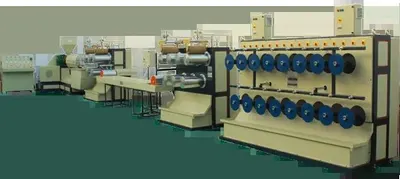
The catalogue includes a 2‑ply, 3‑ply, 5‑ply, 7‑ply and a high‑speed corrugated cardboard production line. Each line is specified by the number of board plies it can produce, indicating the range of single‑wall and multi‑wall board structures the equipment can handle. No HS‑code details are provided in the source data, but the products fall within the machinery category for paper and paperboard manufacturing.
Product Range and Specialties of Hebei Xinguang Machinery Imp & Exp Co., Ltd.
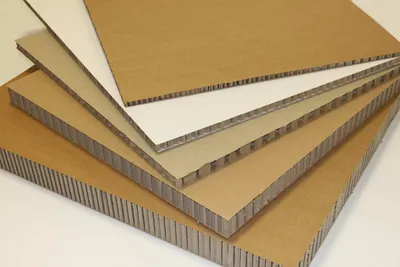
Hebei Xinguang’s listed machinery covers corrugated cardboard production lines ranging from 2‑ply to 7‑ply configurations, plus a high‑speed variant. In the corrugated industry, lines are typically rated by output capacity (e.g., 30 - 120 tons per day) and by the flute profile they can produce (B, C, E, and BC). Buyers often look for equipment that can meet specific board strength standards such as burst strength ≥ 300 kPa and edge crush test ≥ 120 kN/m. Modern lines incorporate CNC controls, automatic glue application, and quick‑change tools to switch between flute types.
The high‑speed line usually targets large‑scale converters that require speeds above 120 m/min and integrated quality monitoring. For lower‑capacity users, 2‑ply and 3‑ply lines can be sufficient to produce single‑wall board for packaging boxes. Typical ancillary equipment includes pre‑cutting stations, printing units, and stacking systems, which are often sourced as part of a complete production line package.
Trade and Export Information - Hebei Xinguang Machinery Imp & Exp Co., Ltd.
China is a leading exporter of corrugated board machinery, with major import markets in North America, Western Europe, and Southeast Asia. The equipment is classified under HS chapter 84, commonly HS code 8422 for paper‑making and paperboard‑forming machines. Buyers usually request CE marking for EU markets and ISO 9001 certification to verify quality management systems. Shipment is frequently arranged on 40‑ft containers on an FOB basis from ports such as Shanghai or Tianjin, with installation support offered on a CIF or DDP term.
Regulatory considerations include compliance with the EU Machinery Directive and US OSHA safety standards. Export documentation typically comprises a commercial invoice, packing list, certificate of origin, and any requested test reports. Environmental compliance, such as RoHS or REACH, may be required for components containing electronic controls.
Sourcing from Hebei Xinguang Machinery Imp & Exp Co., Ltd. - Buyer Guidance
When sourcing from Hebei Xinguang, request the latest ISO 9001 certificate and CE test report to confirm conformity with international safety and quality standards. Verify the line’s rated output (tons per day), power consumption (kW), and supported flute profiles, and ask for a performance video or on‑site trial if possible. Clarify the warranty period, spare‑parts availability, and whether installation, commissioning, and training are included in the contract.
Because the products are complete production lines, the minimum order is typically the full line rather than individual modules. Lead times for new builds range from 3 to 6 months, depending on customization and component sourcing. Ensure that the supplier provides a detailed packing list, container loading plan, and insurance coverage for the transit period.
Frequently Asked Questions About Hebei Xinguang Machinery Imp & Exp Co., Ltd.
What types of corrugated board can the listed production lines produce?
The lines are configured for 2‑ply to 7‑ply single‑wall board and can be set up for common flute profiles such as B, C, E, and hybrid BC. The high‑speed line can handle rapid changes between profiles while maintaining board strength specifications.
Which HS code applies to these machines for customs clearance?
Machinery for making paper or paperboard, including corrugated board production equipment, is generally classified under HS code 8422. Exact sub‑headings depend on specific machine functions and accessories.
What certifications should a buyer request before purchase?
Buyers should request the supplier’s ISO 9001 certificate and, for European markets, a CE conformity declaration. Additional certifications such as RoHS or REACH may be relevant for electronic control units.
How is the equipment typically packed and shipped?
Full production lines are disassembled, crated, and loaded into 40‑ft containers. Packing includes wooden crates, moisture‑resistant liners, and securing straps to protect delicate components during sea freight.
What is the usual lead time for a new corrugated line?
Lead times commonly range from three to six months, depending on the selected configuration, optional accessories, and any required custom engineering.
Are sample boards or trial runs available before finalizing the order?
Suppliers often provide a pilot run or sample board produced on a demonstration line to verify quality parameters such as burst strength and edge crush test before full‑scale production is commissioned.
What are typical payment terms for machinery exports from China?
Standard trade terms include a Letter of Credit at sight or a 30 % advance payment with the balance payable against shipping documents, though terms can be negotiated per contract.
Which markets most frequently import Chinese corrugated machinery?
The United States, Germany, the United Kingdom, and Vietnam are among the top importers, driven by demand in e‑commerce packaging, consumer goods, and food‑grade box production.




 , China