Gongda Machine Co., Ltd. — Verified Supplier

About Gongda Machine Co., Ltd. - Breweries & Distillery Machinery Supplier in China

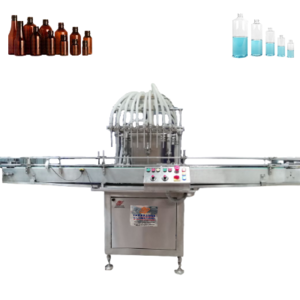
Gongda Machine Co., Ltd. is a China-based supplier with 20 active product listings concentrated in breweries and distillery machinery, beverage processing equipment, and packaging machinery. Its catalogue covers the full liquid-handling chain that a brewery, cidery, winery or fruit-juice plant typically needs: glass-bottle washing, pressure and isobaric filling, can sealing, keg washing-filling unity units, deculming, membrane and diatomite filtration, malt processing equipment, and beverage mixing. The line-up spans light-and-medium machinery such as the automatic glass bottle-washing machine and the beverage mixer, as well as heavier units such as the plate-and-frame diatomite filter and the 5 L cans aseptic filling machine. Geared to beverage producers in China and abroad, the range is built around stainless-steel process equipment sized for batch and semi-continuous lines rather than laboratory or pilot scale.

The supplier's catalogue is organised around three functional blocks: upstream raw-material preparation (malt equipment, new-type malt machine, malting unity machine, deculming machine), mid-stream liquid processing (plate-and-frame and vane-type diatomite filters, membrane filter machine, beer filter machine, fruit juice filter machine, wine filter machine), and downstream packaging (glass bottle beer filling machine, cans isobaric filling machine, cans-sealing machine, pressure and balanced pressure filling machines, beer keg washing-filling unity machine). This grouping mirrors the layout of a typical turnkey beverage line, where brewhouse output is clarified, carbonated where needed, and then dosed into glass bottles, aluminium cans or stainless steel kegs. With 20 active listings, the supplier covers both still and carbonated beverages, including juice and wine filtration, which broadens its reach beyond pure beer production.

Product Range and Specialties of Gongda Machine Co., Ltd.

Gongda Machine Co., Ltd. lists 20 products grouped under breweries and distillery machinery, dispensing systems, packaging machinery, and beverages machinery. The breweries block is the most detailed: glass bottle beer filling machines, cans isobaric filling machines, cans-sealing machines, beer keg washing-filling unity machines, balanced pressure filling machines, pressure filling machines, beer filter machines, and both plate-and-frame and vane-type diatomite filters. Upstream, the malt equipment, new-type malt machine, malting unity machine and deculming machine form a steeping-germination-kilning chain typical of floor or box malting systems used by craft and regional breweries. The filtration sub-range includes membrane filter machines, fruit juice filter machines and wine filter machines, indicating cross-category capability into juice and wine clarification beyond beer alone. Packaging-side machinery covers both glass and metal containers (bottles, aluminium cans, stainless kegs), and the 5 L cans aseptic filling machine addresses the mini-keg and party-keg segment that has grown in on-trade and home-delivery channels. The beverage mixer rounds out the catalogue for syrup blending, carbonated-mix and pre-fermentation blending duties.

Buyers of breweries and distillery machinery in this category typically evaluate equipment against a defined set of process and hygienic-design specifications. Filling machines are usually rated by capacity in bottles or cans per hour, container size range (e.g. 250 ml to 750 ml glass, 220 ml to 500 ml aluminium cans, 5 L to 30 L kegs), filling accuracy in millilitres, CO2 pressure tolerance for isobaric units (commonly 2.5 to 3.5 bar), and contact-surface finish (304 or 316L stainless steel, with internal Ra values typically below 0.8 micrometre for CIP-friendly surfaces). Diatomite (kieselguhr) filters, whether plate-and-frame or vane-type, are specified by filtration area in square metres, throughput in hectolitres per hour, and cake capacity, while membrane filter machines are defined by pore size (commonly 0.2 micrometre or 0.45 micrometre for sterile filtration) and cross-flow rate. Malting equipment is described by batch size in tonnes, floor area, and germination-kilning temperature control range. Buyers should also confirm PLC control platforms, servo versus pneumatic drive, and CIP (clean-in-place) integration, since these drive both throughput and long-term operating cost.

Trade and Export Information - Gongda Machine Co., Ltd.

Breweries and distillery machinery exported from China typically falls under HS code 8421 (filtering or purifying machinery for liquids) and 8422 (machinery for cleaning, filling, closing or labelling bottles, cans and similar containers), with brewhouse and malting equipment often classified under 8438 (machinery for the industrial preparation of food and drink, n.e.c.). Buyers in Africa, Southeast Asia, the Middle East, Eastern Europe and Latin America are the principal import markets for this category, driven by the build-out of regional breweries, cider plants and craft beverage operations. Standard shipments are 20 ft or 40 ft sea-freight containers, with crated machinery weights ranging from a few hundred kilograms for a bottle washer up to several tonnes for a complete brewhouse or filter assembly; electrical specifications are usually confirmed per destination (380 V/50 Hz three-phase for most of Africa, the Middle East and Europe, versus 220 V/60 Hz for parts of Latin America). Incoterms commonly used in this segment are FOB, CFR and CIF, with seaworthy wooden crates, moisture barriers and rust-inhibitor films as the standard export packaging.

For breweries and distillery machinery, buyers typically request CE conformity (mandatory for the European Economic Area), UKCA for the United Kingdom, and confirmation of compliance with pressure-equipment directives such as the EU PED 2014/68/EU for vessels and lines operating above 0.5 bar. Electrical cabinets are normally required to carry UL or CSA certification for North American buyers, and GCC conformity for Gulf states. Food-contact surfaces should meet EU Regulation 1935/2004 or US FDA 21 CFR for materials in contact with beer, juice or wine, and welds on stainless process piping are usually specified to ASME Section IX or equivalent. Pre-shipment inspection by third parties such as SGS, Bureau Veritas or TUV is common for first orders, and a factory acceptance test (FAT) on water or a neutral product is standard practice before crating. China-origin breweries machinery has built a substantial export base over the past two decades, with the country's suppliers competing on integrated brewhouse-to-filling-line packages for capacities from roughly 5 hl up to 50 hl per brew, and on turnkey canning lines running at 3,000 to 12,000 cans per hour.

Sourcing from Gongda Machine Co., Ltd. - Buyer Guidance

Sourcing breweries and distillery machinery from a China-based supplier such as Gongda Machine Co., Ltd. requires buyers to anchor every quotation to a written technical specification rather than a model name alone. Request a detailed spec sheet for each unit covering hourly capacity, container size range, material grade (304 versus 316L stainless), motor power in kW, air and CO2 consumption, control platform (PLC brand and HMI), and CIP integration. Ask for reference lists of similar-capacity installations, recent FAT videos, and the names of any third-party inspection bodies that have audited the workshop. For first orders, a third-party pre-shipment inspection covering dimensional checks, no-load running tests, and material verification with a portable XRF or mill-certificate review is widely used in this category. Payment terms in this segment typically combine a 30% telegraphic transfer deposit with a 70% balance against copy of B/L or after FAT acceptance; letters of credit at sight are also common for new buyer-supplier relationships. Confirm after-sales support in writing: response window, availability of English-language operation manuals and wiring diagrams, recommended spare-parts kit, and whether on-site commissioning is included or quoted separately.

Buyers should also verify regulatory and documentary requirements before placing an order. For the European Union, request the CE Declaration of Conformity, the relevant PED category assessment for pressurised vessels, and electrical schematics with a CE-marked control panel; for the United Kingdom, UKCA documentation; for North America, UL 508A panel certification and, where applicable, ASME U-stamp or NB-stamp for pressure vessels. Food-contact compliance should be documented through material certificates for stainless steel (EN 10088 or ASTM A240) and food-grade rubber seals (EPDM or silicone, FDA/EC 1935 compliant). Packaging and shipping norms in this category include ISPM-15 heat-treated or fumigated wooden crates, internal foam bracing, desiccant bags, and waterproof stretch wrap, with container loading plans provided for 20 ft and 40 ft units. Lead times for built-to-order breweries machinery typically run 30 to 75 working days after deposit, depending on line complexity, and buyers should align vessel bookings accordingly. Finally, request a sample trial of any filter or filling machine on a product similar to your own (beer, juice or wine) before final acceptance, since performance on water alone does not reflect real-product behaviour.

Frequently Asked Questions About Gongda Machine Co., Ltd.

What product categories does Gongda Machine Co., Ltd. supply?

The supplier lists 20 active products across breweries and distillery machinery, beverage processing equipment, packaging machinery, dispensing systems and heavy machinery. The range covers malt processing, diatomite and membrane filtration, glass-bottle and can filling and sealing, keg washing-filling, and beverage mixing for beer, juice and wine applications.

Which HS codes apply to the breweries and packaging machinery in this catalogue?

Filtering and purifying equipment such as the diatomite and membrane filter machines typically falls under HS 8421. Cleaning, filling, closing and sealing machines for bottles, cans and kegs are usually classified under HS 8422. Brewhouse and malting equipment is generally entered under HS 8438 as machinery for the industrial preparation of food and drink.

What certifications should I request before ordering?

For the European Union, request the CE Declaration of Conformity and, for pressurised vessels, assessment under the Pressure Equipment Directive 2014/68/EU. For North America, ask for UL 508A panel certification and ASME-stamped pressure vessels where applicable. Food-contact surfaces should be backed by FDA 21 CFR or EU 1935/2004 material declarations, with mill certificates for 304 or 316L stainless steel.

What specifications are typically checked on a filling machine?

Buyers usually review hourly capacity in bottles or cans per hour, container diameter and height range, filling accuracy in millilitres, CO2 pressure tolerance for isobaric units, contact material grade, and CIP capability. Electrical requirements (380 V/50 Hz or 220 V/60 Hz), air consumption in litres per minute, and PLC/HMI brand should also be confirmed in writing.

What is the typical MOQ and lead time for breweries machinery?

Most breweries and packaging machinery in this category is built to order, so MOQ is effectively one line or one unit. Standard lead times run 30 to 60 working days for single machines and 60 to 120 working days for integrated lines, counted from receipt of the deposit and approved drawing.

How are the machines packed and shipped?

Export packing normally uses ISPM-15 compliant fumigated wooden crates with internal foam bracing, moisture barriers and rust-inhibitor film. Single machines typically load into 20 ft containers, while integrated brewhouse-to-filling lines usually require 40 ft containers; crated weights range from a few hundred kilograms for a bottle washer up to several tonnes for a complete filter or brewhouse.

Can the equipment handle products other than beer?

Yes. The catalogue includes a fruit juice filter machine, a wine filter machine and a beverage mixer, indicating capability beyond beer. Membrane and diatomite filters can typically be configured for juice clarification, wine polishing or sterile filtration, provided the buyer specifies the target product, viscosity and required throughput during enquiry.

What after-sales and documentation should I expect?

Standard documentation includes English-language operation and maintenance manuals, electrical wiring diagrams, and PLC programmes. Buyers should confirm in writing the warranty period, recommended spare-parts list, on-site or remote commissioning support, and the response window for technical enquiries after delivery.


Other Suppliers in Breweries & Distillery Machinery

Top Trusted Suppliers

Related Products in Breweries & Distillery Machinery

Trending in Parent Category

More Suppliers in Parent Category

Related Products

Other Suppliers

EximNext
58.4K+ live requirements
Register Free🎁 5 free buy-lead credits
Post Requirement
🌍 Trusted by 224.4K+ businesses in 200+ countries|
58.4K+ active requirements right now
✉️ [email protected]
|
Sell on EximNextPost Requirement
EximNext
AgricultureApparelConstructionElectronicFoodHomeIndustrialMineralsMiscellaneous
🔥 Deals|✨ AI Match|🏭 Suppliers|📋 Buy Leads|💰 Trade Finance|⭐ Upgrade
58.4K+ live RFQs·194.4K+ suppliers
🎁 5 free credits →
EximNext
EximNext
Register Free
🎁 5 free buy-lead credits
Sign In
📋Post Requirement💬Get QuotesAI Match📋RFQ Marketplace
All Categories
Services & Tools
🏭Supplier Directory🔥Today's Deals💰Trade FinanceMembership
Sell on EximNext
AboutContactBlogHelp
🏭

Gongda Machine Co., Ltd.

Harbor
Country flag , China
🛡️
78/100
Trust Score

Gongda Machine Co., Ltd. Product Catalog

Showing 12 of 20 products
View all products →
Beverage mixer
Harbor
Beverage mixer
Contact
MOQ: 1 Unit
Wine filter machine
Harbor
Wine filter machine
Contact
MOQ: 1 Unit
Fruit juice filter machine
Harbor
Fruit juice filter machine
Contact
MOQ: 1 Unit
Vane-type diatomite filter machine
Harbor
Vane-type diatomite filter machine
Contact
MOQ: 1 Unit
Beer filter machine
Harbor
Beer filter machine
Contact
MOQ: 1 Unit
Malting unity machine
Harbor
Malting unity machine
Contact
MOQ: 1 Unit
Deculming machine
Harbor
Deculming machine
Contact
MOQ: 1 Unit
Beer keg washing, filling unity machine
Harbor
Beer keg washing, filling unity machine
Contact
MOQ: 1 Unit
New-type malt machine
Harbor
New-type malt machine
Contact
MOQ: 1 Unit
Membrane filter machine
Harbor
Membrane filter machine
Contact
MOQ: 1 Unit
Balanced pressure filling machine
Harbor
Balanced pressure filling machine
Contact
MOQ: 1 Unit
Pressure filling machine
Harbor
Pressure filling machine
Contact
MOQ: 1 Unit

About Gongda Machine Co., Ltd. - Breweries & Distillery Machinery Supplier in China

Gongda Machine Co., Ltd. is a China-based supplier with 20 active product listings concentrated in breweries and distillery machinery, beverage processing equipment, and packaging machinery. Its catalogue covers the full liquid-handling chain that a brewery, cidery, winery or fruit-juice plant typically needs: glass-bottle washing, pressure and isobaric filling, can sealing, keg washing-filling unity units, deculming, membrane and diatomite filtration, malt processing equipment, and beverage mixing. The line-up spans light-and-medium machinery such as the automatic glass bottle-washing machine and the beverage mixer, as well as heavier units such as the plate-and-frame diatomite filter and the 5 L cans aseptic filling machine. Geared to beverage producers in China and abroad, the range is built around stainless-steel process equipment sized for batch and semi-continuous lines rather than laboratory or pilot scale.

The supplier's catalogue is organised around three functional blocks: upstream raw-material preparation (malt equipment, new-type malt machine, malting unity machine, deculming machine), mid-stream liquid processing (plate-and-frame and vane-type diatomite filters, membrane filter machine, beer filter machine, fruit juice filter machine, wine filter machine), and downstream packaging (glass bottle beer filling machine, cans isobaric filling machine, cans-sealing machine, pressure and balanced pressure filling machines, beer keg washing-filling unity machine). This grouping mirrors the layout of a typical turnkey beverage line, where brewhouse output is clarified, carbonated where needed, and then dosed into glass bottles, aluminium cans or stainless steel kegs. With 20 active listings, the supplier covers both still and carbonated beverages, including juice and wine filtration, which broadens its reach beyond pure beer production.

Product Range and Specialties of Gongda Machine Co., Ltd.

Gongda Machine Co., Ltd. lists 20 products grouped under breweries and distillery machinery, dispensing systems, packaging machinery, and beverages machinery. The breweries block is the most detailed: glass bottle beer filling machines, cans isobaric filling machines, cans-sealing machines, beer keg washing-filling unity machines, balanced pressure filling machines, pressure filling machines, beer filter machines, and both plate-and-frame and vane-type diatomite filters. Upstream, the malt equipment, new-type malt machine, malting unity machine and deculming machine form a steeping-germination-kilning chain typical of floor or box malting systems used by craft and regional breweries. The filtration sub-range includes membrane filter machines, fruit juice filter machines and wine filter machines, indicating cross-category capability into juice and wine clarification beyond beer alone. Packaging-side machinery covers both glass and metal containers (bottles, aluminium cans, stainless kegs), and the 5 L cans aseptic filling machine addresses the mini-keg and party-keg segment that has grown in on-trade and home-delivery channels. The beverage mixer rounds out the catalogue for syrup blending, carbonated-mix and pre-fermentation blending duties.

Buyers of breweries and distillery machinery in this category typically evaluate equipment against a defined set of process and hygienic-design specifications. Filling machines are usually rated by capacity in bottles or cans per hour, container size range (e.g. 250 ml to 750 ml glass, 220 ml to 500 ml aluminium cans, 5 L to 30 L kegs), filling accuracy in millilitres, CO2 pressure tolerance for isobaric units (commonly 2.5 to 3.5 bar), and contact-surface finish (304 or 316L stainless steel, with internal Ra values typically below 0.8 micrometre for CIP-friendly surfaces). Diatomite (kieselguhr) filters, whether plate-and-frame or vane-type, are specified by filtration area in square metres, throughput in hectolitres per hour, and cake capacity, while membrane filter machines are defined by pore size (commonly 0.2 micrometre or 0.45 micrometre for sterile filtration) and cross-flow rate. Malting equipment is described by batch size in tonnes, floor area, and germination-kilning temperature control range. Buyers should also confirm PLC control platforms, servo versus pneumatic drive, and CIP (clean-in-place) integration, since these drive both throughput and long-term operating cost.

Trade and Export Information - Gongda Machine Co., Ltd.

Breweries and distillery machinery exported from China typically falls under HS code 8421 (filtering or purifying machinery for liquids) and 8422 (machinery for cleaning, filling, closing or labelling bottles, cans and similar containers), with brewhouse and malting equipment often classified under 8438 (machinery for the industrial preparation of food and drink, n.e.c.). Buyers in Africa, Southeast Asia, the Middle East, Eastern Europe and Latin America are the principal import markets for this category, driven by the build-out of regional breweries, cider plants and craft beverage operations. Standard shipments are 20 ft or 40 ft sea-freight containers, with crated machinery weights ranging from a few hundred kilograms for a bottle washer up to several tonnes for a complete brewhouse or filter assembly; electrical specifications are usually confirmed per destination (380 V/50 Hz three-phase for most of Africa, the Middle East and Europe, versus 220 V/60 Hz for parts of Latin America). Incoterms commonly used in this segment are FOB, CFR and CIF, with seaworthy wooden crates, moisture barriers and rust-inhibitor films as the standard export packaging.

For breweries and distillery machinery, buyers typically request CE conformity (mandatory for the European Economic Area), UKCA for the United Kingdom, and confirmation of compliance with pressure-equipment directives such as the EU PED 2014/68/EU for vessels and lines operating above 0.5 bar. Electrical cabinets are normally required to carry UL or CSA certification for North American buyers, and GCC conformity for Gulf states. Food-contact surfaces should meet EU Regulation 1935/2004 or US FDA 21 CFR for materials in contact with beer, juice or wine, and welds on stainless process piping are usually specified to ASME Section IX or equivalent. Pre-shipment inspection by third parties such as SGS, Bureau Veritas or TUV is common for first orders, and a factory acceptance test (FAT) on water or a neutral product is standard practice before crating. China-origin breweries machinery has built a substantial export base over the past two decades, with the country's suppliers competing on integrated brewhouse-to-filling-line packages for capacities from roughly 5 hl up to 50 hl per brew, and on turnkey canning lines running at 3,000 to 12,000 cans per hour.

Sourcing from Gongda Machine Co., Ltd. - Buyer Guidance

Sourcing breweries and distillery machinery from a China-based supplier such as Gongda Machine Co., Ltd. requires buyers to anchor every quotation to a written technical specification rather than a model name alone. Request a detailed spec sheet for each unit covering hourly capacity, container size range, material grade (304 versus 316L stainless), motor power in kW, air and CO2 consumption, control platform (PLC brand and HMI), and CIP integration. Ask for reference lists of similar-capacity installations, recent FAT videos, and the names of any third-party inspection bodies that have audited the workshop. For first orders, a third-party pre-shipment inspection covering dimensional checks, no-load running tests, and material verification with a portable XRF or mill-certificate review is widely used in this category. Payment terms in this segment typically combine a 30% telegraphic transfer deposit with a 70% balance against copy of B/L or after FAT acceptance; letters of credit at sight are also common for new buyer-supplier relationships. Confirm after-sales support in writing: response window, availability of English-language operation manuals and wiring diagrams, recommended spare-parts kit, and whether on-site commissioning is included or quoted separately.

Buyers should also verify regulatory and documentary requirements before placing an order. For the European Union, request the CE Declaration of Conformity, the relevant PED category assessment for pressurised vessels, and electrical schematics with a CE-marked control panel; for the United Kingdom, UKCA documentation; for North America, UL 508A panel certification and, where applicable, ASME U-stamp or NB-stamp for pressure vessels. Food-contact compliance should be documented through material certificates for stainless steel (EN 10088 or ASTM A240) and food-grade rubber seals (EPDM or silicone, FDA/EC 1935 compliant). Packaging and shipping norms in this category include ISPM-15 heat-treated or fumigated wooden crates, internal foam bracing, desiccant bags, and waterproof stretch wrap, with container loading plans provided for 20 ft and 40 ft units. Lead times for built-to-order breweries machinery typically run 30 to 75 working days after deposit, depending on line complexity, and buyers should align vessel bookings accordingly. Finally, request a sample trial of any filter or filling machine on a product similar to your own (beer, juice or wine) before final acceptance, since performance on water alone does not reflect real-product behaviour.

Frequently Asked Questions About Gongda Machine Co., Ltd.

What product categories does Gongda Machine Co., Ltd. supply?

The supplier lists 20 active products across breweries and distillery machinery, beverage processing equipment, packaging machinery, dispensing systems and heavy machinery. The range covers malt processing, diatomite and membrane filtration, glass-bottle and can filling and sealing, keg washing-filling, and beverage mixing for beer, juice and wine applications.

Which HS codes apply to the breweries and packaging machinery in this catalogue?

Filtering and purifying equipment such as the diatomite and membrane filter machines typically falls under HS 8421. Cleaning, filling, closing and sealing machines for bottles, cans and kegs are usually classified under HS 8422. Brewhouse and malting equipment is generally entered under HS 8438 as machinery for the industrial preparation of food and drink.

What certifications should I request before ordering?

For the European Union, request the CE Declaration of Conformity and, for pressurised vessels, assessment under the Pressure Equipment Directive 2014/68/EU. For North America, ask for UL 508A panel certification and ASME-stamped pressure vessels where applicable. Food-contact surfaces should be backed by FDA 21 CFR or EU 1935/2004 material declarations, with mill certificates for 304 or 316L stainless steel.

What specifications are typically checked on a filling machine?

Buyers usually review hourly capacity in bottles or cans per hour, container diameter and height range, filling accuracy in millilitres, CO2 pressure tolerance for isobaric units, contact material grade, and CIP capability. Electrical requirements (380 V/50 Hz or 220 V/60 Hz), air consumption in litres per minute, and PLC/HMI brand should also be confirmed in writing.

What is the typical MOQ and lead time for breweries machinery?

Most breweries and packaging machinery in this category is built to order, so MOQ is effectively one line or one unit. Standard lead times run 30 to 60 working days for single machines and 60 to 120 working days for integrated lines, counted from receipt of the deposit and approved drawing.

How are the machines packed and shipped?

Export packing normally uses ISPM-15 compliant fumigated wooden crates with internal foam bracing, moisture barriers and rust-inhibitor film. Single machines typically load into 20 ft containers, while integrated brewhouse-to-filling lines usually require 40 ft containers; crated weights range from a few hundred kilograms for a bottle washer up to several tonnes for a complete filter or brewhouse.

Can the equipment handle products other than beer?

Yes. The catalogue includes a fruit juice filter machine, a wine filter machine and a beverage mixer, indicating capability beyond beer. Membrane and diatomite filters can typically be configured for juice clarification, wine polishing or sterile filtration, provided the buyer specifies the target product, viscosity and required throughput during enquiry.

What after-sales and documentation should I expect?

Standard documentation includes English-language operation and maintenance manuals, electrical wiring diagrams, and PLC programmes. Buyers should confirm in writing the warranty period, recommended spare-parts list, on-site or remote commissioning support, and the response window for technical enquiries after delivery.

About Gongda Machine Co., Ltd. - Breweries & Distillery Machinery Supplier in China

Gongda Machine Co., Ltd. is a China-based supplier with 20 active product listings concentrated in breweries and distillery machinery, beverage processing equipment, and packaging machinery. Its catalogue covers the full liquid-handling chain that a brewery, cidery, winery or fruit-juice plant typically needs: glass-bottle washing, pressure and isobaric filling, can sealing, keg washing-filling unity units, deculming, membrane and diatomite filtration, malt processing equipment, and beverage mixing. The line-up spans light-and-medium machinery such as the automatic glass bottle-washing machine and the beverage mixer, as well as heavier units such as the plate-and-frame diatomite filter and the 5 L cans aseptic filling machine. Geared to beverage producers in China and abroad, the range is built around stainless-steel process equipment sized for batch and semi-continuous lines rather than laboratory or pilot scale.

The supplier's catalogue is organised around three functional blocks: upstream raw-material preparation (malt equipment, new-type malt machine, malting unity machine, deculming machine), mid-stream liquid processing (plate-and-frame and vane-type diatomite filters, membrane filter machine, beer filter machine, fruit juice filter machine, wine filter machine), and downstream packaging (glass bottle beer filling machine, cans isobaric filling machine, cans-sealing machine, pressure and balanced pressure filling machines, beer keg washing-filling unity machine). This grouping mirrors the layout of a typical turnkey beverage line, where brewhouse output is clarified, carbonated where needed, and then dosed into glass bottles, aluminium cans or stainless steel kegs. With 20 active listings, the supplier covers both still and carbonated beverages, including juice and wine filtration, which broadens its reach beyond pure beer production.

Product Range and Specialties of Gongda Machine Co., Ltd.

Gongda Machine Co., Ltd. lists 20 products grouped under breweries and distillery machinery, dispensing systems, packaging machinery, and beverages machinery. The breweries block is the most detailed: glass bottle beer filling machines, cans isobaric filling machines, cans-sealing machines, beer keg washing-filling unity machines, balanced pressure filling machines, pressure filling machines, beer filter machines, and both plate-and-frame and vane-type diatomite filters. Upstream, the malt equipment, new-type malt machine, malting unity machine and deculming machine form a steeping-germination-kilning chain typical of floor or box malting systems used by craft and regional breweries. The filtration sub-range includes membrane filter machines, fruit juice filter machines and wine filter machines, indicating cross-category capability into juice and wine clarification beyond beer alone. Packaging-side machinery covers both glass and metal containers (bottles, aluminium cans, stainless kegs), and the 5 L cans aseptic filling machine addresses the mini-keg and party-keg segment that has grown in on-trade and home-delivery channels. The beverage mixer rounds out the catalogue for syrup blending, carbonated-mix and pre-fermentation blending duties.

Buyers of breweries and distillery machinery in this category typically evaluate equipment against a defined set of process and hygienic-design specifications. Filling machines are usually rated by capacity in bottles or cans per hour, container size range (e.g. 250 ml to 750 ml glass, 220 ml to 500 ml aluminium cans, 5 L to 30 L kegs), filling accuracy in millilitres, CO2 pressure tolerance for isobaric units (commonly 2.5 to 3.5 bar), and contact-surface finish (304 or 316L stainless steel, with internal Ra values typically below 0.8 micrometre for CIP-friendly surfaces). Diatomite (kieselguhr) filters, whether plate-and-frame or vane-type, are specified by filtration area in square metres, throughput in hectolitres per hour, and cake capacity, while membrane filter machines are defined by pore size (commonly 0.2 micrometre or 0.45 micrometre for sterile filtration) and cross-flow rate. Malting equipment is described by batch size in tonnes, floor area, and germination-kilning temperature control range. Buyers should also confirm PLC control platforms, servo versus pneumatic drive, and CIP (clean-in-place) integration, since these drive both throughput and long-term operating cost.

Trade and Export Information - Gongda Machine Co., Ltd.

Breweries and distillery machinery exported from China typically falls under HS code 8421 (filtering or purifying machinery for liquids) and 8422 (machinery for cleaning, filling, closing or labelling bottles, cans and similar containers), with brewhouse and malting equipment often classified under 8438 (machinery for the industrial preparation of food and drink, n.e.c.). Buyers in Africa, Southeast Asia, the Middle East, Eastern Europe and Latin America are the principal import markets for this category, driven by the build-out of regional breweries, cider plants and craft beverage operations. Standard shipments are 20 ft or 40 ft sea-freight containers, with crated machinery weights ranging from a few hundred kilograms for a bottle washer up to several tonnes for a complete brewhouse or filter assembly; electrical specifications are usually confirmed per destination (380 V/50 Hz three-phase for most of Africa, the Middle East and Europe, versus 220 V/60 Hz for parts of Latin America). Incoterms commonly used in this segment are FOB, CFR and CIF, with seaworthy wooden crates, moisture barriers and rust-inhibitor films as the standard export packaging.

For breweries and distillery machinery, buyers typically request CE conformity (mandatory for the European Economic Area), UKCA for the United Kingdom, and confirmation of compliance with pressure-equipment directives such as the EU PED 2014/68/EU for vessels and lines operating above 0.5 bar. Electrical cabinets are normally required to carry UL or CSA certification for North American buyers, and GCC conformity for Gulf states. Food-contact surfaces should meet EU Regulation 1935/2004 or US FDA 21 CFR for materials in contact with beer, juice or wine, and welds on stainless process piping are usually specified to ASME Section IX or equivalent. Pre-shipment inspection by third parties such as SGS, Bureau Veritas or TUV is common for first orders, and a factory acceptance test (FAT) on water or a neutral product is standard practice before crating. China-origin breweries machinery has built a substantial export base over the past two decades, with the country's suppliers competing on integrated brewhouse-to-filling-line packages for capacities from roughly 5 hl up to 50 hl per brew, and on turnkey canning lines running at 3,000 to 12,000 cans per hour.

Sourcing from Gongda Machine Co., Ltd. - Buyer Guidance

Sourcing breweries and distillery machinery from a China-based supplier such as Gongda Machine Co., Ltd. requires buyers to anchor every quotation to a written technical specification rather than a model name alone. Request a detailed spec sheet for each unit covering hourly capacity, container size range, material grade (304 versus 316L stainless), motor power in kW, air and CO2 consumption, control platform (PLC brand and HMI), and CIP integration. Ask for reference lists of similar-capacity installations, recent FAT videos, and the names of any third-party inspection bodies that have audited the workshop. For first orders, a third-party pre-shipment inspection covering dimensional checks, no-load running tests, and material verification with a portable XRF or mill-certificate review is widely used in this category. Payment terms in this segment typically combine a 30% telegraphic transfer deposit with a 70% balance against copy of B/L or after FAT acceptance; letters of credit at sight are also common for new buyer-supplier relationships. Confirm after-sales support in writing: response window, availability of English-language operation manuals and wiring diagrams, recommended spare-parts kit, and whether on-site commissioning is included or quoted separately.

Buyers should also verify regulatory and documentary requirements before placing an order. For the European Union, request the CE Declaration of Conformity, the relevant PED category assessment for pressurised vessels, and electrical schematics with a CE-marked control panel; for the United Kingdom, UKCA documentation; for North America, UL 508A panel certification and, where applicable, ASME U-stamp or NB-stamp for pressure vessels. Food-contact compliance should be documented through material certificates for stainless steel (EN 10088 or ASTM A240) and food-grade rubber seals (EPDM or silicone, FDA/EC 1935 compliant). Packaging and shipping norms in this category include ISPM-15 heat-treated or fumigated wooden crates, internal foam bracing, desiccant bags, and waterproof stretch wrap, with container loading plans provided for 20 ft and 40 ft units. Lead times for built-to-order breweries machinery typically run 30 to 75 working days after deposit, depending on line complexity, and buyers should align vessel bookings accordingly. Finally, request a sample trial of any filter or filling machine on a product similar to your own (beer, juice or wine) before final acceptance, since performance on water alone does not reflect real-product behaviour.

Frequently Asked Questions About Gongda Machine Co., Ltd.
What product categories does Gongda Machine Co., Ltd. supply?
The supplier lists 20 active products across breweries and distillery machinery, beverage processing equipment, packaging machinery, dispensing systems and heavy machinery. The range covers malt processing, diatomite and membrane filtration, glass-bottle and can filling and sealing, keg washing-filling, and beverage mixing for beer, juice and wine applications.
Which HS codes apply to the breweries and packaging machinery in this catalogue?
Filtering and purifying equipment such as the diatomite and membrane filter machines typically falls under HS 8421. Cleaning, filling, closing and sealing machines for bottles, cans and kegs are usually classified under HS 8422. Brewhouse and malting equipment is generally entered under HS 8438 as machinery for the industrial preparation of food and drink.
What certifications should I request before ordering?
For the European Union, request the CE Declaration of Conformity and, for pressurised vessels, assessment under the Pressure Equipment Directive 2014/68/EU. For North America, ask for UL 508A panel certification and ASME-stamped pressure vessels where applicable. Food-contact surfaces should be backed by FDA 21 CFR or EU 1935/2004 material declarations, with mill certificates for 304 or 316L stainless steel.
What specifications are typically checked on a filling machine?
Buyers usually review hourly capacity in bottles or cans per hour, container diameter and height range, filling accuracy in millilitres, CO2 pressure tolerance for isobaric units, contact material grade, and CIP capability. Electrical requirements (380 V/50 Hz or 220 V/60 Hz), air consumption in litres per minute, and PLC/HMI brand should also be confirmed in writing.
What is the typical MOQ and lead time for breweries machinery?
Most breweries and packaging machinery in this category is built to order, so MOQ is effectively one line or one unit. Standard lead times run 30 to 60 working days for single machines and 60 to 120 working days for integrated lines, counted from receipt of the deposit and approved drawing.
How are the machines packed and shipped?
Export packing normally uses ISPM-15 compliant fumigated wooden crates with internal foam bracing, moisture barriers and rust-inhibitor film. Single machines typically load into 20 ft containers, while integrated brewhouse-to-filling lines usually require 40 ft containers; crated weights range from a few hundred kilograms for a bottle washer up to several tonnes for a complete filter or brewhouse.
Can the equipment handle products other than beer?
Yes. The catalogue includes a fruit juice filter machine, a wine filter machine and a beverage mixer, indicating capability beyond beer. Membrane and diatomite filters can typically be configured for juice clarification, wine polishing or sterile filtration, provided the buyer specifies the target product, viscosity and required throughput during enquiry.
What after-sales and documentation should I expect?
Standard documentation includes English-language operation and maintenance manuals, electrical wiring diagrams, and PLC programmes. Buyers should confirm in writing the warranty period, recommended spare-parts list, on-site or remote commissioning support, and the response window for technical enquiries after delivery.

🏭
Gongda Machine Co., Ltd.
Country flag , China
Harbor
78/100
Trust Score
📦
20
Products
Free to contact — no commission
Escrow payment available
Verified business identity
Compare more suppliers
Post a requirement — get 10 quotes free
Let verified suppliers compete for your business. Free, fast, no commitment.
EximNext Verified Supplier
Business identity verified
Physical address confirmed
Financial history checked
Certifications authenticated
Trade references validated
Due Diligence
Verify this supplier's real shipping history.
Every shipment, every buyer, every port. Trade data that can't be faked.
Run due diligence →
Discover More

Related Suppliers & Products

Explore similar suppliers, related products and trending categories

Other Suppliers in Breweries & Distillery Machinery

Top Trusted Suppliers

Related Products in Breweries & Distillery Machinery

Trending in Parent Category

More Suppliers in Parent Category

Stay ahead in global trade
Weekly market insights & new supplier alerts.
EximNext
Exim Next is a leading global B2B marketplace, connecting over 205,000 verified suppliers and buyers across 200+ countries. As a trusted import export marketplace, it serves as the essential B2B portal for businesses worldwide, empowering them to expand their international reach. With Exim Next, businesses can trade smarter and grow faster.
SECURE PAYMENTS
VISAMastercardPayPalSWIFTL/CEscrow
Follow us
© 2026 EximNext