Changzhou Kaifeng Auto Parts Co., Ltd. — Verified Supplier
About Changzhou Kaifeng Auto Parts Co., Ltd. - Automobile Body Parts Supplier in China
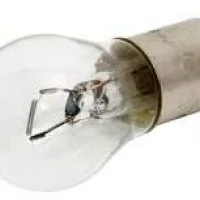
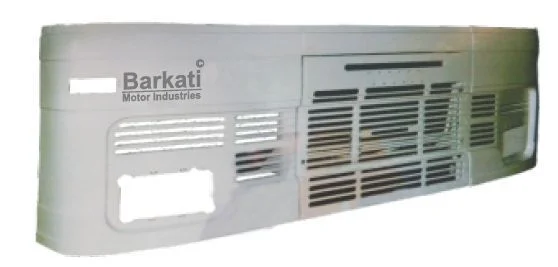
Changzhou Kaifeng Auto Parts Co., Ltd. is based in Changzhou, Jiangsu Province, China and currently lists 19 active products. The catalogue is split between automobile body parts and automobile bulbs, lights & lamps, all recorded under HS chapter 87 (motor vehicle parts) and HS chapter 85 (electrical lighting equipment). Products such as front bumper grills, grille guards and fender brackets are classified under HS code 8708.29, while lighting assemblies for Porsche, BMW and Toyota use HS codes 8512.20, 9405.40 and 9405.41. Each entry specifies the primary polymer or metal material, for example ABS with chrome finish, PP/ABS composites, or POM engineering plastic.
The listed items target a range of vehicle models including Toyota Tacoma, Porsche Cayenne, Mercedes‑Benz W204/W213, BMW F18/F30/F35 and Land Cruiser. Materials are typical automotive‑grade plastics (ABS, polypropylene, polycarbonate, POM) and metal hybrids (steel, aluminum, powder‑coated finishes). The product descriptions also note surface treatments such as electro‑plating, matte or chrome finishes, and the inclusion of lenses, reflectors or mounting brackets where applicable.
Product Range and Specialties of Changzhou Kaifeng Auto Parts Co., Ltd.
The supplier’s catalogue contains front bumper grills for the 2016 Toyota Tacoma (ABS with chrome or matte finish) and plastic composite grills (ABS/PP), a powder‑coated steel/aluminum grille guard for the 2013 Tacoma, and a variety of lighting components such as Porsche Cayenne reflector assemblies (ABS housing with PMMA lens) and BMW fog lights (POM engineering plastic). Typical industry grades for these plastics include UL94 V‑0 flame retardancy, ISO 16750 temperature cycling resistance, and impact strength of 30 kJ/m² for ABS. Automotive lighting parts usually comply with ECE R112 photometric standards and are tested for water ingress (IP5/6).
In the broader market, bumper and fender components are commonly supplied in ABS or PP blends that meet ISO 11439 for impact resistance, while lighting housings often require polycarbonate lenses meeting ISO 10625 for optical clarity. Buyers often look for surface‑treated finishes that meet corrosion‑resistance standards such as ASTM B117 salt‑spray testing. The catalogue’s mix of polymer‑only parts and hybrid metal‑plastic brackets reflects the typical material selection for weight‑reduction and durability in modern vehicles.
Trade and Export Information - Changzhou Kaifeng Auto Parts Co., Ltd.
China remains the world’s largest exporter of automotive aftermarket parts, with the majority of shipments classified under HS 8708.29 for body components and HS 8512.20/9405.40 for lighting assemblies. Export logistics usually involve 20‑foot or 40‑foot containers packed in corrugated cartons, with FOB Shanghai or Ningbo as common Incoterms. Importers in North America, the European Union and the Gulf Cooperation Council frequently request ISO 9001 or IATF 16949 quality management certification, as well as CE marking or RoHS compliance for lighting products. Chinese manufacturers also follow the China Compulsory Certification (CCC) for certain automotive electrical items, although buyers typically verify this before shipment.
Customs authorities in destination markets often inspect HS 8708.29 items for proper labeling of material composition and country of origin, while HS 8512.20 and 9405.40 products may be subject to additional safety testing for photometric performance and electromagnetic compatibility. Buyers should be prepared for documentation such as a commercial invoice, packing list, certificate of origin and, where required, a test report confirming compliance with the relevant ECE or FMVSS standards.
Sourcing from Changzhou Kaifeng Auto Parts Co., Ltd. - Buyer Guidance
When sourcing from this supplier, buyers should request material data sheets that confirm the polymer grade (e.g., ABS grade PA‑66, PP‑EPMD copolymer) and any surface‑treatment specifications. Test reports for impact resistance, UV ageing (ASTM D4325) and flame retardancy (UL94) are standard for body parts, while lighting assemblies should be accompanied by photometric test reports, lens optical clarity data, and compliance certificates such as ECE R112 or FMVSS 108.
Typical minimum order quantities for molded plastic components range from 100 to 500 units, with lead times of 4‑6 weeks after design approval. Samples are usually supplied in single‑piece packaging for verification of fit, finish and material properties before bulk production. Buyers are advised to verify the supplier’s export documentation, confirm the HS code used for customs clearance, and ensure that any required certifications (ISO 9001, IATF 16949, CE, RoHS) are provided either by the supplier or obtained from a third‑party inspection agency.
Frequently Asked Questions About Changzhou Kaifeng Auto Parts Co., Ltd.
What HS codes are used for the bumper and grille products?
Bumper, grille and fender components are classified under HS code 8708.29, with a specific sub‑heading 8708.2940 used for electro‑plated chrome finishes.
Which materials are common for the lighting assemblies?
The lighting items listed use polycarbonate lenses combined with ABS or PP housings, and in one case a POM engineering plastic housing with an aluminum reflector.
What certifications should a buyer request for these auto parts?
Buyers typically request ISO 9001 or IATF 16949 quality system certificates, CE marking for electrical lighting, and RoHS compliance for any material containing restricted substances.
What are the typical packaging and container sizes for these products?
Automotive parts are usually packed in cardboard boxes placed on wooden pallets, allowing shipment in standard 20‑ft or 40‑ft containers. Light‑weight plastic components often occupy 1‑2 cubic meters per 1,000 units.
What is a realistic lead time for a bulk order?
After finalizing drawings and receiving a sample approval, production lead time is generally 4‑6 weeks, plus additional time for container loading and shipping.
Are there specific test reports buyers need for the fog lights and headlamps?
Yes, buyers should request photometric test reports (ECE R112 or FMVSS 108), lens optical clarity data, and water‑ingress ratings (IP5/6) for fog lights and headlamps.
What is the typical minimum order quantity (MOQ) for molded plastic parts?
MOQs for the listed ABS or PP components are usually between 100 and 500 pieces, depending on the size and complexity of the mold.
How can a buyer verify the material composition of the supplied parts?
Buyers should ask for a material data sheet or a certificate of analysis that details polymer grades, any additives, and surface‑treatment processes such as chrome plating or powder coating.




 , China