Berryhill Petroleum And Minerals Corp. Llc — Supplier
About Berryhill Petroleum And Minerals Corp. Llc - Petroleum By Products Supplier in United States
The United States supplier Berryhill Petroleum And Minerals Corp. Llc lists six active petroleum products. Its catalogue includes Aviation Kerosene (JP‑54/Jet A‑1), a Tier 1 refinery blend of D2 diesel, D6 heavy fuel oil and Jet fuels (including EN 5), Mazut M100 compliant with GOST 10585/75, Maya Crude and Venezuela Crude, plus a combined D2/D6/Jet fuel offering. Each product falls under the HS Chapter 27 family for petroleum oils, with refined fuels typically classified under HS 2711 and crude oils under HS 2710. The supplier’s top categories are recorded as Petroleum By Products and Crude Oil, reflecting both refined and unrefined streams. No additional company history or size metrics are provided beyond the six listed items.
Product Range and Specialties of Berryhill Petroleum And Minerals Corp. Llc
Berryhill’s product list covers standard aviation kerosene (Jet A‑1) that meets ASTM D1655 specifications such as a flash point above 38 °C and a freezing point of - 47 °C or lower. The Tier 1 refinery blends include D2 diesel (ASTM D975, sulfur ≤0.5 % m/m) and D6 heavy fuel oil (viscosity 180‑380 cSt at 50 °C, sulfur ≤1.0 %). The EN 5 variant adds an EN‑590‑type diesel specification for European markets. Mazut M100, referenced by GOST 10585/75, is a heavy residual fuel oil with typical viscosity 100‑200 cSt at 50 °C and sulfur content up to 3.5 %. Maya and Venezuela Crude are unrefined grades where buyers usually evaluate API gravity (e.g., 30‑35° API) and sulfur levels (0.5‑1.5 %). These grades correspond to the common HS 2710 classification for crude petroleum oils.
Trade and Export Information - Berryhill Petroleum And Minerals Corp. Llc
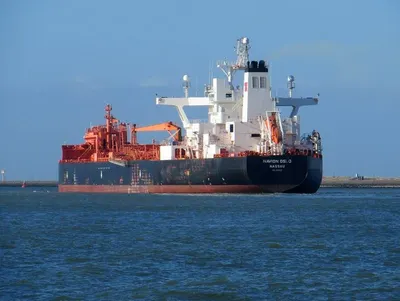
The United States is a major exporter of both refined petroleum fuels and crude oil, with shipments traditionally directed to Europe, East Asia, and the Middle East. HS 2710 and HS 2711 codes are routinely examined by customs authorities, and importers often require API certification, ISO 9001 quality management evidence, and third‑party lab analysis such as SGS or Bureau Veritas reports. Bulk shipments are typically loaded onto ocean tankers or ISO tanks, with standard Incoterms of FOB or CIF used for long‑haul contracts. Export compliance includes MARPOL tanker regulations, EPA reporting for sulfur content, and, where applicable, adherence to the U.S. Department of Commerce’s Export Administration Regulations. Buyers usually arrange pre‑shipment inspection (PSI) under the destination country’s customs authority to verify product grade and volume.
Sourcing from Berryhill Petroleum And Minerals Corp. Llc - Buyer Guidance
When sourcing from Berryhill, buyers should request a current Certificate of Analysis that details flash point, freezing point, sulfur, viscosity, and API gravity for each fuel. For refined products, a copy of the ASTM or EN standard compliance sheet and any API‑Q1 or API‑Q2 audit reports are typical verification documents. Crude oil purchases normally require a basic sediment‑water‑removal (BSW) test result and a declaration of sulfur and metal content. It is advisable to obtain a sample in a 200 L ISO tank or 20‑ft container for independent testing before finalizing volume contracts. Clarify packaging (bulk tanker vs. ISO tank), loading port, and Incoterm (FOB, CIF) to align logistics and insurance responsibilities.
Frequently Asked Questions About Berryhill Petroleum And Minerals Corp. Llc
What refined fuel grades does Berryhill list?
The catalogue includes Aviation Kerosene (JP‑54/Jet A‑1), D2 diesel meeting ASTM D975, D6 heavy fuel oil, and an EN 5 diesel variant, all classified under HS 2711.
Are there specifications available for Mazut M100?
Mazut M100 is described according to GOST 10585/75, with typical viscosity of 100‑200 cSt at 50 °C and sulfur up to 3.5 % m/m; it falls under HS 2711.
How can I verify the quality of Maya or Venezuela Crude?
Request a Certificate of Analysis showing API gravity, sulfur content, and basic BSW test results; buyers also often ask for an API‑Q1 audit report for crude shipments.
What documentation should I ask for before placing an order?
Ask for the latest COA, ASTM or EN compliance certificates, any API quality management certificates, and a pre‑shipment inspection report accepted by the destination customs authority.
What are the typical packaging and shipping methods?
Bulk petroleum products are usually shipped in ocean tankers or ISO tanks; smaller volumes may be packed in 20‑ft or 40‑ft containers with appropriate UN‑approved drums for additives.
Which Incoterms are commonly used for these exports?
FOB (Free on Board) and CIF (Cost, Insurance, Freight) are the standard Incoterms employed by U.S. exporters of petroleum fuels and crude oil.
What are the usual minimum order quantities and lead times?
Lead times depend on vessel scheduling but generally range from 2 to 4 weeks after contract signing; minimum volumes are typically defined by the tanker size, often starting at 5 000 MT for bulk shipments.
Which markets import these U.S. petroleum products?
European refining hubs, East Asian petrochemical complexes, and Middle‑Eastern power generators are the primary import destinations for U.S. refined fuels and crude oil.




 , United States