Autolinkcnc Technology — Manufacturer & Wholesale Supplier
About Autolinkcnc Technology - CNC Wire Bending and Spring Forming Machinery Supplier in China
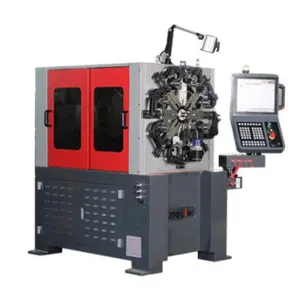
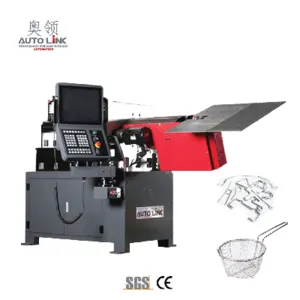
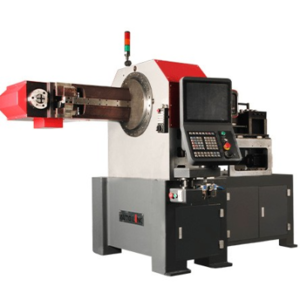
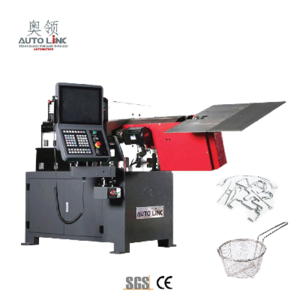
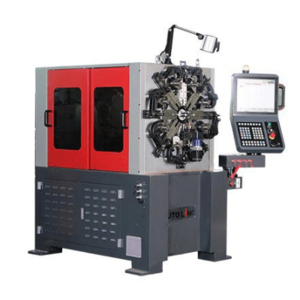
Autolinkcnc Technology is a machinery supplier based in Dongguan, Guangdong Province, China, with an active catalogue of 10 products concentrated in CNC wire bending, wire forming, and spring making equipment. The supplier's listings cover 2D and 3D wire bending machines, CNC spring forming machines, tension and torsion spring making machines, and dedicated wire hook and hanger production equipment, all of which fall within HS chapters 8462 (machine tools for forging, bending, folding, straightening, or flattening metal) and 8463 (other machine tools for working metal without removing material). Materials referenced across the catalogue are steel, iron, and steel/iron wire, consistent with the wire diameters and tensile grades typically processed by this class of equipment. The supplier is positioned in Dongguan, a manufacturing hub within the Pearl River Delta that hosts a dense cluster of metalworking machinery producers and component suppliers.
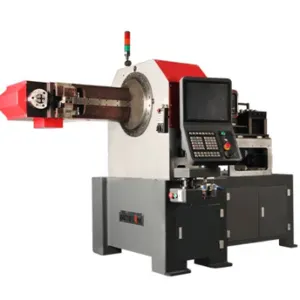
The product set is built around numerically controlled wire forming, with axis counts ranging from standard 2D configurations to a 12-axis CNC wire forming model, indicating capability spans for both simple hook and hanger work and complex multi-bend geometries. Categories listed alongside the machinery include Rope Making Machines, Welding and Wire Mesh Machinery, Welding Wires and Supplies, Industrial Wires and Cables, Extrusion Machines, Metal Working Machinery, and Wire Mesh, situating the supplier within the broader Chinese metalworking and wire products ecosystem. Dongguan's logistics infrastructure, including proximity to Shenzhen, Guangzhou, and the Yantian and Nansha container terminals, supports export-oriented machinery shipments to overseas buyers.
Product Range and Specialties of Autolinkcnc Technology
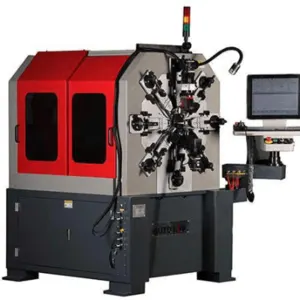
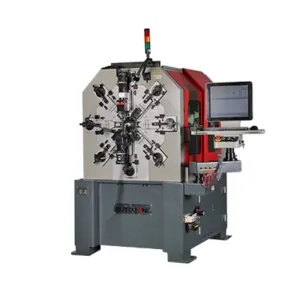
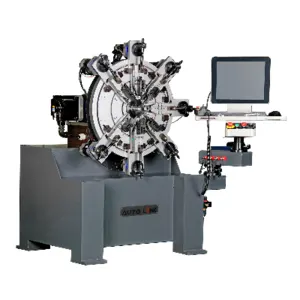
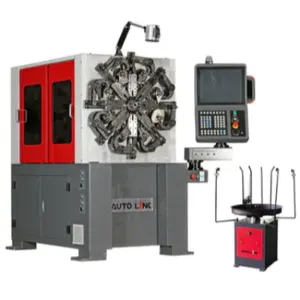
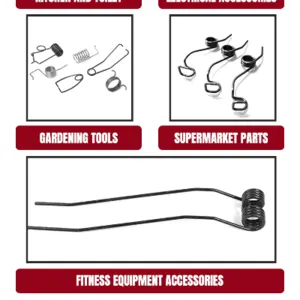
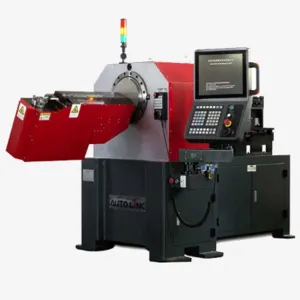
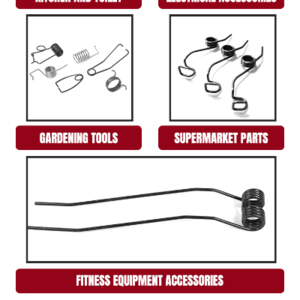
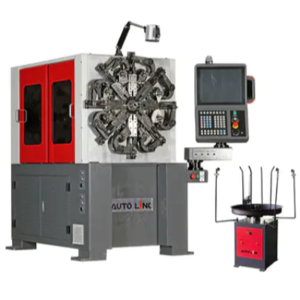
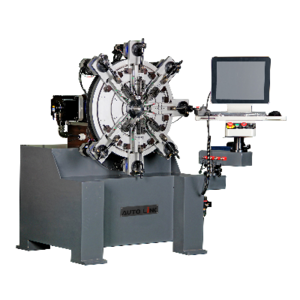
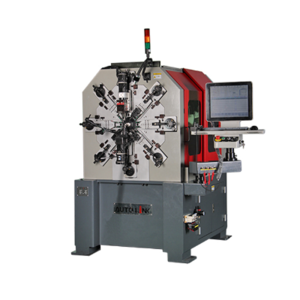
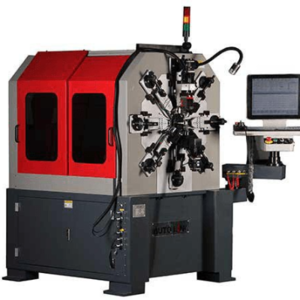
The active catalogue comprises 10 CNC machine models: a CNC Wire Bending Machine (HS 8462.31), a 3D CNC Wire Bending Machine (HS 8462.29), a 3D Wire Bending Machine for sale (HS 8462.21), a Fully Automated 2D CNC Wire Bending Machine (HS 8462.29), a 3D Wire Forming and Torsion Spring Making Machine (HS 8462.21), an Extension CNC Spring Forming Machine (HS 8462.31), a Tension Spring Making Machine (HS 8463.30), a Wire Hook Hanger Making Machine (HS 8462.21), a general CNC Wire Forming Machine (HS 8462.29), and a 12 Axis CNC Wire Forming Machine (HS 8462.31). All ten machines are designed to process steel, iron, or steel/iron wire, the standard feedstock for industrial spring, hook, and formed-wire component production.
In the CNC wire forming category, typical buyer specifications include wire diameter ranges commonly spanning 0.3 mm to 16 mm, axis counts from 2 to 12, servo-driven feed and bend heads, and production rates expressed in pieces per minute that vary with part complexity. Spring making machines in this segment are generally evaluated on wire tensile range (often up to 2000 MPa for music wire and stainless grades), maximum outside diameter, and the ability to handle stainless steel wire, carbon steel wire, and spring steel wire per standards such as GB/T 4357 (carbon steel wire for springs), ASTM A228 (music steel wire), and JIS G3521. Wire mesh and welding wire categories, where the supplier also lists related equipment, are typically specified against ISO 9001 quality management, with mesh counts, wire gauge (SWG), and aperture dimensions in mm as the primary buyer-facing parameters.
Trade and Export Information - Autolinkcnc Technology
Chinese exporters of CNC wire bending and spring forming machinery typically ship to industrial buyers in Southeast Asia (Vietnam, Indonesia, India, Thailand), the Middle East (Turkey, UAE, Saudi Arabia), Africa (Egypt, Nigeria, South Africa), Eastern Europe, and Latin America (Mexico, Brazil), with the EU and North America as additional destinations for higher-axis precision models. The relevant HS code families for this machinery class are 8462.21 (numerically controlled bending, folding, straightening, or flattening machines), 8462.29 (other bending, folding, and straightening machines), 8462.31 (numerically controlled shearing machines, including combined punching and shearing), and 8463.30 (machine tools for working wire without removing material). For the related welding wire and wire mesh categories, HS chapters 8311 (welding electrodes and similar products) and 7314 (cloth, grill, netting, and fencing of iron or steel wire) are commonly referenced.
For this category of capital equipment, buyers typically require CE marking for the European market, UL or CSA certification for North America, and conformity to GB standards for Chinese-domestic acceptance, alongside ISO 9001 quality management documentation. Machinery in this class is generally packed in wooden crates or plywood cases with moisture barriers, desiccant, and steel banding, and is typically quoted on FOB Shenzhen or FOB Guangzhou Incoterms, with CIF deliveries to the buyer's port of discharge also common. Sea freight in 20 ft or 40 ft containers is the standard mode for these machines, with lead times typically ranging from 30 to 60 days for custom-configured units and shorter for standard models. Pre-shipment inspection (PSI) by third-party agencies such as SGS, Bureau Veritas, or TUV is routinely requested by overseas buyers of Chinese metalworking machinery.
Sourcing from Autolinkcnc Technology - Buyer Guidance
Buyers evaluating Autolinkcnc Technology should request the specific wire diameter range (in mm), maximum axis count, servo motor and CNC controller brand (such as Yaskawa, Delta, or Mitsubishi), and production rate in pieces per minute for each machine model. Standard documents to request include the bill of materials, electrical schematics, operation manual in the buyer's language, CE or equivalent conformity certificate, and a factory acceptance test (FAT) video showing the machine forming the buyer's specific part geometry. For spring forming equipment, ask for confirmation of compatible wire tensile strengths and the maximum spring outside diameter, and request sample springs produced on the specific machine being quoted.
Before issuing a purchase order, buyers should confirm the machine's total connected power, air supply requirements, machine footprint and weight (to plan container loading and foundation work), and the scope of installation, commissioning, and operator training. For wire mesh and welding wire categories, buyers typically request mill test certificates (MTC) per EN 10204 3.1, mesh aperture tolerance sheets, and weld shear strength data. Given the capital equipment nature of these machines, a 30% deposit with balance against copy of B/L is a common payment structure in this segment, and buyers should clarify warranty terms (commonly 12 months), spare parts inclusion, and the supplier's English-language technical support capacity before finalizing the order.
Frequently Asked Questions About Autolinkcnc Technology
What types of machines does Autolinkcnc Technology manufacture?
The supplier manufactures CNC wire bending machines, 2D and 3D wire forming machines, spring making machines (tension and torsion), wire hook and hanger making machines, and a 12-axis CNC wire forming machine, all designed to process steel, iron, and steel/iron wire.
Which HS code families apply to the machinery in this catalogue?
The machines are classified under HS 8462.21, 8462.29, and 8462.31 for numerically controlled and other bending, folding, and forming machines, and HS 8463.30 for machines working wire without removing material.
What wire diameter ranges and materials can these machines typically process?
Machines in this category commonly process wire diameters from 0.3 mm to 16 mm in carbon steel, stainless steel, and spring steel grades, with tensile strengths typically up to 2000 MPa for music wire per ASTM A228.
Which certifications should I request when importing this machinery?
Buyers should request CE marking for the European market, ISO 9001 quality management documentation, and a factory acceptance test report, with third-party pre-shipment inspection by SGS, Bureau Veritas, or TUV as standard practice.
What is the typical lead time and shipping method for these machines?
Standard models typically ship within 30 to 45 days, while custom-configured units may require 45 to 60 days, with sea freight in 20 ft or 40 ft containers from Shenzhen or Guangzhou being the standard logistics mode.
What documents should accompany the machine shipment?
Typical shipping documents include the commercial invoice, packing list, bill of lading, certificate of origin, CE or conformity certificate, operation and maintenance manuals, and electrical schematics.
What payment terms are standard for this equipment category?
A 30% deposit by T/T with 70% balance against copy of B/L is typical, though L/C at sight is also accepted by many Chinese machinery exporters for first-time orders.
Can the supplier provide installation and training support?
Buyers should confirm in writing whether the supplier includes on-site installation, commissioning, and operator training, or whether remote video guidance and English-language technical support are provided as the standard service package.




 Dongguan, China