AR Instrumed — Verified Supplier
About AR Instrumed - Dental Equipments & Materials Supplier in Pakistan
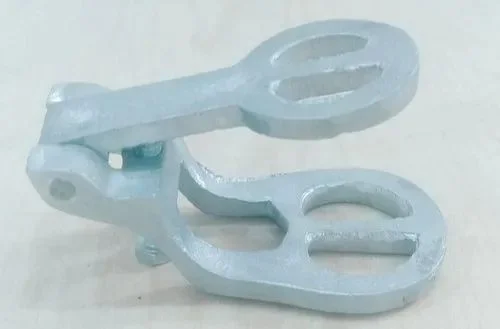
Pakistan‑based AR Instrumed lists seven distinct dental instrument products in its catalogue. All items fall under the primary category Dental Equipments & Materials and are recorded with the HS sub‑heading 9018.49, which covers surgical and dental instruments. The product set includes Blue Plasma Gracey Curettes, a 9‑piece Extraction & Dental Instruments set, Blue Plasma Periodontal Instruments, two 5‑piece Osteotome sets (convex curved and convex straight), Rubber Dam Punches, and a 3‑piece Dental Basic Examination set. Materials are described as medical‑grade stainless steel, with several items featuring a titanium‑nitride based blue plasma PVD coating, and the stainless grades are noted as AISI 420 or 440C where specified. The catalogue therefore provides a focused but technically diverse range of hand‑held dental tools for clinical use.
Product Range and Specialties of AR Instrumed
The catalogue enumerates seven products, each classified under HS code 9018.49 and made from surgical‑grade stainless steel, with coating variations such as blue plasma titanium‑nitride. In the dental instrument market, AISI 420 and 440C steels are standard for their high corrosion resistance and ability to retain sharp edges after repeated sterilization cycles. Typical industry grades for curettes and forceps meet ISO 13485 material requirements and often conform to ASTM F2129 for dimensional tolerance. Coated instruments such as the Blue Plasma series usually carry a coating thickness of 1 - 2 µm to improve wear resistance and provide a distinctive color for instrument identification. Packaging for these items commonly uses sterilized blister packs or sealed instrument trays, which are then palletized for 20‑ft or 40‑ft container loads.
Trade and Export Information - AR Instrumed
Dental instruments from Pakistan are generally exported to markets in the Middle East, Africa, Europe and North America, where hospitals and dental clinics source high‑precision hand tools. The HS sub‑heading 9018.49 is monitored for compliance with safety standards; buyers typically require CE marking for EU entry and FDA registration for U.S. imports, alongside ISO 13485 certification of the manufacturing quality system. Pakistani exporters often ship on FOB Karachi or CIF Dubai terms, using temperature‑controlled containers when instruments are pre‑sterilized. Customs authorities may request material test reports, coating adhesion data and a declaration of compliance with the Medical Devices Regulation of the destination country. Pakistan’s medical device sector has been expanding its share in global dental instrument trade, benefitting from established logistics corridors and a growing network of freight forwarders familiar with HS 9018 procedures.
Sourcing from AR Instrumed - Buyer Guidance
When sourcing from AR Instrumed, buyers should request the latest material certification for the stainless steel grades (AISI 420 or 440C) and a coating report confirming titanium‑nitride thickness and hardness. A copy of the supplier’s ISO 13485 audit report, or equivalent quality‑management documentation, helps verify that production meets internationally recognised medical‑device standards. Test reports for corrosion resistance, hardness (typically ≥ 200 HB) and sterilization validation (e.g., steam autoclave cycles) are standard documents to ask for before confirming a purchase. Samples packaged in the same sterile blister or tray format as the bulk order allow verification of dimensions, edge sharpness and coating integrity. Confirming the packaging material’s barrier properties and the planned container loading plan (e.g., 20‑ft container capacity of ~ 1,200 units) reduces risk of damage during transit.
Frequently Asked Questions About AR Instrumed
Which material certifications are typically required for these dental instruments?
Buyers normally request stainless‑steel grade certificates for AISI 420 or 440C and a coating verification report for the titanium‑nitride PVD layer, showing thickness and hardness values.
What quality‑management standards should I verify before ordering?
Confirm that the supplier holds an ISO 13485 quality‑management system certificate, or that they can provide a recent audit report, as this is the common benchmark for medical‑device manufacturers.
Are there specific regulatory marks I need to see for export to the EU or U.S.?
For EU destinations, CE marking on the instrument is typically required; for the United States, FDA 510(k) clearance or registration is the standard regulatory entry point.
What is a typical minimum order quantity for the instrument sets?
Many manufacturers set a MOQ of one full set per item, but larger bulk orders (e.g., 100 sets) are common to optimise container loading and reduce per‑unit shipping costs.
How are the instruments usually packaged for international shipment?
Standard practice is sterile blister packing or sealed instrument trays, which are then boxed and palletised for sea freight, often in 20‑ft or 40‑ft containers.
What lead times should I expect for production and shipping?
Lead times generally range from 4 to 6 weeks for production, plus additional time for container loading and transit, depending on the chosen Incoterm (FOB or CIF).
Which documents should I request before finalising the purchase?
Ask for the material test report, coating certification, ISO 13485 compliance certificate, CE or FDA documentation, and a packing list indicating container dimensions and weight.




 , Pakistan