Wuhan Linkage Track Equipment Co., Ltd — Supplier
About Wuhan Linkage Track Equipment Co., Ltd - Locomotive / Railway Equipments & Components Supplier in China
Wuhan Linkage Track Equipment Co., Ltd is based in Wuhan, Hubei province, China and currently lists 113 active products across its catalogue. The company groups its offerings under categories such as Locomotive / Railway Equipments & Components, Tools & Instruments, Railway Fittings, Hydraulic Equipments, Industrial Machinery, Clamps, Industrial Valves & Gauges, and Drilling Machines & Tools. Each product aligns with recognised HS chapters for railway maintenance equipment (e.g., chapter 8425) and hand tools (e.g., chapter 8465). The supplier’s catalogue includes both powered and manual devices used throughout railway construction and maintenance operations.
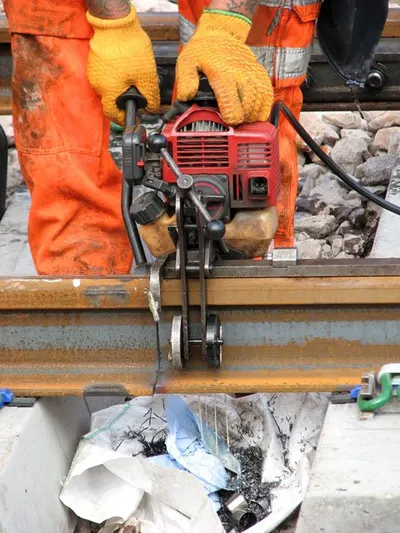
The listed items range from portable digital rolling track gauges and lithium‑battery rail cutting machines to hydraulic rail tamping machines and ultrasonic flaw detectors. Additional products include rail grinding machines, impact wrenches, rail turnouts, and various clamps and fixing devices. These goods are typically classified under HS codes for rail track maintenance tools and for industrial hand tools, reflecting their functional purpose rather than a single unified HS number. The breadth of the catalogue demonstrates coverage of most standard maintenance tasks on standard gauge railways.
Product Range and Specialties of Wuhan Linkage Track Equipment Co., Ltd
The catalogue features specific models such as the Portable Digital Rolling Track Gauge, NLB‑300 Rail Impact Wrench, NQG‑5.1 Abrasive Rail Cutting Machine, Li‑Battery Electric Railway Grinding Machine, Hydraulic Rail Tamping Machine and Automatic Remote Control Rail Tamping Machine. Industry practice for these categories includes ISO 9001 quality management, CE marking for electrical safety, and compliance with EN standards such as EN 1337 for rail grinding and EN 15620 for tamping equipment. Typical specifications include cutting disc diameters of 300‑600 mm, grinding wheel speeds up to 2 800 rpm, hydraulic pressures of 150‑250 bar for tampers, and battery voltages of 24 V for portable electric units. Materials used are high‑strength steel for clamps, wear‑resistant carbides for abrasive discs, and hardened alloy for impact wrench sockets, matching the grades expected by railway operators worldwide.
Trade and Export Information - Wuhan Linkage Track Equipment Co., Ltd
China is a major exporter of railway maintenance machinery, supplying equipment to Southeast Asia, Africa, the Middle East and Latin America. Products such as rail grinders and tamping machines are commonly shipped under HS chapter 8425, while hand tools and impact wrenches fall under HS chapter 8465. Buyers typically request CE certificates, ISO 9001 compliance, and any relevant EN test reports before shipment. Standard export packaging includes steel‑reinforced wooden crates or ISO‑standard pallets, loaded into 20‑ft or 40‑ft containers, with Incoterms FOB or CIF frequently used. Chinese export regulations require a Declaration of Conformity for CE‑marked items and, for battery‑powered equipment, a safety data sheet for lithium batteries as per UN 38.3.
Sourcing from Wuhan Linkage Track Equipment Co., Ltd - Buyer Guidance
When sourcing from this supplier, buyers should ask for product data sheets that detail power ratings, hydraulic pressure ranges, battery capacity and safety certifications. Request the CE Declaration of Conformity, ISO 9001 certificate and any applicable EN test reports (e.g., EN 1337 for grinders) to verify compliance with international railway standards such as UIC or AREMA. Verify packaging dimensions against container capacities and confirm that the supplier can provide the required phytosanitary certification for wood packaging if wooden pallets are used.
Frequently Asked Questions About Wuhan Linkage Track Equipment Co., Ltd
What types of rail cutting machines does the supplier offer?
The catalogue lists a Lithium Battery Rail Cutting Machine, an NQG‑5.1 Abrasive Rail Cutting Machine, a Lightweight Abrasive Rail Saw Disc Cutter and a standard Rail Cutting Machine. These machines are designed for standard gauge rails up to 1 435 mm and use disc diameters between 300 mm and 600 mm.
Which certifications should a buyer verify for the grinding and tamping equipment?
Buyers should request CE conformity, ISO 9001 quality‑management certification and any relevant EN standards such as EN 1337 for rail grinders or EN 15620 for tamping machines. Additional test reports on vibration, noise and hydraulic performance are commonly required.
What is the typical power source for the portable rail tools?
Portable tools are offered in both lithium‑ion battery versions (typically 24 V) and internal‑combustion versions that run on gasoline or diesel. Power outputs range from about 1.5 kW for handheld impact wrenches to 5 kW for larger grinding units.
How are the rail inspection devices packaged for export?
Ultrasonic flaw detectors and digital gauges are packed in reinforced wooden crates with foam inserts, sized to fit a standard 20‑ft container. The packaging complies with ISPM 15 wood‑packaging standards for international shipping.
What are the common lead times for the hydraulic rail tamping machines?
Standard lead time is 30‑45 days after order confirmation, with an optional expedited schedule of 15‑20 days for larger orders. Shipping is typically arranged in 40‑ft containers under FOB or CIF terms.
Which HS codes apply to the supplier’s railway track components?
Rail maintenance equipment such as tamping machines and rail grinders falls under HS chapter 8425, while hand tools like impact wrenches are classified under HS chapter 8465. Abrasive discs and cutting accessories are listed under HS chapter 6805.
What documentation is needed to clear customs in Europe for these products?
Importers generally need a commercial invoice, packing list, CE Declaration of Conformity and any applicable EN test reports (e.g., EN 1337 for grinders). Battery‑powered units also require a safety data sheet for the lithium batteries.
Are there any size or weight limits for container loading?
Most equipment weighs between 50 kg for handheld tools and 800 kg for hydraulic tamping machines, fitting comfortably within standard 20‑ft or 40‑ft containers. Load‑distribution guidelines follow IEC 60079 when lithium batteries are present.




 , China