RAQ Manufacturer&Traders — Verified Manufacturer & Wholesale Supplier
About RAQ Manufacturer&Traders - Sports Balls Supplier in Australia
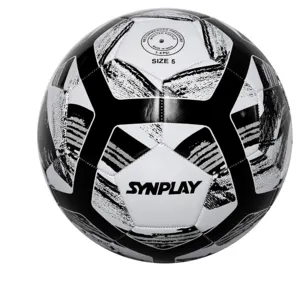
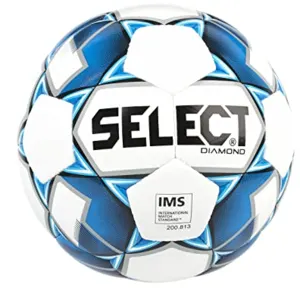
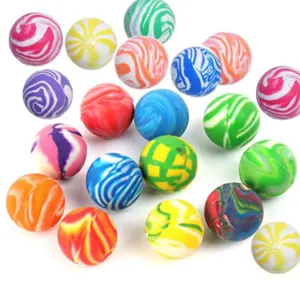
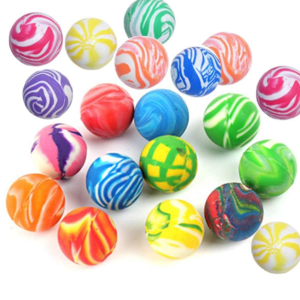
Based in Brisbane, Australia, RAQ Manufacturer&Traders lists five distinct soccer‑ball products in its catalogue. The active product count of five includes machine‑sewn and hand‑sewn variants that are classified under HS chapter 95.06.62, the international tariff heading for sports balls. Each entry specifies the outer material - ranging from PU or PVC leather to synthetic leather/TPU - and the type of bladder, such as butyl, latex or rubber. The catalogue also records a mini ball with HS code 9506.62.00 that uses a leather or synthetic cover over a rubber or cork core. All products are described using the material and construction details supplied by the supplier.
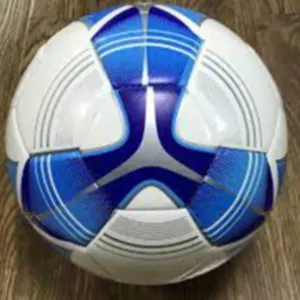
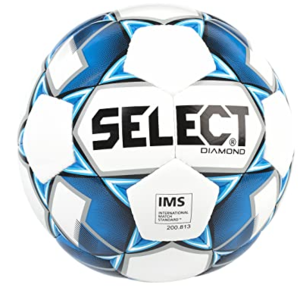
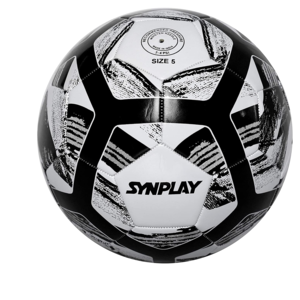
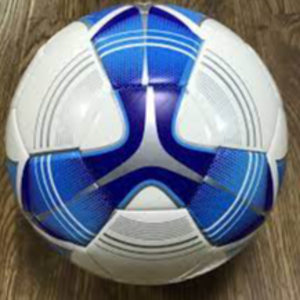
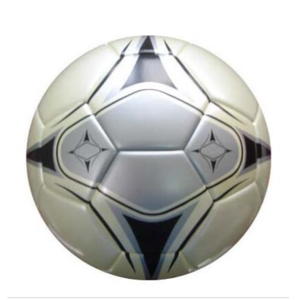
The listed items cover a machine‑sewn soccer ball, a hand‑sewn match/club ball, a hand‑sewn training/club ball (named MERCURIO), and a machine‑sewn model called STREAM, each falling under the same HS code 9506.62. The material descriptions include PU leather outer cover with butyl rubber bladder, synthetic leather/TPU cover with latex or butyl bladder, and premium leather or PU synthetic leather for hand‑sewn versions. No additional categories such as rugby or volleyball balls are detailed in the current product list, limiting the supplier’s published range to these five soccer‑ball types.
Product Range and Specialties of RAQ Manufacturer&Traders
Soccer balls exported from Australia are typically produced in size 5 for senior competition, with a circumference of 68 - 70 cm, weight between 410 g and 450 g, and a pressure range of 0.6 - 1.1 bar. Common quality standards include FIFA Quality Pro, FIFA Quality, and the ASTM F2379 test method for bounce, roundness and water absorption. Materials most often used are polyurethane (PU) or PVC leather for the outer panels, and butyl or latex bladders for pressure retention. Hand‑sewn balls usually feature 32 panels stitched together, while machine‑sewn models employ bonded or thermal‑fusion techniques that meet the same dimensional tolerances. Buyers frequently request certification that the balls comply with the FIFA Quality Programme or ISO 9001 quality‑management system.
Standard export packaging for these balls consists of individual cardboard boxes, typically stacked on wooden pallets that fill a 20‑ft container with 1,200 - 1,600 units depending on box dimensions. For mini balls, packaging may be reduced to smaller cartons, allowing higher unit density per container. Shipping terms commonly use FOB Brisbane Port or CIF destination, with the goods subject to inspection under the Australian Quarantine and Inspection Service (AQIS) for any bio‑hazard risk.
Trade and Export Information - RAQ Manufacturer&Traders
Australia’s sports‑ball exports are directed mainly toward Europe (Germany, Spain, United Kingdom), North America (United States, Canada), and Asian markets such as Japan, South Korea and the United Arab Emirates, where football equipment is in steady demand. The HS code 9506.62 places the products in the “Sports goods; balls” chapter, which is monitored by customs authorities for compliance with safety and material standards. Importers usually request CE marking for the EU, and may also ask for ISO 9001 or FIFA Quality certificates to verify performance. Australian exporters often work with freight forwarders experienced in handling 20‑ft and 40‑ft containers, and the goods must meet the Australian Export Control and biosecurity regulations before departure.
Typical certifications required by buyers include a test report for bounce height (ASTM F2379), water absorption, and shape retention, as well as a declaration of conformity to the FIFA Quality Programme. While RAQ Manufacturer&Traders does not list specific certifications in its provided data, buyers should request copies of any ISO 9001 quality‑management certificates, CE declarations, or FIFA test results that the supplier may hold. Compliance with the International Organization for Standardization (ISO) and the International Standards Organization for sports equipment (ISO 18362) is also common in this segment.
Sourcing from RAQ Manufacturer&Traders - Buyer Guidance
Prospective buyers should obtain a detailed product specification sheet that confirms the outer material (PU, PVC, synthetic leather or TPU), the bladder type (butyl, latex or rubber), and the exact size and weight of each ball model. Because the catalogue lists the same HS code (9506.62) for four of the five items, it is advisable to verify the correct sub‑heading and any applicable duty rates with the freight forwarder. Requesting a pre‑shipment sample and an independent laboratory test report covering bounce, pressure loss, and water absorption will help confirm compliance with FIFA or ASTM standards. Typical minimum order quantities for machine‑sewn balls range from 500 units to 1,000 units per model, with lead times of 30 - 45 days after order confirmation, subject to production scheduling and export clearance.
Buyers should also confirm the packaging format - individual cardboard boxes placed on standard Euro pallets - and the incoterm to be used, such as FOB Brisbane or CIF destination port. Documentation to request includes the commercial invoice, packing list, certificate of origin, and any phytosanitary or quarantine certificates required by the importing country. Verifying that the supplier can provide CE or FIFA certification, or at least a commitment to obtain them, reduces the risk of customs delays.
Frequently Asked Questions About RAQ Manufacturer&Traders
What soccer‑ball models are listed in RAQ Manufacturer&Traders’ catalogue?
The catalogue lists five models: a machine‑sewn soccer ball, a hand‑sewn match/club ball, a hand‑sewn training/club ball (MERCURIO), a machine‑sewn STREAM ball, and a mini ball with a leather or synthetic cover.
Which HS code is applied to the listed soccer balls?
Four of the five products use HS code 9506.62 (Sports balls), while the mini ball is recorded under HS code 9506.62.00.
What outer materials and bladder types are specified for these balls?
Outer materials include PU or PVC leather, synthetic leather, TPU, and premium leather. Bladders are described as butyl rubber, latex, or rubber/cork core for the mini ball.
What certifications should a buyer request for these products?
Buyers typically request CE marking for EU shipments, ISO 9001 quality‑management certification, and FIFA Quality Programme test reports or ASTM F2379 bounce test results to verify performance.
How are the balls usually packaged for export?
Each ball is packed in an individual cardboard box; boxes are placed on standard Euro pallets, allowing a 20‑ft container to hold roughly 1,200 - 1,600 units depending on box size.
What are common minimum order quantities and lead times?
Machine‑sewn soccer balls generally have a minimum order of 500 units per model, with lead times of 30 to 45 days after order confirmation. Mini balls may have similar or slightly lower MOQ.
How can a buyer obtain a sample or test report?
A buyer should request a pre‑shipment sample together with an independent laboratory report covering bounce height, pressure retention, water absorption, and size/weight compliance.
Which regions most often import Australian soccer balls?
Typical import regions include Europe (e.g., Germany, Spain, United Kingdom), North America (United States, Canada) and Asia (Japan, South Korea, United Arab Emirates).




 , Australia