PCOS Korea — Supplier
About PCOS Korea - Traffic Lights and Signals Supplier in South Korea (Republic Of Korea)
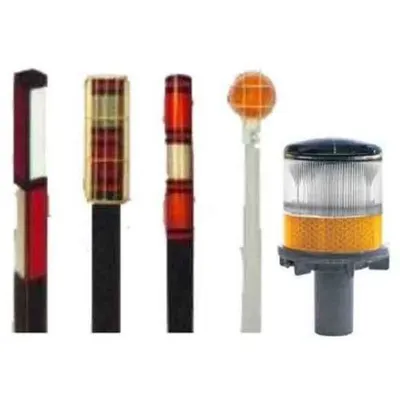
PCOS Korea is based in South Korea (Republic Of Korea) and currently lists five active products in its catalogue. The company focuses on traffic safety equipment, specifically traffic lights and signals as well as traffic safety devices. Its product list includes a folding type delineator, honeycomb folding type delineator, reflectors, honeycomb reflector, and a honeycomb folding type delineator variant. The catalogue groups these items under the broader categories of traffic lights and signals and traffic safety devices, aligning with standard HS chapter classifications for such equipment. All items are intended for road and highway safety applications.
The folding type delineator and honeycomb variants are designed as portable, retroreflective markers for temporary lane guidance. Reflectors are supplied as passive devices that return light to vehicle headlights, while honeycomb reflectors incorporate a cellular structure to increase surface area. These products are typically manufactured from high‑impact polycarbonate or aluminum alloy, materials that meet durability requirements for outdoor exposure. The catalogue does not specify dimensions, but similar market items range from 300 mm to 900 mm in length and comply with standards such as EN 12368 for road safety reflectors. The supplier’s five‑product portfolio reflects a focused offering within the traffic safety segment.
Product Range and Specialties of PCOS Korea
PCOS Korea’s catalogue covers folding type delineators, honeycomb folding delineators, standard reflectors and honeycomb reflectors. In the traffic safety market, folding delineators are usually produced from UV‑stabilised polycarbonate or aluminum, offering retroreflective grades from Class 1 (low) to Class 3 (high) as defined by EN 12368. Honeycomb designs increase surface area, improving visibility and allowing larger retroreflective coefficients, typically above 300 cd·s/m². Passive reflectors are commonly supplied in round or panel shapes, calibrated to meet a minimum retroreflectivity of 200 cd·s/m² for Class 2 applications. Buyers often request specifications such as luminous intensity, impact resistance (e.g., 30 J drop test), and colour‑coded mounting brackets. Packaging generally involves reinforced cardboard boxes or wooden crates, with each crate holding 200‑300 units depending on size, and pallets prepared for 20‑ft or 40‑ft container loading.
Trade and Export Information - PCOS Korea
South Korea is a significant exporter of traffic safety equipment, delivering products to Southeast Asia, the Middle East, and European markets. Portable traffic delineators and passive reflectors are typically classified under HS chapter 85 for electrical traffic devices and chapter 83 for metal goods, though exact codes vary by product type. Importers commonly require CE marking, compliance with EN 12368 or ISO 22120, and documentation of retroreflectivity performance. Export shipments from South Korea often use FOB or CIF Incoterms, with goods packed on standard 20‑ft or 40‑ft containers and secured on wooden pallets. The country’s logistics infrastructure supports efficient sea freight from major ports such as Busan, facilitating timely delivery to global buyers.
Sourcing from PCOS Korea - Buyer Guidance
When sourcing from PCOS Korea, request a detailed product data sheet that includes material composition, retroreflectivity class, dimensions, and impact‑resistance test results. Buyers should also ask for CE test reports and, where applicable, ISO 9001 quality‑management certification to verify compliance with international safety standards. Verifying sample units for colour, mounting hardware, and reflective performance before full‑scale ordering helps confirm that the products meet the buyer’s project specifications.
Frequently Asked Questions About PCOS Korea
What types of traffic delineators does PCOS Korea offer?
The catalogue lists a folding type delineator, a honeycomb folding type delineator, and a honeycomb folding type delineator variant. All are portable, retroreflective markers used for temporary lane or roadwork guidance.
Are the reflectors passive or illuminated?
The listed reflectors are passive devices that rely on vehicle headlights for illumination. They are designed to meet retroreflectivity standards such as EN 12368.
Which certifications should a buyer request for these products?
Buyers typically request CE marking, compliance with EN 12368 for reflectors, and ISO 9001 quality‑management documentation. Additional test reports for retroreflectivity and impact resistance are common.
What is the typical minimum order quantity (MOQ) for the delineators?
Industry practice for portable traffic markers is an MOQ of 500 units per model, though exact figures depend on packaging and shipment size. Buyers should confirm the MOQ directly with the supplier.
What packaging format is used for shipment?
Products are usually packed in reinforced cardboard boxes or wooden crates, with each crate holding 200‑300 units depending on size. Palletization follows standard 20‑ft or 40‑ft container loading practices.
Which Incoterms are most commonly used for exporting these items from South Korea?
Exporters of traffic safety devices from South Korea frequently use FOB (Free on Board) or CIF (Cost, Insurance, Freight) terms, allowing buyers to arrange onward transport. The choice depends on the buyer’s preferred logistics arrangement.
What lead time can a buyer expect after order confirmation?
Typical production and preparation lead times for these metal or polymer markers range from four to six weeks. Lead time may extend if custom colours or logo engraving are requested.
How can a buyer verify product compliance before shipment?
Request a product data sheet, CE test report, and retroreflectivity measurement results. Independent third‑party inspection reports can also be arranged to confirm conformity with relevant standards.




 , South Korea (Republic Of Korea)