Nutrichfoods — Verified Supplier
About Nutrichfoods - Agricultural Commodities Supplier in India
Nutrichfoods is an India-based supplier listing 5 active products across five distinct agricultural commodity categories: cashew nuts, wheat, basmati rice, desiccated coconut, and red chilli. The catalogue spans both edible nuts and dry fruits (raw cashew nuts), cereal grains (wheat, basmati rice), coconut derivatives (desiccated coconut), and spice crops (red chilli), giving the supplier a multi-commodity footprint within India's agri-export trade. India is among the world's largest producers and processors of cashew kernels, basmati rice, and a range of spices, and these five categories are core staples in the country's agricultural export basket. The single HS code explicitly paired in the catalogue is 1006.30, which covers semi-milled or wholly milled rice and is the chapter used for the Sugandha Basmati Rice line.
The supplier's listed items map to several different HS chapters: cashew nuts typically fall under chapter 0801, wheat under 1001, rice under 1006, desiccated coconut under 0801 (if sweetened) or 0801/0802 depending on preparation, and dried red chilli under 0904. Buyers reviewing the catalogue should note that only the basmati rice line carries an explicit HS code (1006.30) in the facts provided, while the remaining four products have no HS code listed and should be confirmed directly. With five SKUs spanning nuts, grains, coconut products, and whole spices, Nutrichfoods sits in the multi-commodity Indian agri-trader segment rather than a single-product specialist.
Product Range and Specialties of Nutrichfoods
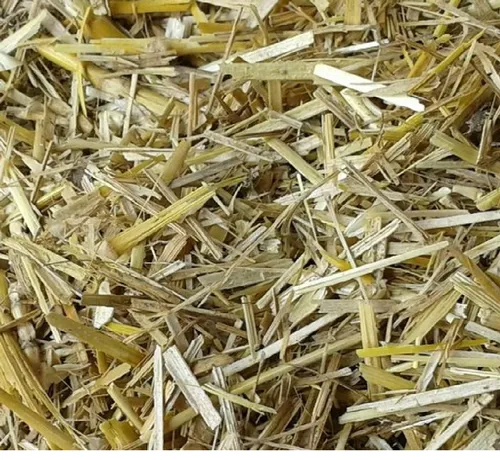
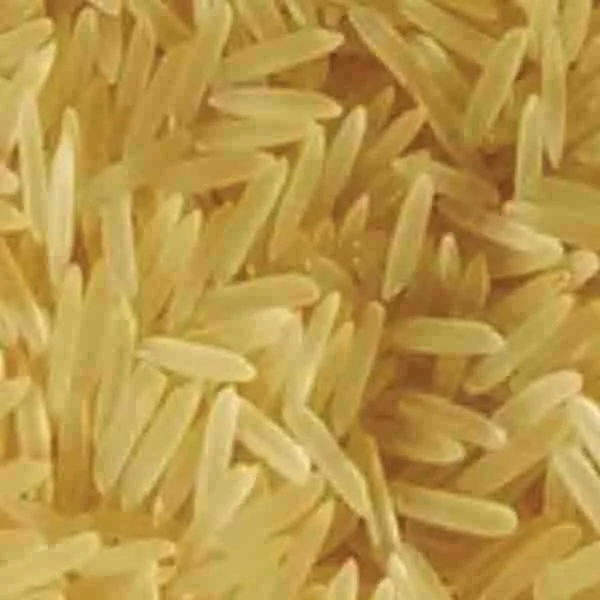
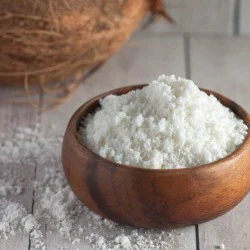
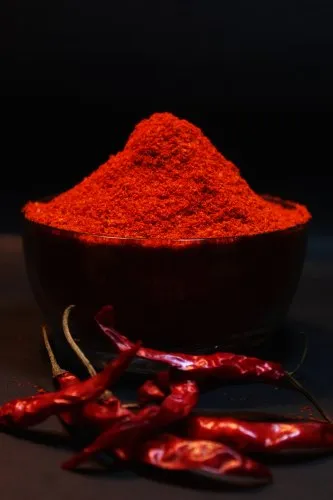
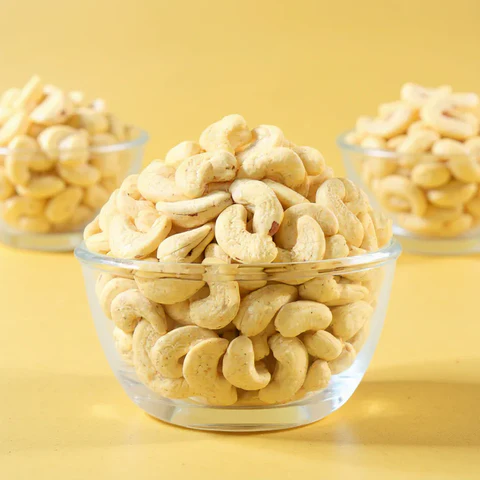
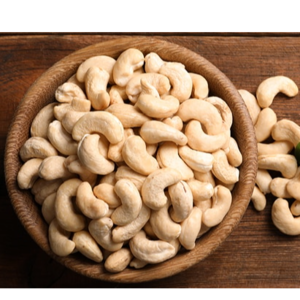
The Nutrichfoods catalogue covers five product lines. The Sugandha Basmati Rice is listed as a Grade A long-grain aromatic rice under HS 1006.30; in the wider Indian basmati trade, common grades include Sugandha, 1121, Pusa, and traditional Basmati, with grain length typically 7.0-7.5 mm for Sugandha and aged varieties often held 12-24 months. Buyers of Indian wheat (Triticum aestivum) typically specify protein content (11-13%), moisture below 13%, foreign matter under 1-2%, and test weight in kg/hl; common Indian export wheat varieties include Sharbati, Lokwan, and Durum. Raw cashew nuts (RCN) from India and West Africa are traded by nut count (e.g., 180-240 nuts/kg), with origin grades such as Ivory Coast, Benin, and Indian origin; kernel outturn is a key specification. Desiccated coconut in the Indian and Sri Lankan trade is commonly graded by fat content, with High Fat (HF) grades around 65-72% oil content and Low Fat grades around 55-60%, and by granulation (fine, medium, coarse). Red chilli from India is traded by variety (Sannam, Teja, Byadige, Wonder Hot), measured in ASTA colour value (typically 30-160+ ASTA) and Scoville Heat Units (SHU), with Guntur and Byadgi being the dominant Indian export origins.
Across these five categories, the underlying HS code families are 0801 (cashew and coconut, depending on preparation), 0904 (peppers/chillies), 1001 (wheat), and 1006 (rice). Standard packaging across Indian agri-commodity exporters typically includes 25 kg and 50 kg PP bags for rice and wheat, 50 kg jute or PP bags for raw cashew nuts, 25 kg multi-wall paper or PP bags for desiccated coconut, and 25-50 kg PP/jute bags for whole red chilli, often loaded in 20 ft FCLs (around 18-25 MT depending on commodity) or 40 ft FCLs.
Trade and Export Information - Nutrichfoods
Indian exporters of basmati rice, cashew nuts, wheat, desiccated coconut, and red chilli typically ship to the Middle East (UAE, Saudi Arabia, Iran, Iraq), Africa (Egypt, South Africa, Kenya, Nigeria), Europe (UK, Germany, Netherlands), and North America, with rice and cashews also reaching East and Southeast Asia. Basmati rice exports from India are dominated by shipments under HS 1006.30 to Iran, Saudi Arabia, UAE, and the UK, while Indian raw cashew nut exports under HS 0801.31/0801.32 are largely directed to processors in Vietnam and India for kernel conversion. Indian wheat (HS 1001) is exported mainly to Bangladesh, Sri Lanka, the UAE, and African buyers during surplus years, and Indian red chilli (HS 0904) is shipped in large volumes to China, Vietnam, Thailand, Mexico, and the UAE for oleoresin extraction and food use.
For these categories, buyers typically require a phytosanitary certificate (issued by India's Plant Quarantine authority), a certificate of origin, fumigation certificate, and a health certificate; food safety and quality certifications commonly requested include ISO 22000 / FSSC 22000, HACCP, BRCGS, and Halal/Kosher where the destination market requires them. Maximum Residue Limits (MRLs) compliance under EU Regulation 396/2005 and US FDA tolerances is standard for spices and rice entering regulated markets, and aflatoxin limits (commonly below 4-10 ppb for nuts and spices) are routinely tested. Indian basmati rice exports benefit from a GI (Geographical Indication) tag, and shipments are usually made under Incoterms such as FOB, CFR, or CIF in 20 ft or 40 ft dry containers, with desiccated coconut and chilli often shipped in container liner bags to control moisture.
Sourcing from Nutrichfoods - Buyer Guidance
For each of the five categories Nutrichfoods lists, buyers should request product-specific documentation before confirming an order. For Sugandha Basmati Rice, ask for the grade declaration, average grain length, moisture content (target below 14%), broken percentage, and a pre-shipment analysis from an accredited lab; for wheat, request protein, moisture, foreign matter, and test weight figures. Raw cashew nut buyers should ask for the nut count per kg, kernel outturn ratio, moisture, and the proportion of defective nuts, while desiccated coconut buyers should confirm fat content (HF vs LF), moisture (typically below 3%), granulation, and free fatty acid levels. For red chilli, request the variety name, ASTA colour value, capsaicin content or SHU, and aflatoxin/ochratoxin test reports.
General buyer practice for Indian agri-commodities is to insist on a pre-shipment inspection (SGS, Bureau Veritas, or Intertek), third-party lab analysis, and a sealed reference sample retained on both sides. Confirm the fumigation status, packaging type and weight per bag, and whether the seller can load 20 ft or 40 ft FCL quantities, as well as the Incoterm and port of loading. For the four products without an explicit HS code in the facts (raw cashew nut, wheat, desiccated coconut, red chilli), buyers should request the seller's declared HS classification and verify it against the importing country's tariff schedule. Certifications such as ISO 22000, HACCP, BRCGS, Halal, or Organic should be requested and verified by certificate number rather than taken at face value.
Frequently Asked Questions About Nutrichfoods
What product categories does Nutrichfoods supply?
Nutrichfoods lists 5 active products across five categories: raw cashew nuts, wheat, Sugandha Basmati Rice, fine grade high-fat desiccated coconut, and red chilli. Only the basmati rice line has an explicit HS code (1006.30) in the catalogue; the other four should be confirmed with the supplier for HS classification.
Which grade and specification is the Sugandha Basmati Rice?
The Sugandha Basmati Rice is listed as Grade A, a long-grain aromatic Indian variety with grain length typically around 7.0-7.5 mm. Buyers should still request moisture (commonly below 14%), broken percentage, and aging period before confirming orders.
What documents should I request when importing these goods from India?
Standard documents for Indian agri-commodities include a phytosanitary certificate, certificate of origin, health/fumigation certificate, commercial invoice, packing list, and bill of lading. For regulated markets, also request MRL and aflatoxin lab reports from an accredited laboratory.
Which certifications are commonly required for these product categories?
Buyers of basmati rice, cashew, wheat, desiccated coconut, and red chilli typically ask for ISO 22000, FSSC 22000, HACCP, BRCGS, and Halal or Kosher certificates where the destination requires them. Organic, Rainforest Alliance, or Fairtrade certifications may also be requested depending on the buyer's market.
What is the typical packaging and container load for these commodities?
Indian exporters usually pack rice, wheat, and chilli in 25 kg or 50 kg PP/jute bags, cashew nuts in 50 kg jute bags, and desiccated coconut in 25 kg multi-wall paper or PP bags. A 20 ft FCL typically holds 18-25 metric tons depending on the commodity and bag weight.
What is the usual MOQ and lead time for Indian agri-commodity shipments?
MOQ for Indian rice, wheat, cashew, coconut, and chilli exporters is typically one 20 ft FCL, though some sellers accept 10-15 MT trial orders. Production plus inland transit to port usually takes 7-21 days, with ocean transit adding another 10-35 days depending on the destination region.
How should I verify product quality before shipment?
Buyers should appoint a third-party inspection agency such as SGS, Bureau Veritas, or Intertek for a pre-shipment inspection, including sampling and lab testing for moisture, broken grains, foreign matter, aflatoxin, and grade-specific parameters. A retained reference sample, sealed and signed by both parties, is standard practice.
Which regions typically import these goods from India?
Indian basmati rice, cashew, wheat, desiccated coconut, and red chilli are commonly shipped to the Middle East (UAE, Saudi Arabia, Iran), Africa (Egypt, Nigeria, South Africa), Europe (UK, Germany, Netherlands), and Asia (Vietnam, China, Bangladesh). Specific destination suitability should be confirmed based on the buyer's regulatory and market requirements.




 , India