LLC Armavir Fatty acid plant — Verified Manufacturer & Wholesale Supplier
About LLC Armavir Fatty acid plant - Fatty Acids Supplier in Russian Federation
The Russian Federation, Armavir region, hosts LLC Armavir Fatty acid plant which lists five active products in its catalogue. The catalogue covers sunflower‑derived fatty acid (HS 3823.12), unrefined sunflower seed oil (HS 1512.21), refined deodorized sunflower oil (HS 1512.19), sunflower lecithin (HS 3823.19) and soy lecithin (HS 2106.90). Each entry is recorded with its material description, ranging from industrial‑grade fatty acid to food‑grade lecithin. The supplier’s top categories include sunflower oil, corn oil, edible oils and related seed meals, reflecting a focus on vegetable‑oil derived chemicals.
LLC Armavir Fatty acid plant’s product list is limited to industrial chemicals derived from vegetable oils. The fatty acid product is described as Sunflower Oil Fatty Acid (Industrial Grade) under HS 3823.12, while the oil products are classified under HS 1512 series for sunflower seed oil, both unrefined and refined deodorized forms. Lecithin offerings are split between sunflower (HS 3823.19) and soy (HS 2106.90), each indicated as industrial or food grade. No other product families are mentioned in the supplied data.
Product Range and Specialties of LLC Armavir Fatty acid plant
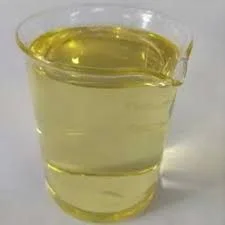
The catalogue focuses on five items that belong to two HS chapters: Chapter 15 for edible oils and Chapter 38 for chemical preparations. In the oil segment, unrefined sunflower oil typically meets ICUMSA 45 - 48 colour standards, peroxide values below 10 meq O₂/kg, and free fatty acid (FFA) levels under 0.5 %. Refined deodorized sunflower oil is usually sold with an iodine value around 110 - 115 g I₂/100 g, moisture below 0.1 % and a cloud point near -5 °C. Sunflower‑derived fatty acid is commonly supplied with an acid value below 5 mg KOH/g and a FFA content under 0.2 %. Lecithin products are graded by phospholipid content (70‑80 %), moisture under 0.5 % and ash below 1 %, with soybean lecithin often required to meet food‑grade purity specifications. Buyers in cosmetics, pharmaceuticals and food processing frequently request these benchmark specifications.
Trade and Export Information - LLC Armavir Fatty acid plant
Russia exports vegetable‑oil derivatives primarily to the Middle East, South Asia and East Asia, with Israel, the UAE, India and China listed as major destinations for this supplier. HS 1512 products fall under the “Edible vegetable oils and their fractions” chapter, which commonly requires phytosanitary certificates and, for EU markets, compliance with the EU Commission Regulation 2018/775 on vegetable oil quality. HS 3823 chemical preparations are subject to REACH registration in the EU and FDA food‑contact approval in the United States. Standard export logistics involve 20‑ft or 40‑ft containers packed in food‑grade drums (200 L) or IBCs, with CIF or FOB terms most frequently used. Russian exporters of oil‑based chemicals often provide certificates of conformity (ISO 9001) and, where required, ISO 22000 or HACCP documentation to satisfy import regulations.
Sourcing from LLC Armavir Fatty acid plant - Buyer Guidance
When sourcing from this supplier, request a Certificate of Analysis (CoA) that details acid value, iodine value, peroxide value and phospholipid content for the relevant product. An up‑to‑date Material Safety Data Sheet (MSDS) and a country‑of‑origin certificate should also be obtained to satisfy customs and regulatory checks. For EU buyers, verify REACH registration numbers; for US buyers, request FDA food‑contact compliance evidence. Typical minimum order quantities are 1 metric ton per product, with a standard lead time of 30‑45 days after order confirmation, and samples of 5‑10 kg are commonly offered for pre‑qualification.
Frequently Asked Questions About LLC Armavir Fatty acid plant
What HS codes are used for the products offered by LLC Armavir Fatty acid plant?
The supplier lists HS 3823.12 for sunflower‑derived fatty acid, HS 1512.21 for unrefined sunflower oil, HS 1512.19 for refined deodorized sunflower oil, HS 3823.19 for sunflower lecithin and HS 2106.90 for soy lecithin.
Which certifications should a buyer request for the fatty acid and oil products?
Buyers should request a Certificate of Analysis, an ISO 9001 quality certificate, and, depending on the destination market, REACH registration for EU imports or FDA food‑contact approval for US imports.
What typical quality parameters are checked for refined sunflower oil?
Refined sunflower oil is usually verified for an iodine value of 110‑115 g I₂/100 g, peroxide value below 10 meq O₂/kg, free fatty acid content under 0.5 % and moisture below 0.1 %.
How is sunflower lecithin commonly graded?
Sunflower lecithin is graded by phospholipid content (70‑80 %), moisture under 0.5 % and ash content below 1 %, with food‑grade purity often required for nutraceutical applications.
What packaging formats are standard for the supplier’s oil products?
The oil products are typically packed in food‑grade steel drums of 200 L capacity or in bulk IBC tanks, sealed to prevent leakage and suitable for CIF or FOB shipment.
What documentation is needed for customs clearance of the soy lecithin product?
Customs clearance generally requires an MSDS, a Certificate of Origin, a CoA showing phospholipid purity, and any applicable sanitary or phytosanitary certificates for the destination country.
What are the usual lead times and minimum order quantities for these products?
Standard lead times range from 30 to 45 days after order confirmation, and the usual minimum order quantity is 1 metric ton per product, with smaller sample quantities of 5‑10 kg available on request.




 , Russian Federation