JJB International — Supplier
About JJB International - Masterbatch Supplier in India
India‑based JJB International lists eight distinct product groups in its export catalogue. The catalogue comprises Plastic Masterbatch, a range of Spices, Paper Cups for tea and coffee, Carton Paper, Paper Bags, Corn Starch, Food Disposables Cutleries, and Kraft Liner, Test Liner and Fluting Paper. Each entry is recorded under a separate HS‑code family used for customs classification, although the exact codes are not disclosed in the supplied data. The company operates as an imported‑tier supplier and indicates that free samples are available on request with freight borne by the client.
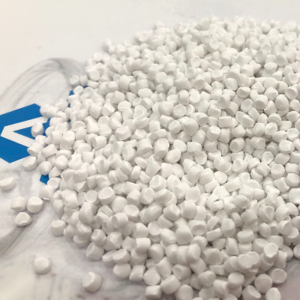
The supplier’s catalogue focuses on material‑based categories that are commonly sourced for food‑service, packaging and polymer processing sectors. Masterbatch products are typically supplied in 25 kg drums or 200 kg totes and are formulated to meet colour or functional specifications such as UV‑stability or anti‑static performance. Indian exporters of spices generally comply with food‑grade standards such as India Standard (IS) 1500 and may hold certifications like FSSAI or ISO 22000, although no specific certification is listed for this supplier. The remaining paper‑based items are produced in standard grammage ranges (e.g., 180‑250 g/m² for paper cups) and are often shipped in 20‑ft or 40‑ft containers.
Product Range and Specialties of JJB International
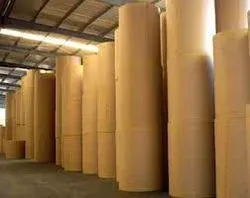
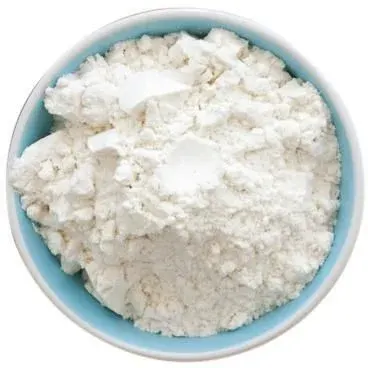
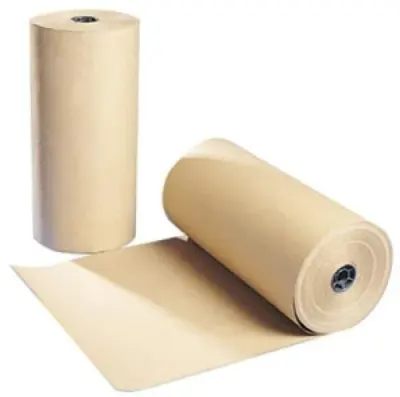
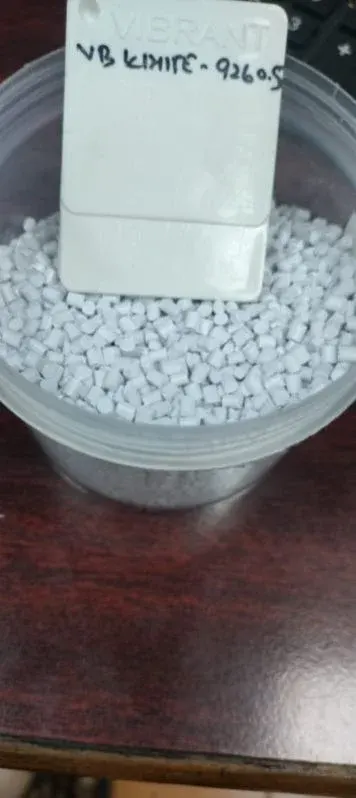
The eight product lines cover both polymer additives and paper‑based packaging solutions. Plastic Masterbatch is a concentrated polymer additive used to colour or modify the properties of base resins; typical grades include pigment‑based (e.g., 5 % loading) and functional masterbatches such as impact modifiers. The spice portfolio, while not itemised, generally includes dehydrated varieties that are graded by moisture content (typically ≤12 %) and particle size (e.g., 0.5‑2 mm). Paper Cups for tea and coffee are usually manufactured from food‑grade polyethylene‑coated paper with a wall thickness of 0.18‑0.25 mm, while Carton Paper and Kraft Liner Board are supplied in standard sheet sizes (e.g., 1000 mm × 1000 mm) with basis weights between 180‑300 g/m². Paper Bags are often produced in kraft or coated variants with gram weights of 30‑80 g/m², and Corn Starch is sold as a fine powder with typical purity ≥95 % and moisture ≤12 %. Food Disposables Cutleries are generally made from molded polystyrene or biodegradable PLA, meeting ASTM F1792 or EN 13432 standards where applicable.
Trade and Export Information - JJB International
India ranks among the top exporters of polymer additives, paper packaging and food‑grade starch, supplying markets in the United States, the European Union, the Middle East and Southeast Asia. Masterbatch shipments are usually classified under HS Chapter 38 (polyolefins) and require documentation such as a Material Safety Data Sheet (MSDS) and, where colourants are involved, compliance with REACH or EU Regulation No 1907/2006. Spices and corn starch fall under HS Chapter 21 and Chapter 11 respectively; buyers commonly request certificates of analysis, pesticide residue reports and, for EU destinations, compliance with EU Regulation No 1169/2011 on food information. Paper‑based packaging items are classified under HS Chapter 48; typical export paperwork includes a phytosanitary certificate for raw pulp and a declaration of compliance with FSC or PEFC sustainability schemes, though these are not confirmed for the supplier. Container loading follows standard practices: paper products are palletised in 20‑ft containers (≈20 tons) while bulk masterbatch and starch are loaded in bulk bags or drums within 40‑ft containers.
Sourcing from JJB International - Buyer Guidance
When evaluating JJB International, buyers should request product data sheets that specify colourant type, loading percentage and melt flow index for masterbatch, and moisture, ash and microbial limits for spices and corn starch. Samples should be inspected for visual uniformity, dimensional tolerances (e.g., cup wall thickness ±0.02 mm) and, where relevant, compliance test reports such as FDA Food Contact Substance (FCS) clearance or EU Food Contact Materials (FCM) certification. Verification of export documentation - MSDS, certificate of origin, and any third‑party laboratory analysis - helps confirm that the goods meet the regulatory regime of the destination market. Buyers are advised to confirm packaging details, such as inner liner material for paper cups and moisture‑proof liners for paper bags, and to agree on Incoterms (CIF, FOB) that match the logistics chain for the target region.
Frequently Asked Questions About JJB International
What HS‑code families apply to the products listed by JJB International?
Masterbatch typically falls under HS 3801, spices under HS 0905, paper cups and carton paper under HS 4820‑4821, paper bags under HS 4811, corn starch under HS 1101 and food disposables under HS 3924. The supplier’s catalogue does not publish exact codes, so buyers should confirm the specific sub‑heading before placing orders.
Which certifications should a buyer request for the spice and starch products?
Buyers normally request a Certificate of Analysis, a pesticide residue report, and compliance with FSSAI (India) or ISO 22000. For EU destinations, a declaration of conformity with EU Regulation No 1169/2011 is also standard.
What are the typical packaging formats for the masterbatch and corn starch?
Masterbatch is commonly supplied in 25 kg drums or 200 kg totes, sealed to prevent moisture ingress. Corn starch is usually packed in 25 kg multi‑wall bags or bulk containers, with moisture content not exceeding 12 %.
How are paper cups prepared for export?
Paper cups are generally coated with a thin polyethylene layer, folded and glued to achieve a wall thickness of 0.18‑0.25 mm, then packed in cartons of 500‑1000 units per 20‑ft container. Export documentation often includes a food‑contact safety sheet.
What lead times are typical for these product categories?
Lead times depend on product type: masterbatch and starch can be ready for shipment within 2‑4 weeks after order confirmation, while paper cups, bags and cartons usually require 3‑5 weeks to accommodate printing and coating processes.
Are free samples truly free of charge?
The supplier states that samples are provided on request with freight costs borne by the client; buyers should arrange shipping terms and verify that the sample includes all relevant product data sheets.
Which markets import Indian masterbatch and paper packaging most frequently?
Major importers include the United States, Germany, the United Kingdom, the United Arab Emirates and Singapore, where the food‑service and consumer goods sectors have high demand for colour and functional polymer additives as well as recyclable paper packaging.
What documentation is needed for customs clearance of these goods?
Customs typically requires a commercial invoice, packing list, certificate of origin, MSDS for chemical products, and any required health or safety certificates (e.g., FDA or EU FCM) depending on the destination country.




 , India