Jiaozuo Zjn Environmental Protection Equipment Technology Co. Ltd. — Supplier
About Jiaozuo Zjn Environmental Protection Equipment Technology Co. Ltd. - Industrial Machinery Supplier in China
Jiaozuo Zjn Environmental Protection Equipment Technology Co. Ltd. is based in Jiaozuo, China and lists 131 active products across multiple machinery categories. The catalogue focuses on industrial drying equipment, including rotary dryers, multi‑cylinder dryers and specialized dryers for feed, dyeing material, sludge, wood chips, rice bran, leather waste, ammonium sulfate, sweet‑potato residue, liquor dregs and other organic or mineral streams. Each machine is described by its functional purpose rather than a specific HS code, but they fall under the HS chapter 84 family for industrial machinery. The product titles indicate capacity‑focused solutions such as “100+ Tons per Day” rotary dryers and “large‑scale intelligence” dryers for various residues. The supplier also lists equipment for waste‑heat utilization and energy‑efficient drying, reflecting a broader focus on environmental protection in processing plants.
The listed items belong to the broader categories of Industrial Machinery, Heating, Air‑Conditioning & Ventilation, and Food Processing Machinery. By grouping dryers for specific feedstocks - such as municipal sludge, electro‑plating sludge, corn steep liquor, and dyeing sludge - the catalogue signals capability to handle heterogeneous material properties like high moisture, viscosity and temperature sensitivity. Although no HS codes are provided per item, the products align with HS 8421 (machinery for filtering, purifying or cleaning liquids) and HS 8479 (machines for special purposes). The supplier’s portfolio also covers related equipment for waste‑heat recovery, a common integration in large‑scale drying plants to improve energy efficiency.
Product Range and Specialties of Jiaozuo Zjn Environmental Protection Equipment Technology Co. Ltd.
The product range consists exclusively of drying systems designed for bulk handling of organic and inorganic residues. Typical industrial dryers of this type operate at inlet temperatures between 150 °C and 250 °C and achieve final moisture contents of 5 % - 12 % depending on feedstock. Capacity ratings in the catalogue range from “100+ tons per day” rotary dryers to smaller “intelligent” units for specific streams such as sweet‑potato residue or liquor dregs. In the global market, dryers are classified by construction (single‑cylinder, multi‑cylinder, rotary) and by heat source (direct fire, waste‑heat recovery, hot‑oil or steam). Common industry specifications include material‑specific residence time, air flow rates measured in m³/h, and energy consumption figures expressed in kWh per ton of water removed. Buyers often request compliance with ISO 9001 for quality management and ISO 14001 for environmental management, although the supplier’s catalogue does not list these certifications explicitly.
Trade and Export Information - Jiaozuo Zjn Environmental Protection Equipment Technology Co. Ltd.
China is a major exporter of industrial drying equipment, with the majority of shipments classified under HS 8421 and HS 8479. Typical import destinations include Southeast Asian countries (Vietnam, Thailand, Malaysia), the Middle East (Saudi Arabia, United Arab Emirates), Africa (Nigeria, South Africa) and Eastern Europe, where construction, food processing and waste‑treatment facilities require robust drying solutions. Buyers usually require CE marking for equipment sold within the European Economic Area and may also request UL or SGS inspection reports for safety and performance verification. Standard export packaging involves crating the dryer components on Euro pallets or in 20‑ft and 40‑ft containers, with dimensions tailored to the unit’s frame size; larger rotary dryers may be shipped as knock‑down kits. Common Incoterms are FOB Chinese ports such as Shanghai or Tianjin, with buyers arranging inland freight and customs clearance. Exporters from China often provide pre‑shipment inspection reports under the buyer’s chosen inspection agency to satisfy regulatory compliance in the destination market.
Sourcing from Jiaozuo Zjn Environmental Protection Equipment Technology Co. Ltd. - Buyer Guidance
When sourcing these dryers, buyers should request a detailed technical datasheet that includes design capacity (tons per day), rated thermal power (kW), inlet and outlet temperature ranges, moisture reduction percentages, and power consumption per ton of water removed. Verification of certifications such as CE, ISO 9001 or ISO 14001 should be requested directly from the supplier, together with test reports that demonstrate compliance with relevant IEC or EN standards for pressure vessels and rotating equipment. It is advisable to confirm the lead time for standard models (typically 30‑45 days) and for customized designs (often 60‑90 days), as well as the minimum order quantity for spare parts or auxiliary systems. Buyers should also clarify packaging details - whether the dryer will be shipped fully assembled, as a knock‑down kit, or with pre‑installed heat‑exchange modules - and the preferred Incoterm for the transaction.
Frequently Asked Questions About Jiaozuo Zjn Environmental Protection Equipment Technology Co. Ltd.
What types of materials can the listed dryers handle?
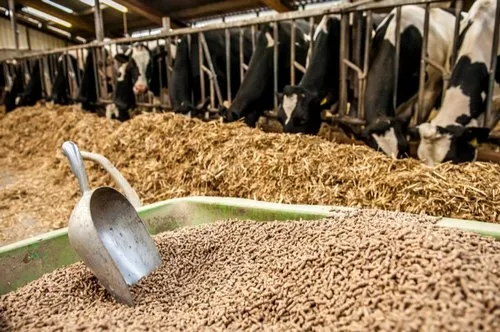
The catalogue covers dryers for high‑moisture organic residues such as municipal sludge, liquor dregs, sweet‑potato residue, corn steep liquor, as well as mineral streams like ammonium sulfate and wood chips. Each unit is engineered for the specific viscosity and particle size of the feedstock.
Are the dryers compliant with international safety standards?
International buyers typically request CE marking or an equivalent certification (e.g., UL). The supplier should provide the applicable certificates and test reports upon request, as they are not listed in the catalogue.
What is the typical moisture reduction performance?
Industrial dryers of this class normally achieve final moisture levels between 5 % and 12 % depending on the feedstock, with evaporation capacities expressed in tons of water removed per hour.
What are the common HS codes for these machines?
Drying equipment for bulk materials is usually classified under HS 8421 (machinery for filtering, purifying or cleaning liquids) or HS 8479 (machines for special purposes).
What lead times should a buyer expect?
Standard models are generally delivered within 30‑45 days after order confirmation; customized designs may require 60‑90 days depending on engineering and fabrication requirements.
What packaging and shipping options are offered?
Units are typically packed in reinforced steel crates or wooden pallets for transport in 20‑ft or 40‑ft containers. Larger rotary dryers may be shipped as knock‑down kits to fit container dimensions.
Which certifications are commonly required for these dryers?
Buyers often require CE, ISO 9001 quality‑management certification and, for environmentally focused equipment, ISO 14001. Additional certifications such as IEC 60034 for rotating machinery may be requested.
How can a buyer request a sample or pilot test?
Because the equipment is large‑scale, suppliers usually provide a pilot‑scale unit or a performance test report rather than a physical sample. Buyers should ask for a trial run report on a comparable feedstock before placing a full order.




 , China