Ingrido Excipients LLP — Verified Manufacturer & Wholesale Supplier
About Ingrido Excipients LLP - Pharmaceutical Excipients and Starches Supplier in India
Ingrido Excipients LLP is an Indian manufacturer and exporter based in Mumbai suburban, Maharashtra, with 5 active products listed across pharmaceutical excipients and starch categories. The company's catalogue covers native starches derived from maize and tapioca alongside carbomer polymers and a ready-to-use aqueous dispersion, giving it a footprint that spans both food-grade and pharma-grade excipient applications. Its listed products fall under three HS code families: HS 1108 (starches, inulin), specifically 1108.12 for maize starch and 1108.14 for tapioca starch, and HS 3906 (acrylic polymers in primary forms) at 3906.90 for carbomer grades. Mumbai, located in Maharashtra, is one of India's principal pharmaceutical manufacturing and export hubs, with access to JNPT and Mumbai port for containerised shipments.
The supplier's portfolio reflects the dual positioning typical of Indian excipient exporters that serve both the domestic formulation industry and overseas buyers in regulated and semi-regulated markets. Maize starch and tapioca starch are staple pharmaceutical excipients used as binders, diluents and disintegrants in solid oral dosage forms, while carbomer 940 is a cross-linked polyacrylic acid widely used as a rheology modifier in topical gels, creams and controlled-release matrices. The inclusion of a pre-dispersed grade (InCoat L30D USP-NF Dispersion Liquid) signals capability in value-added, ready-to-use excipient systems rather than only commodity powders, which is a relevant distinction for formulators seeking to skip the high-shear wetting step during manufacturing.
Product Range and Specialties of Ingrido Excipients LLP
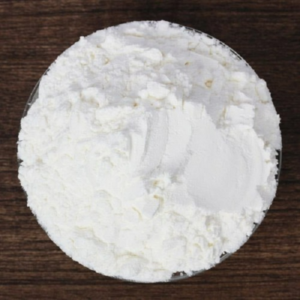
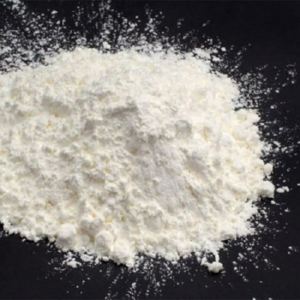
Ingrido Excipients LLP's catalogue is anchored by two native starches, Maize Starch (HS 1108.12) and Tapioca Starch (HS 1108.14), and three polymer-based excipients: Carbomer 940 powder (HS 3906.90), Inpol 940 (a carbomer 940 variant), and InCoat L30D USP-NF Dispersion Liquid. Native starches in this category are typically traded against specifications such as moisture content (commonly below 10-12%), pH of the aqueous slurry (usually 4.5-7.0 for pharmaceutical grades), ash content, sulphur dioxide residue limits, and microbial counts aligned with pharmacopoeial monographs. Carbomer 940, a homopolymer cross-linked with polyalkenyl polyethers, is graded by viscosity of a 0.5% neutralised aqueous dispersion (commonly 40,000-60,000 cP), residual solvent levels (benzene typically below 2 ppm in pharmaceutical grades), and heavy-metal limits conforming to USP/NF or EP monographs.
The starch and carbomer categories each carry well-defined grade hierarchies that buyers routinely compare. For maize and tapioca starch, pharmaceutical grades (USP, EP, IP, JP) are differentiated from food-grade and industrial-grade by tighter limits on impurities, microbiological load, and traceability documentation. For carbomers, the 900-series (934, 940, 941, 974) is the established nomenclature, with 940 being the high-viscosity grade preferred for topical gels and sustained-release matrices, while pre-dispersed forms such as InCoat L30D are typically supplied as 30% solids aqueous dispersions that simplify handling and reduce dusting and agglomeration risks during plant transfers. The supplier's category listing also spans Corn Starch, Potato Starch, Rice Starch, Wheat Starch and broader Industrial Chemicals, indicating a starch and excipient focus beyond the 5 products currently published.
Trade and Export Information - Ingrido Excipients LLP
Indian starch and pharmaceutical excipient exporters typically serve formulation manufacturers across South Asia, the Middle East and Africa, Southeast Asia, and Latin America, with established flows also into regulated markets such as the EU and the US via distributors holding Drug Master Files. The relevant HS code families for this catalogue are HS 1108 (starches; inulin) for the native starches and HS 3906 (acrylic polymers in primary forms) for the carbomer polymers; both chapters attract routine customs scrutiny on tariff classification, certificate of origin, and in some jurisdictions REACH registration for polymers placed on the EU market. Container loadings for powdered starches typically run 18-25 MT per 20 ft FCL in woven polypropylene or kraft paper bags of 25 kg or 50 kg, while carbomer powders are commonly packed in 10 kg or 20 kg fibre drums with polyethylene liners to control moisture pickup, since carbomers are hygroscopic.
For pharmaceutical excipients, buyers and regulators typically require a current Certificate of Suitability (CEP) or Drug Master File (DMF) reference for the specific grade, plus a Certificate of Analysis (CoA) tied to the pharmacopoeial monograph (USP/NF, EP, IP or JP as applicable), residual solvent statements, TSE/BSE-free declarations, allergen statements, and a recent microbiological report. Indian exporters in this segment commonly ship under CIF, CFR or FOB Incoterms via Mumbai's JNPT or Nhava Sheva, with sea freight lead times of roughly 15-30 days to Gulf and African ports and 30-45 days to European and American destinations depending on routing. For the dispersion liquid, packaging shifts to 200 L HDPE drums or 25 L carboys with temperature-controlled handling noted on the shipping documents, as aqueous polymer dispersions can be sensitive to freezing and prolonged heat exposure during transit.
Sourcing from Ingrido Excipients LLP - Buyer Guidance
Buyers sourcing pharmaceutical excipients from Ingrido Excipients LLP should request the pharmacopoeial grade (USP, EP, IP or JP) applicable to their target market, along with a current CoA for the specific lot, the manufacturing date, retest period, and storage conditions. For carbomer 940 and Inpol 940, confirm the viscosity specification of a neutralised 0.5% aqueous dispersion, residual solvent limits (especially benzene and ethyl acetate), heavy-metal totals, and microbial limits, and ask whether a Type IV Drug Master File or equivalent regulatory file is available for the US market or a CEP for the EU. For InCoat L30D USP-NF Dispersion Liquid, verify the solids content (typically 30% w/w), preservative system, pH, and recommended storage temperature range, and confirm compatibility with the dispersion equipment already in use.
For the native starches (Maize Starch HS 1108.12 and Tapioca Starch HS 1108.14), request microbiological data, moisture and ash values, sulphur dioxide residue (if applicable), and a declaration of origin and country of cultivation, as well as confirmation that the grade meets the monograph claimed on the CoA. Standard buyer practice is to obtain a pre-shipment sample of 500 g to 1 kg for laboratory evaluation before issuing a purchase order, and to agree on third-party pre-shipment inspection (SGS, Bureau Veritas or Intertek) covering identity, assay, related substances, and packaging integrity. MOQ, lead time, payment terms (typically 30% advance with balance against copy of B/L or via confirmed LC for new buyers), and the supplier's response time to technical questionnaires are practical signals to track before scaling up to container volumes.
Frequently Asked Questions About Ingrido Excipients LLP
What product categories does Ingrido Excipients LLP currently list?
The supplier lists 5 active products spanning native starches (Maize Starch under HS 1108.12 and Tapioca Starch under HS 1108.14) and pharmaceutical polymer excipients (Carbomer 940 powder under HS 3906.90, Inpol 940 carbomer variant, and InCoat L30D USP-NF Dispersion Liquid). Its broader category tags also reference Corn, Potato, Rice and Wheat Starch and Industrial Chemicals.
Which pharmacopoeial grades are typically relevant for the starches and carbomers in this catalogue?
Buyers in regulated markets usually request USP/NF, EP, IP or JP grades depending on destination. For carbomer 940, the monograph specifies viscosity of a neutralised dispersion, residual solvent limits including benzene, heavy-metal controls, and microbial limits. For native starches, pharmacopoeial monographs set moisture, ash, sulphur dioxide residue and microbial limits that should be confirmed on each CoA.
What documents should be requested before placing a purchase order?
Request a lot-specific Certificate of Analysis, a Technical Data Sheet, a Material Safety Data Sheet, TSE/BSE-free and allergen declarations, and information on regulatory filings such as a Drug Master File (US) or CEP (EU) where the grade is intended for a regulated market. For new suppliers, a small paid trial sample of 500 g to 1 kg is standard practice before container orders.
What is the typical packaging and container loading for these excipients?
Maize and tapioca starch powders are commonly packed in 25 kg or 50 kg kraft paper or woven polypropylene bags, with 20 ft FCL loadings of roughly 18-25 MT depending on bulk density. Carbomer 940 powder is typically supplied in 10 kg or 20 kg fibre drums with polyethylene liners to control moisture, and the InCoat L30D dispersion is usually shipped in 25 L carboys or 200 L HDPE drums with temperature handling notes on the documents.
What Incoterms and shipping routes are typical for Indian excipient exporters?
Mumbai-based exporters commonly quote FOB Mumbai (JNPT/Nhava Sheva), CFR or CIF to the buyer's port. Sea freight lead times are roughly 15-30 days to Gulf and African ports and 30-45 days to European and American destinations, with transit times sensitive to routing and transhipment. For temperature-sensitive dispersion liquids, container type (standard vs insulated) and reefer settings should be agreed in writing.
What MOQ and lead time should a buyer expect from a manufacturer-exporter of this size?
For native starches, MOQs often start at one to several pallets (roughly 500 kg to 1 MT) for trial orders and scale to full 20 ft container loads of 18-25 MT for commercial volumes. For carbomer powders and dispersions, MOQs are commonly one fibre drum (10-20 kg) or one carboy (25 L) for sampling, with production lead times of 2-4 weeks for stock grades and longer for customised specifications.
Which certifications are typically required for pharmaceutical excipients imported into the EU and US?
EU buyers typically require a CEP from EDQM or full REACH compliance plus an EP-grade CoA, while US buyers usually request a DMF reference number and USP/NF-grade documentation. In both regions, residual solvent statements (aligned with ICH Q3C), elemental impurities data (ICH Q3D), and microbiological reports are standard requirements and should be confirmed with the supplier before order placement.
How can a buyer verify product quality before shipment?
Standard practice is to commission an independent pre-shipment inspection by SGS, Bureau Veritas or Intertek covering identity, assay against the pharmacopoeial monograph, related substances, microbial limits, and packaging and labelling checks. Retain samples from the inspected lot for 12 months as a reference in case of post-shipment disputes, and reconcile the inspector's findings with the supplier's CoA before releasing payment.




 Mumbai suburban, India