Hebi Juxing Resin Co., Ltd — Verified Supplier
About Hebi Juxing Resin Co., Ltd - Water Treatment Chemicals Supplier in China
Based in China, Hebi Juxing Resin Co., Ltd lists six active products in its catalogue. The supplier groups its offerings under the categories Water Treatment Chemicals and Resin, indicating a focus on ion‑exchange materials used for purification and treatment processes. The product titles include several cation and anion exchange resins such as "201í-7(717) anion exchange resin", "001 7(732) cation exchange resin" and variations like "001x7(732) cation exchange resin" as well as a sulphated coal product. All entries are presented without additional HS‑code details, reflecting the limited catalogue data provided. The catalogue therefore emphasizes resin types rather than broader chemical inventories.
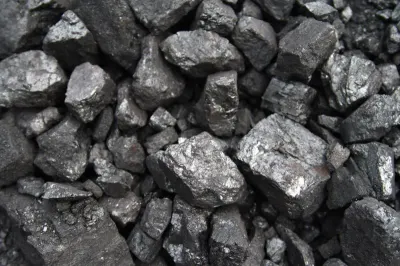
The listed resins are typical strong‑acid cation exchangers and strong‑base anion exchangers that are common in municipal and industrial water treatment circuits. In practice, such resins are measured by exchange capacity (meq/100 g), bead size (0.5 - 1.2 mm) and chloride content (≤0.25 %). The sulphated coal product is a form of activated coal used for adsorption of organic contaminants. Buyers generally expect compliance with industry standards such as ISO 9001 for quality management and may request material safety data sheets (MSDS) for each grade. The six‑product portfolio suggests a narrow but specialised product line aimed at water‑treatment applications.
Product Range and Specialties of Hebi Juxing Resin Co., Ltd
Hebi Juxing Resin Co., Ltd’s catalogue contains three distinct anion exchange resins (including the 201í-7(717) and 201 7(717) designations) and three cation exchange resins (001 7(732), 001x7(732) and a duplicated 001x7(732) entry). In the global resin market, anion exchangers are typically classified as strong‑base resins with a nitrogen functional group, while cation exchangers are usually strong‑acid resins bearing sulfonic acid groups. Typical grades for these resins fall within IEC 60771 specifications, with exchange capacities ranging from 1.0 to 1.8 meq g‑1 for cation types and 0.8 to 1.4 meq g‑1 for anion types. The sulphated coal falls under the activated carbon family, where iodine numbers of 900 - 1200 mg g‑1 and ash contents below 10 % are common quality markers. Buyers often compare resin performance by regeneration efficiency, pressure drop, and chemical stability under the target pH range.
Trade and Export Information - Hebi Juxing Resin Co., Ltd
China is a major exporter of ion‑exchange resins and related water‑treatment chemicals, supplying Asia‑Pacific, the Middle East and European markets. The resin products are generally classified under HS chapter 39 (Plastics and articles thereof) and occasionally under HS 3824 (Chemical products for the treatment of water). International buyers usually request certifications such as ISO 9001, ISO 14001 and, where applicable, NSF/ANSI 61 or ISO 14024 for environmental claims. Standard packaging includes 25 kg drums or bulk bags that fit into 20‑ft or 40‑ft containers, with FOB Shanghai or CIF destination being common Incoterms. Export documentation often includes a Certificate of Origin, MSDS and a test report confirming exchange capacity and chloride content. The typical export flow involves forwarders handling temperature‑controlled containers for resin stability during transit.
Sourcing from Hebi Juxing Resin Co., Ltd - Buyer Guidance
When sourcing from Hebi Juxing Resin Co., Ltd, buyers should request a detailed data sheet that lists exchange capacity (meq g‑1), bead size distribution, regeneration pH range and chloride content for each resin grade. A third‑party test report complying with IEC 60771 or ASTM D5139 is advisable to verify performance claims before placing a bulk order. Buyers should also obtain the Material Safety Data Sheet and confirm that the resin complies with any regional certification they require, such as NSF/ANSI 61 for North American water‑treatment projects. Verify packaging details - typically 25 kg drums with moisture barrier liners - and confirm the container loading plan to avoid resin exposure to extreme temperatures. Finally, clarify the supplier’s lead time, which for specialized resin batches is usually 4 - 6 weeks from order confirmation, and agree on an inspection protocol such as pre‑shipment sampling or third‑party inspection at the port of loading.
Frequently Asked Questions About Hebi Juxing Resin Co., Ltd
What types of ion‑exchange resins does Hebi Juxing Resin Co., Ltd list in its catalogue?
The catalogue lists three anion exchange resins (including 201í-7(717) and 201 7(717)) and three cation exchange resins (001 7(732), 001x7(732) and a duplicate 001x7(732) entry).
What certifications are typically required for water‑treatment resins imported from China?
Importers usually require ISO 9001 quality‑management certification, and may also ask for ISO 14001, NSF/ANSI 61 or IEC 60771 compliance depending on the target market.
What packaging format is standard for the resins offered by this supplier?
Resins are commonly packed in 25 kg steel drums or bulk bags that can be loaded into 20‑ft or 40‑ft containers for ocean freight.
Which HS code chapters do these resin products fall under?
Ion‑exchange resins are generally classified under HS chapter 39 (Plastics and articles thereof) or HS 3824 (Chemical products for water treatment).
What documentation should a buyer request before placing an order?
Buyers should ask for a Material Safety Data Sheet, a third‑party test report confirming exchange capacity, and a Certificate of Origin for customs clearance.
What is a typical lead time for bulk orders of these resins?
Lead times are commonly 4 to 6 weeks from order confirmation, depending on the specific grade and production schedule.
Which regions most often import water‑treatment resins from China?
Major import regions include Southeast Asia, the Middle East, Europe and North America, where municipal and industrial water‑treatment projects drive demand.




 , China