H R Basuli — Verified Supplier
About H R Basuli - Cashew Nuts Supplier in India
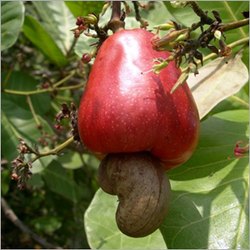
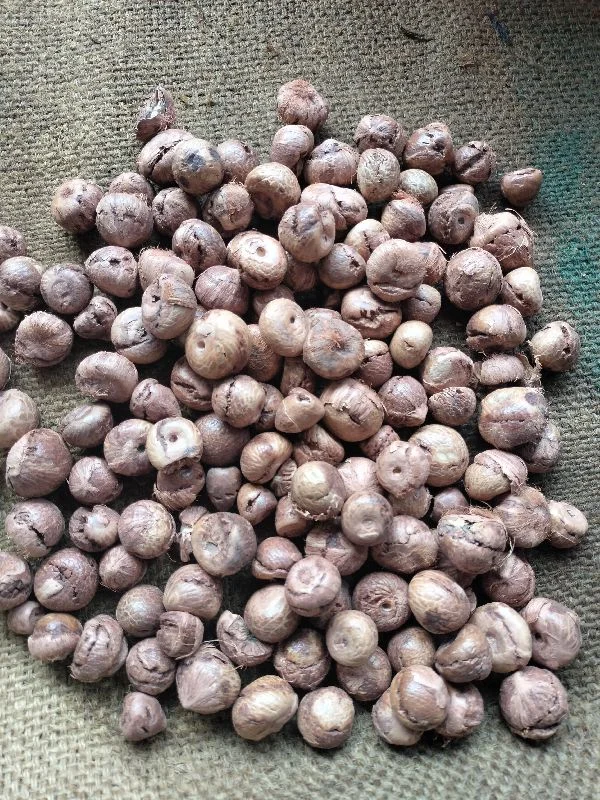
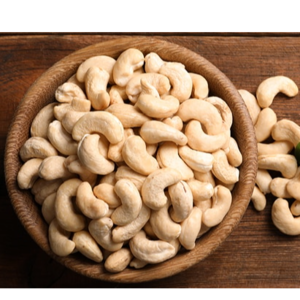
India is a major producer of cashew nuts, and H R Basuli lists 11 active products sourced from Indian orchards. The catalogue covers a range of cashew nut size grades such as W180, W240, W280, W320, W400 and specialty splits, as well as whole kernels and processed varieties. Each product is identified by its industry‑standard size designation, which corresponds to the average kernel weight per 1,000 nuts. The supplier also offers an organic split cashew nut line that meets organic production standards. All items fall under the broader categories of Cashew Nuts and Cashew Kernels.
The product list includes both raw and processed forms, for example LWP (large white pieces) and SWP (small white pieces) nuts, as well as BB (big broken) nuts and a JH processed variant. The inclusion of whole kernels indicates that the nuts have been shelled and cleaned to a kernel‑only product. No HS codes are provided in the catalogue, but the items belong to the HS chapter 08 family for edible nuts. The active product count of 11 reflects the supplier’s focused range within the cashew segment. The catalogue does not reference any additional categories beyond cashew nuts and kernels.
Product Range and Specialties of H R Basuli
The catalogue enumerates size‑graded cashew nuts (W180, W240, W280, W320, W400) which in industry terms indicate kernel weight ranges of approximately 180‑210 g, 240‑260 g, 280‑300 g, 320‑340 g and 400‑420 g per 1,000 nuts respectively. Typical quality grades for these sizes are classified as “Export Grade A” when moisture is ≤5 % and shelling outturn exceeds 48 %. The organic split nuts are commonly required to meet USDA Organic or EU Organic standards, with a maximum pesticide residue limit of 0.01 mg kg⁻¹. Whole cashew kernels are usually graded by kernel size, moisture, and purity, with standard specifications of ≤5 % moisture, ≤0.2 % foreign matter, and ≥48 % kernel recovery. Processed variants such as the JH processed nuts often involve roasting or blanching and are sold with specifications for color, flavor, and absence of off‑odors.
In global trade, these cashew products are packed in 20‑ft containers using 25‑kg polypropylene bags or bulk cartons, with total shipment capacity around 20‑22 metric tonnes per container. Buyers often request a certificate of analysis (CoA) that details size distribution, moisture, aflatoxin levels (≤10 µg kg⁻¹) and microbial counts.
Trade and Export Information - H R Basuli
India ranks among the top exporters of cashew nuts, supplying roughly 1.2 million tonnes annually. Major import markets include the United States, United Arab Emirates, Saudi Arabia, the European Union and Vietnam, where cashews are used in confectionery, snack foods and food‑service applications. The HS code 0801.10 covers raw cashew nuts in shell, while 0801.20 applies to raw cashew kernels; processed forms fall under 0801.30. Export shipments typically require a phytosanitary certificate, a commercial invoice and a packing list, and many buyers request ISO 22000 or HACCP audit reports.
Organic cashew shipments are often accompanied by organic certification from accredited bodies such as the National Programme for Organic Production (NPOP) in India, and may be subject to additional EU organic import requirements. Freight is commonly arranged on a CIF or FOB basis, with 20‑ft containers loading at Indian ports such as Nhava Sheva (Mumbai) or Chennai. Seasonal peak shipments occur between November and March, aligning with the Indian harvest calendar.
Sourcing from H R Basuli - Buyer Guidance
When sourcing from H R Basuli, buyers should request a detailed Certificate of Analysis for each size grade, confirming moisture content, aflatoxin level, shelling outturn and size distribution. For the organic split nuts, a copy of the latest organic certification and a pesticide residue report should be obtained before finalizing the order.
Verification of packaging - 25 kg bags or bulk containers - and labeling in English with net weight, country of origin and HS code is standard practice. Buyers are advised to confirm the supplier’s ability to meet the typical minimum order quantity of one 20‑ft container (≈20 t) or negotiate smaller batches with appropriate freight consolidation. Lead times from order confirmation to shipment usually range from 30 to 45 days, depending on harvest timing and processing schedules.
Frequently Asked Questions About H R Basuli
What size grades are available in the catalogue?
The catalogue lists W180, W240, W280, W320 and W400 cashew nuts, each corresponding to a specific kernel weight range per 1,000 nuts.
Are there organic cashew products?
Yes, the supplier offers Organic Split Cashew Nuts that must be accompanied by an NPOP or equivalent organic certification and a pesticide residue analysis.
Which HS codes apply to these products?
Raw cashew nuts in shell fall under HS 0801.10, raw kernels under HS 0801.20, and processed nuts such as roasted or blanched varieties under HS 0801.30.
What typical certifications should a buyer request?
Buyers should ask for a phytosanitary certificate, ISO 22000 or HACCP audit report, and where applicable, organic certification and a Certificate of Analysis detailing moisture, aflatoxin and microbial limits.
What are the usual packaging formats?
Cashew nuts are commonly packed in 25 kg polypropylene bags, bulk cartons, or directly bulk‑loaded into 20‑ft containers, with total container capacity around 20‑22 metric tonnes.
What is the standard minimum order quantity and lead time?
Standard shipments are based on a 20‑ft container load of approximately 20 t; smaller orders can be arranged with freight consolidation. Lead time from order confirmation to shipment is typically 30‑45 days.
Which regions import Indian cashews most frequently?
The United States, United Arab Emirates, Saudi Arabia, the European Union and Vietnam are the primary import markets for Indian cashew nuts and kernels.




 , India