Gbond Tech — Verified Supplier
About Gbond Tech - Digital Camera/Video Camera Supplier in China
China hosts six active product listings from Gbond Tech, covering digital imaging, night‑vision, laser and optical modules. The catalogue is grouped under Digital Camera/Video Camera, Surveillance Equipments, Agriculture and Scientific Instruments, reflecting a focus on electronic and optical sensing devices. Each entry aligns with a distinct product type that is commonly classified under HS chapter 85 for electronic equipment. The supplier’s portfolio is limited to six distinct items, providing a concise but technically diverse offering for B2B buyers.
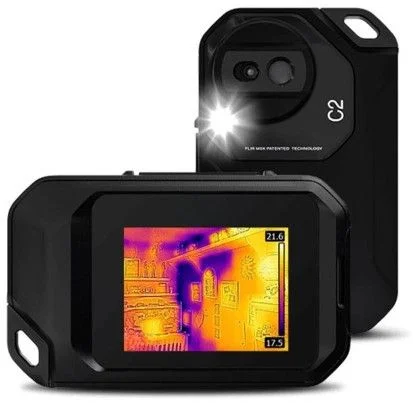
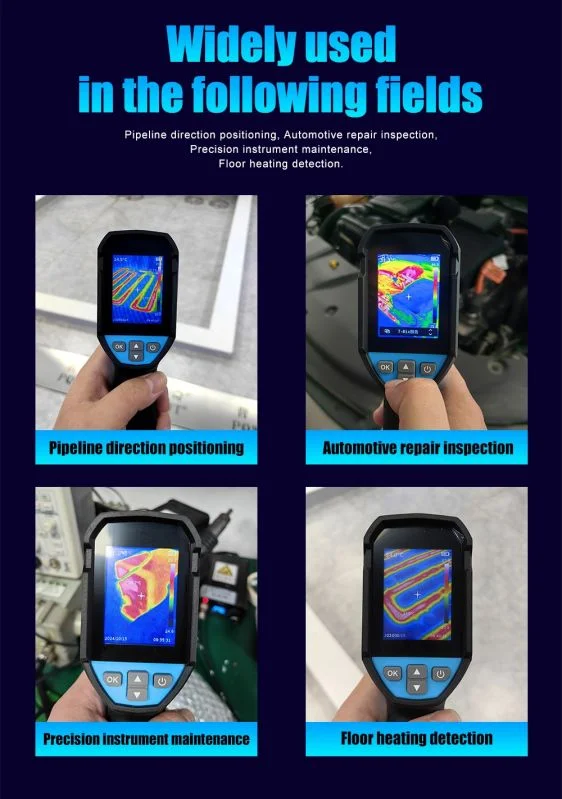
The listed items include an Online Camera compared with the FLIR AX8 thermal unit, a Night Vision Scope designed for hunting and police patrol, an Infrared Camera, Low Noise Lasers, a Binocular Vision Module and a Handheld Thermal Imaging Camera. These products span thermal imaging, low‑light optics and precision laser sources, all of which are typical components in security, industrial inspection and scientific measurement applications. The descriptions imply capabilities such as thermal sensitivity below 50 mK, infrared wavelengths around 8‑14 µm, and laser linewidths under 1 nm, which are standard performance markers in these sectors.
Product Range and Specialties of Gbond Tech
Gbond Tech’s catalogue features a handheld thermal imaging camera and an infrared camera, both of which usually employ uncooled microbolometer sensors with resolutions ranging from 320 × 240 to 640 × 480 pixels. In the surveillance segment, the Night Vision Scope and Binocular Vision Module typically incorporate image intensifier tubes or near‑infrared LEDs, delivering detection ranges of 150‑300 m under low‑light conditions. The Low Noise Lasers are generally supplied in wavelengths of 532 nm or 1064 nm with output powers below 10 mW, meeting safety class 3R requirements. The Online Camera vs. FLIR AX8 comparison suggests a product positioned against a benchmark thermal camera that offers a temperature range of - 20 °C to +350 °C and a thermal resolution of 0.06 °C. Buyers can expect these devices to conform to standard connector types (e.g., USB‑C, HDMI) and to be compatible with common video analysis software.
Trade and Export Information - Gbond Tech
Export of thermal imaging and night‑vision equipment from China typically targets security firms in the Middle East, automotive manufacturers in Europe and OEMs in North America. Surveillance cameras and laser modules are also shipped to agricultural technology providers in Southeast Asia and scientific research institutions in Australia. Buyers usually require CE marking for European markets, FCC certification for the United States, and ISO 9001 quality management documentation for large contracts. Packaging standards include anti‑static bubble wrap for electronic modules and reinforced wooden crates for bulk laser shipments, with most shipments consolidated in 20‑ft or 40‑ft containers under CIF or FOB terms. Chinese exporters of optical and infrared equipment often undergo pre‑shipment inspections by agencies such as SGS or Bureau Veritas to verify compliance with the relevant HS code (chapter 85 for electronic devices, chapter 90 for optical instruments).
Sourcing from Gbond Tech - Buyer Guidance
When sourcing from Gbond Tech, buyers should request a full test report that includes thermal sensitivity (mK), resolution (pixels), wavelength range (µm) for infrared cameras and laser wavelength plus output power for low‑noise lasers. CE or FCC test certificates, a declaration of conformity and a copy of the supplier’s ISO 9001 certificate are standard documents to verify before placing an order. It is advisable to obtain a sample unit to confirm interface compatibility (e.g., HDMI 2.0, USB‑3.0) and to verify that the handheld camera meets the advertised operating temperature range. Verify the packaging details, such as moisture‑resistant inner bags and outer cardboard strength, to prevent damage during sea freight.
Frequently Asked Questions About Gbond Tech
What specifications should I request for the Handheld Thermal Imaging Camera?
Ask for sensor type (microbolometer), resolution (e.g., 320 × 240 px), thermal sensitivity (≤ 50 mK), temperature measurement range (‑20 °C to +350 °C) and output interfaces (HDMI, USB). Also request a CE or FCC test report and a performance video sample.
Are the Night Vision Scopes suitable for police patrol use?
The scopes typically incorporate image intensifier tubes rated for Class 3R eye‑safe output and provide detection ranges of 150‑300 m in low light. Verify the supplied ballistic‑grade housing and request an FCC compliance certificate for radio‑frequency emissions.
What laser safety standards apply to the Low Noise Lasers?
Low‑noise lasers are usually classified under IEC 60825‑1 as Class 3R or lower. Request the laser safety data sheet, wavelength (532 nm or 1064 nm) and output power details, plus any ISO 9001 quality audit reports.
How can I confirm the Infrared Camera’s wavelength coverage?
Ask for the spectral response chart indicating coverage between 8 µm and 14 µm, along with a calibrated radiometric test report. A CE declaration of conformity for electromagnetic compatibility is also standard.
What is the typical MOQ and lead time for the Binocular Vision Module?
Suppliers of optical modules from China often set a minimum order of 50‑100 units, with a production lead time of 25‑35 days after order confirmation, depending on customization.
What packaging is used for laser shipments?
Laser units are usually packed in anti‑static bubble wrap inside a reinforced wooden crate, with moisture‑absorbing packets to protect against humidity during sea transport.
Which certifications should I verify before importing the Online Camera?
Request CE marking for European markets, FCC certification for the United States, and an ISO 9001 quality management certificate. A pre‑shipment inspection report from an accredited third‑party lab is also common practice.




 , China