D.K.Shah & Sons — Verified Supplier

About D.K.Shah & Sons - Turmeric Supplier in India

D.K.Shah & Sons is an India-based supplier listing 8 active products concentrated in a single commodity category: turmeric, marketed across three sub-categories (Turmeric Powder, Turmeric, and Spices). The catalogue covers both raw agricultural form (dry, natural, organic, and whole raw turmeric roots) and processed ground form (pure, whole, and yellow turmeric powder), which mirrors the two principal commercial presentations of Curcuma longa that move through Indian wholesale spice channels. Indian turmeric is traded globally from producing belts in Tamil Nadu (Erode), Telangana, Maharashtra, and Karnataka, and is recognised for high curcumin-bearing cultivars such as Salem and Erode varieties. The supplier's product mix sits within HS chapter 09 (Spices), specifically subheading 0910.30 for turmeric, the harmonised code under which whole, cut, sliced, broken or powdered turmeric enters international customs clearance.

D.K.Shah & Sons operates as a domestic-origin exporter working from India, the world's largest producer, consumer and exporter of turmeric, accounting for roughly 75-80% of global production and around 60% of world trade volumes. The 8-line catalogue reflects the standard split Indian shippers maintain between raw rhizome exports (typically sold to grinders and reprocessors in destination markets) and finished powder exports (sold directly to food, nutraceutical, and seasoning blenders). The presence of an "Organic Turmeric Root" line alongside conventional dry and natural roots indicates the supplier serves both conventional and certified-organic buyer segments, a common dual-track approach in Indian spice export houses that supply to EU, North American and Middle Eastern importers.

Product Range and Specialties of D.K.Shah & Sons

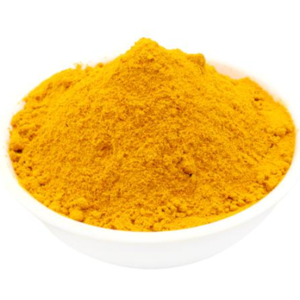
The D.K.Shah & Sons catalogue is built around two physical forms of the same raw material. The root-side listings (Dry Turmeric Roots, Natural Turmeric Roots, Organic Turmeric Root, and Whole Raw Turmeric Roots) are the unprocessed rhizomes of Curcuma longa, traded in cured and polished form, typically finger or bulb grades, with finger turmeric generally commanding a premium over bulbs due to higher curcumin concentration and cleaner appearance. The powder-side listings (Turmeric Powder, Pure Turmeric Powder, Turmeric Whole Powder, and Yellow Turmeric Powder) are ground rhizome products, and the "whole powder" descriptor usually indicates the rhizome is ground without separating finger and bulb fractions, while "yellow" refers to colour intensity, a key visual specification tied to curcumin content.

Industry-standard specifications that buyers typically request for these lines include curcumin content (commonly 2-5% for regular grades and 5-7.5% for high-curcumin export grades), moisture (max 10% per ASTA and ESA cleanliness specifications), volatile oil content, total ash, acid-insoluble ash, lead and heavy metal limits, and microbiological parameters. ASTA Cleanliness Specifications (the American Spice Trade Association standard) and the European Spice Association (ESA) Minimum Quality Requirements are the two benchmark grading systems applied to Indian turmeric shipments. Powder mesh sizes typically range from 40 to 80 mesh depending on end use, and organic-root lines are usually paired with USDA NOP, EU 2018/848, or NPOP certification documentation, which buyers should verify before shipment.

Trade and Export Information - D.K.Shah & Sons

Turmeric exported from India under HS 0910.30 flows primarily to food processing, nutraceutical, cosmetic, and traditional medicine industries. The largest importing regions are the United States, the European Union (Germany, the UK, the Netherlands), the United Arab Emirates, Saudi Arabia, Japan, Bangladesh, and Malaysia, with the US and EU together accounting for a substantial share of India's turmeric powder exports. Whole and raw root shipments are more common to grinders and reprocessors in South and Southeast Asia, the Middle East, and parts of Africa, where local milling capacity adds value before re-export or domestic consumption.

For Indian turmeric exporters, the documentation set typically required by buyers includes a Certificate of Origin from the relevant Export Inspection Council / Export Inspection Agency (EIA) approved laboratory, an Agmark grade certificate where applicable, a fumigation certificate, a phyto-sanitary certificate from the Plant Quarantine authority, and a pre-shipment analysis report covering curcumin, moisture, ash, and microbiology. EU-bound shipments must comply with EU Regulation 1881/2006 on contaminants (aflatoxin and ochratoxin limits), Regulation 2023/915 on maximum levels for certain contaminants in food, and the EU Novel Food regulation where curcumin extracts are involved at high dosage. US shipments fall under FDA Food Facility Registration and FSVP importer requirements, with ASTA cleanliness compliance. Standard export packaging is 25 kg or 50 kg multi-wall kraft paper bags for powder, and 25-50 kg jute or PP bags for whole roots, with 20 ft FCL loads of roughly 12-18 metric tonnes depending on bulk density. Indian-origin turmeric typically ships under Incoterms FOB or CIF to most destination ports, with Mundra, Chennai, Cochin, and Nhava Sheva being the principal loading ports.

Sourcing from D.K.Shah & Sons - Buyer Guidance

Buyers sourcing from D.K.Shah & Sons should request a current Certificate of Analysis (CoA) tied to a specific lot, listing curcumin percentage by HPLC, moisture content, total ash, acid-insoluble ash, volatile oil, lead, cadmium, and aflatoxin B1/total aflatoxin results. For the Organic Turmeric Root line, valid NPOP, USDA NOP, or EU organic certification scope documents covering the named supplier entity should be requested, along with the certifying body's certificate number and validity. Sample evaluation prior to purchase order is standard practice in this category, with buyers typically requesting 100-500 g of powder or 1-2 kg of whole roots for laboratory verification against their own specifications.

Before confirming an order, buyers should confirm the exact form (finger vs. bulb, single-pass vs. double-polished roots; mesh size and curcumin grade for powder), the harvest year, the fumigation treatment used (methyl bromide vs. phosphine, which affects EU acceptance), and the named production or sourcing district. Lead times for Indian turmeric shipments from order confirmation to FOB loading typically run 15-30 days for stock items and longer for organic or custom-grade lots. MOQ varies by form, but 1 metric tonne for powder and 5-10 tonnes for whole roots is a common starting point for export orders. Payment terms in this trade are usually T/T (30% advance, 70% against copy of B/L) or irrevocable L/C at sight, and pre-shipment inspection by SGS, Bureau Veritas, or Intertek is routinely requested by first-time buyers.

Frequently Asked Questions About D.K.Shah & Sons

What forms of turmeric does D.K.Shah & Sons list?

The catalogue lists 8 products split between raw rhizome form (Dry Turmeric Roots, Natural Turmeric Roots, Organic Turmeric Root, and Whole Raw Turmeric Roots) and ground powder form (Turmeric Powder, Pure Turmeric Powder, Turmeric Whole Powder, and Yellow Turmeric Powder). All items fall under HS subheading 0910.30 for turmeric.

Which curcumin grade should buyers specify for the powder lines?

Buyers should specify curcumin percentage on the CoA, typically 2-5% for standard food-grade turmeric powder and 5-7.5% for high-curcumin grades used in nutraceutical applications. Colour alone is not a substitute for measured curcumin content.

What documentation should be requested with a turmeric shipment from India?

Standard documents include a phyto-sanitary certificate from India's Plant Quarantine authority, a fumigation certificate, a Certificate of Origin, a pre-shipment analysis report from an EIC/EIA-approved laboratory, and where relevant an Agmark grade certificate. Organic lines require valid NPOP, USDA NOP, or EU organic scope certificates.

Which contaminant limits apply to Indian turmeric exports?

EU-bound shipments must meet aflatoxin and ochratoxin limits under Regulation 2023/915, plus lead and cadmium maxima. US shipments must comply with FDA tolerances, and most international buyers apply ASTA Cleanliness Specifications or European Spice Association minimum quality standards.

What is the typical packaging and container load for Indian turmeric exports?

Powder is usually packed in 25 kg or 50 kg multi-wall kraft paper bags with inner food-grade liners, and whole roots in 25-50 kg jute or PP bags. A 20 ft FCL typically holds 12-18 metric tonnes depending on bulk density and packaging.

What are the usual Incoterms and lead times for Indian turmeric shipments?

Most Indian turmeric exports ship on FOB or CIF terms from ports such as Mundra, Chennai, Cochin, or Nhava Sheva. Lead times from order confirmation to FOB loading typically run 15-30 days for stock items and longer for organic or custom-graded lots.

What is the typical MOQ for export orders of turmeric powder and whole roots?

MOQ commonly starts at around 1 metric tonne for turmeric powder and 5-10 metric tonnes for whole raw roots, though suppliers may accept smaller trial orders for new buyer relationships. MOQ should always be confirmed in writing before order placement.

How should buyers verify the organic status of the Organic Turmeric Root line?

Buyers should request a copy of the supplier's valid organic certificate (NPOP, USDA NOP, or EU 2018/848 scope as applicable), confirm the certifying body and certificate number, and verify that the certificate covers turmeric and the named supplier entity. A transaction certificate should accompany each shipment.


Featured Products from this Supplier

Other Suppliers in Primary Category

Top Trusted Suppliers

Related Products

Trending in Parent Category

More Suppliers in Category

Related Products

Other Suppliers

EximNext
58.7K+ live requirements
Register Free🎁 Reach verified global buyers
Post Requirement
🌍 Trusted by 224.9K+ businesses in 200+ countries|
58.7K+ active requirements right now
✉️ [email protected]
|
Sell on EximNextPost Requirement
EximNext
AgricultureApparelConstructionElectronicFoodHomeIndustrialMineralsMiscellaneous
🔥 Deals|✨ AI Match|🏭 Suppliers|📋 Buy Leads|💰 Trade Finance
58.7K+ live RFQs·194.8K+ suppliers
🎁 Reach global buyers →
EximNext
EximNext
Register Free
🎁 Reach verified global buyers
Sign In
📋Post Requirement💬Get Quotes✨AI Match📋RFQ Marketplace
All Categories
Services & Tools
🏭Supplier Directory🔥Today's Deals💰Trade Finance
Sell on EximNext →
AboutContactBlogHelp
Global Trade  ·  India
8
products listed

D.K.Shah & Sons

⚓ Harbor
Country flag , India
🛡️
54/100
Trust Score

D.K.Shah & Sons Product Catalog

Showing 8 of 8 products
View all products →
Natural Turmeric Roots
⚓ Harbor
Natural Turmeric Roots
Contact
MOQ: 1 Unit
Organic Turmeric Root
⚓ Harbor
Organic Turmeric Root
Contact
MOQ: 1 Unit
Whole Raw Turmeric Roots
⚓ Harbor
Whole Raw Turmeric Roots
Contact
MOQ: 1 Unit
Pure Turmeric Powder
⚓ Harbor
Pure Turmeric Powder
Contact
MOQ: 1 Unit
Turmeric Whole Powder
⚓ Harbor
Turmeric Whole Powder
Contact
MOQ: 1 Unit
Yellow Turmeric Powder
⚓ Harbor
Yellow Turmeric Powder
Contact
MOQ: 1 Unit
Dry Turmeric Roots
⚓ Harbor
Dry Turmeric Roots
Contact
MOQ: 1 Unit
Turmeric Powder
⚓ Harbor
Turmeric Powder
Contact
MOQ: 1 Unit

About D.K.Shah & Sons - Turmeric Supplier in India

D.K.Shah & Sons is an India-based supplier listing 8 active products concentrated in a single commodity category: turmeric, marketed across three sub-categories (Turmeric Powder, Turmeric, and Spices). The catalogue covers both raw agricultural form (dry, natural, organic, and whole raw turmeric roots) and processed ground form (pure, whole, and yellow turmeric powder), which mirrors the two principal commercial presentations of Curcuma longa that move through Indian wholesale spice channels. Indian turmeric is traded globally from producing belts in Tamil Nadu (Erode), Telangana, Maharashtra, and Karnataka, and is recognised for high curcumin-bearing cultivars such as Salem and Erode varieties. The supplier's product mix sits within HS chapter 09 (Spices), specifically subheading 0910.30 for turmeric, the harmonised code under which whole, cut, sliced, broken or powdered turmeric enters international customs clearance.

D.K.Shah & Sons operates as a domestic-origin exporter working from India, the world's largest producer, consumer and exporter of turmeric, accounting for roughly 75-80% of global production and around 60% of world trade volumes. The 8-line catalogue reflects the standard split Indian shippers maintain between raw rhizome exports (typically sold to grinders and reprocessors in destination markets) and finished powder exports (sold directly to food, nutraceutical, and seasoning blenders). The presence of an "Organic Turmeric Root" line alongside conventional dry and natural roots indicates the supplier serves both conventional and certified-organic buyer segments, a common dual-track approach in Indian spice export houses that supply to EU, North American and Middle Eastern importers.

Product Range and Specialties of D.K.Shah & Sons

The D.K.Shah & Sons catalogue is built around two physical forms of the same raw material. The root-side listings (Dry Turmeric Roots, Natural Turmeric Roots, Organic Turmeric Root, and Whole Raw Turmeric Roots) are the unprocessed rhizomes of Curcuma longa, traded in cured and polished form, typically finger or bulb grades, with finger turmeric generally commanding a premium over bulbs due to higher curcumin concentration and cleaner appearance. The powder-side listings (Turmeric Powder, Pure Turmeric Powder, Turmeric Whole Powder, and Yellow Turmeric Powder) are ground rhizome products, and the "whole powder" descriptor usually indicates the rhizome is ground without separating finger and bulb fractions, while "yellow" refers to colour intensity, a key visual specification tied to curcumin content.

Industry-standard specifications that buyers typically request for these lines include curcumin content (commonly 2-5% for regular grades and 5-7.5% for high-curcumin export grades), moisture (max 10% per ASTA and ESA cleanliness specifications), volatile oil content, total ash, acid-insoluble ash, lead and heavy metal limits, and microbiological parameters. ASTA Cleanliness Specifications (the American Spice Trade Association standard) and the European Spice Association (ESA) Minimum Quality Requirements are the two benchmark grading systems applied to Indian turmeric shipments. Powder mesh sizes typically range from 40 to 80 mesh depending on end use, and organic-root lines are usually paired with USDA NOP, EU 2018/848, or NPOP certification documentation, which buyers should verify before shipment.

Trade and Export Information - D.K.Shah & Sons

Turmeric exported from India under HS 0910.30 flows primarily to food processing, nutraceutical, cosmetic, and traditional medicine industries. The largest importing regions are the United States, the European Union (Germany, the UK, the Netherlands), the United Arab Emirates, Saudi Arabia, Japan, Bangladesh, and Malaysia, with the US and EU together accounting for a substantial share of India's turmeric powder exports. Whole and raw root shipments are more common to grinders and reprocessors in South and Southeast Asia, the Middle East, and parts of Africa, where local milling capacity adds value before re-export or domestic consumption.

For Indian turmeric exporters, the documentation set typically required by buyers includes a Certificate of Origin from the relevant Export Inspection Council / Export Inspection Agency (EIA) approved laboratory, an Agmark grade certificate where applicable, a fumigation certificate, a phyto-sanitary certificate from the Plant Quarantine authority, and a pre-shipment analysis report covering curcumin, moisture, ash, and microbiology. EU-bound shipments must comply with EU Regulation 1881/2006 on contaminants (aflatoxin and ochratoxin limits), Regulation 2023/915 on maximum levels for certain contaminants in food, and the EU Novel Food regulation where curcumin extracts are involved at high dosage. US shipments fall under FDA Food Facility Registration and FSVP importer requirements, with ASTA cleanliness compliance. Standard export packaging is 25 kg or 50 kg multi-wall kraft paper bags for powder, and 25-50 kg jute or PP bags for whole roots, with 20 ft FCL loads of roughly 12-18 metric tonnes depending on bulk density. Indian-origin turmeric typically ships under Incoterms FOB or CIF to most destination ports, with Mundra, Chennai, Cochin, and Nhava Sheva being the principal loading ports.

Sourcing from D.K.Shah & Sons - Buyer Guidance

Buyers sourcing from D.K.Shah & Sons should request a current Certificate of Analysis (CoA) tied to a specific lot, listing curcumin percentage by HPLC, moisture content, total ash, acid-insoluble ash, volatile oil, lead, cadmium, and aflatoxin B1/total aflatoxin results. For the Organic Turmeric Root line, valid NPOP, USDA NOP, or EU organic certification scope documents covering the named supplier entity should be requested, along with the certifying body's certificate number and validity. Sample evaluation prior to purchase order is standard practice in this category, with buyers typically requesting 100-500 g of powder or 1-2 kg of whole roots for laboratory verification against their own specifications.

Before confirming an order, buyers should confirm the exact form (finger vs. bulb, single-pass vs. double-polished roots; mesh size and curcumin grade for powder), the harvest year, the fumigation treatment used (methyl bromide vs. phosphine, which affects EU acceptance), and the named production or sourcing district. Lead times for Indian turmeric shipments from order confirmation to FOB loading typically run 15-30 days for stock items and longer for organic or custom-grade lots. MOQ varies by form, but 1 metric tonne for powder and 5-10 tonnes for whole roots is a common starting point for export orders. Payment terms in this trade are usually T/T (30% advance, 70% against copy of B/L) or irrevocable L/C at sight, and pre-shipment inspection by SGS, Bureau Veritas, or Intertek is routinely requested by first-time buyers.

Frequently Asked Questions About D.K.Shah & Sons

What forms of turmeric does D.K.Shah & Sons list?

The catalogue lists 8 products split between raw rhizome form (Dry Turmeric Roots, Natural Turmeric Roots, Organic Turmeric Root, and Whole Raw Turmeric Roots) and ground powder form (Turmeric Powder, Pure Turmeric Powder, Turmeric Whole Powder, and Yellow Turmeric Powder). All items fall under HS subheading 0910.30 for turmeric.

Which curcumin grade should buyers specify for the powder lines?

Buyers should specify curcumin percentage on the CoA, typically 2-5% for standard food-grade turmeric powder and 5-7.5% for high-curcumin grades used in nutraceutical applications. Colour alone is not a substitute for measured curcumin content.

What documentation should be requested with a turmeric shipment from India?

Standard documents include a phyto-sanitary certificate from India's Plant Quarantine authority, a fumigation certificate, a Certificate of Origin, a pre-shipment analysis report from an EIC/EIA-approved laboratory, and where relevant an Agmark grade certificate. Organic lines require valid NPOP, USDA NOP, or EU organic scope certificates.

Which contaminant limits apply to Indian turmeric exports?

EU-bound shipments must meet aflatoxin and ochratoxin limits under Regulation 2023/915, plus lead and cadmium maxima. US shipments must comply with FDA tolerances, and most international buyers apply ASTA Cleanliness Specifications or European Spice Association minimum quality standards.

What is the typical packaging and container load for Indian turmeric exports?

Powder is usually packed in 25 kg or 50 kg multi-wall kraft paper bags with inner food-grade liners, and whole roots in 25-50 kg jute or PP bags. A 20 ft FCL typically holds 12-18 metric tonnes depending on bulk density and packaging.

What are the usual Incoterms and lead times for Indian turmeric shipments?

Most Indian turmeric exports ship on FOB or CIF terms from ports such as Mundra, Chennai, Cochin, or Nhava Sheva. Lead times from order confirmation to FOB loading typically run 15-30 days for stock items and longer for organic or custom-graded lots.

What is the typical MOQ for export orders of turmeric powder and whole roots?

MOQ commonly starts at around 1 metric tonne for turmeric powder and 5-10 metric tonnes for whole raw roots, though suppliers may accept smaller trial orders for new buyer relationships. MOQ should always be confirmed in writing before order placement.

How should buyers verify the organic status of the Organic Turmeric Root line?

Buyers should request a copy of the supplier's valid organic certificate (NPOP, USDA NOP, or EU 2018/848 scope as applicable), confirm the certifying body and certificate number, and verify that the certificate covers turmeric and the named supplier entity. A transaction certificate should accompany each shipment.

About D.K.Shah & Sons - Turmeric Supplier in India

D.K.Shah & Sons is an India-based supplier listing 8 active products concentrated in a single commodity category: turmeric, marketed across three sub-categories (Turmeric Powder, Turmeric, and Spices). The catalogue covers both raw agricultural form (dry, natural, organic, and whole raw turmeric roots) and processed ground form (pure, whole, and yellow turmeric powder), which mirrors the two principal commercial presentations of Curcuma longa that move through Indian wholesale spice channels. Indian turmeric is traded globally from producing belts in Tamil Nadu (Erode), Telangana, Maharashtra, and Karnataka, and is recognised for high curcumin-bearing cultivars such as Salem and Erode varieties. The supplier's product mix sits within HS chapter 09 (Spices), specifically subheading 0910.30 for turmeric, the harmonised code under which whole, cut, sliced, broken or powdered turmeric enters international customs clearance.

D.K.Shah & Sons operates as a domestic-origin exporter working from India, the world's largest producer, consumer and exporter of turmeric, accounting for roughly 75-80% of global production and around 60% of world trade volumes. The 8-line catalogue reflects the standard split Indian shippers maintain between raw rhizome exports (typically sold to grinders and reprocessors in destination markets) and finished powder exports (sold directly to food, nutraceutical, and seasoning blenders). The presence of an "Organic Turmeric Root" line alongside conventional dry and natural roots indicates the supplier serves both conventional and certified-organic buyer segments, a common dual-track approach in Indian spice export houses that supply to EU, North American and Middle Eastern importers.

Product Range and Specialties of D.K.Shah & Sons

The D.K.Shah & Sons catalogue is built around two physical forms of the same raw material. The root-side listings (Dry Turmeric Roots, Natural Turmeric Roots, Organic Turmeric Root, and Whole Raw Turmeric Roots) are the unprocessed rhizomes of Curcuma longa, traded in cured and polished form, typically finger or bulb grades, with finger turmeric generally commanding a premium over bulbs due to higher curcumin concentration and cleaner appearance. The powder-side listings (Turmeric Powder, Pure Turmeric Powder, Turmeric Whole Powder, and Yellow Turmeric Powder) are ground rhizome products, and the "whole powder" descriptor usually indicates the rhizome is ground without separating finger and bulb fractions, while "yellow" refers to colour intensity, a key visual specification tied to curcumin content.

Industry-standard specifications that buyers typically request for these lines include curcumin content (commonly 2-5% for regular grades and 5-7.5% for high-curcumin export grades), moisture (max 10% per ASTA and ESA cleanliness specifications), volatile oil content, total ash, acid-insoluble ash, lead and heavy metal limits, and microbiological parameters. ASTA Cleanliness Specifications (the American Spice Trade Association standard) and the European Spice Association (ESA) Minimum Quality Requirements are the two benchmark grading systems applied to Indian turmeric shipments. Powder mesh sizes typically range from 40 to 80 mesh depending on end use, and organic-root lines are usually paired with USDA NOP, EU 2018/848, or NPOP certification documentation, which buyers should verify before shipment.

Trade and Export Information - D.K.Shah & Sons

Turmeric exported from India under HS 0910.30 flows primarily to food processing, nutraceutical, cosmetic, and traditional medicine industries. The largest importing regions are the United States, the European Union (Germany, the UK, the Netherlands), the United Arab Emirates, Saudi Arabia, Japan, Bangladesh, and Malaysia, with the US and EU together accounting for a substantial share of India's turmeric powder exports. Whole and raw root shipments are more common to grinders and reprocessors in South and Southeast Asia, the Middle East, and parts of Africa, where local milling capacity adds value before re-export or domestic consumption.

For Indian turmeric exporters, the documentation set typically required by buyers includes a Certificate of Origin from the relevant Export Inspection Council / Export Inspection Agency (EIA) approved laboratory, an Agmark grade certificate where applicable, a fumigation certificate, a phyto-sanitary certificate from the Plant Quarantine authority, and a pre-shipment analysis report covering curcumin, moisture, ash, and microbiology. EU-bound shipments must comply with EU Regulation 1881/2006 on contaminants (aflatoxin and ochratoxin limits), Regulation 2023/915 on maximum levels for certain contaminants in food, and the EU Novel Food regulation where curcumin extracts are involved at high dosage. US shipments fall under FDA Food Facility Registration and FSVP importer requirements, with ASTA cleanliness compliance. Standard export packaging is 25 kg or 50 kg multi-wall kraft paper bags for powder, and 25-50 kg jute or PP bags for whole roots, with 20 ft FCL loads of roughly 12-18 metric tonnes depending on bulk density. Indian-origin turmeric typically ships under Incoterms FOB or CIF to most destination ports, with Mundra, Chennai, Cochin, and Nhava Sheva being the principal loading ports.

Sourcing from D.K.Shah & Sons - Buyer Guidance

Buyers sourcing from D.K.Shah & Sons should request a current Certificate of Analysis (CoA) tied to a specific lot, listing curcumin percentage by HPLC, moisture content, total ash, acid-insoluble ash, volatile oil, lead, cadmium, and aflatoxin B1/total aflatoxin results. For the Organic Turmeric Root line, valid NPOP, USDA NOP, or EU organic certification scope documents covering the named supplier entity should be requested, along with the certifying body's certificate number and validity. Sample evaluation prior to purchase order is standard practice in this category, with buyers typically requesting 100-500 g of powder or 1-2 kg of whole roots for laboratory verification against their own specifications.

Before confirming an order, buyers should confirm the exact form (finger vs. bulb, single-pass vs. double-polished roots; mesh size and curcumin grade for powder), the harvest year, the fumigation treatment used (methyl bromide vs. phosphine, which affects EU acceptance), and the named production or sourcing district. Lead times for Indian turmeric shipments from order confirmation to FOB loading typically run 15-30 days for stock items and longer for organic or custom-grade lots. MOQ varies by form, but 1 metric tonne for powder and 5-10 tonnes for whole roots is a common starting point for export orders. Payment terms in this trade are usually T/T (30% advance, 70% against copy of B/L) or irrevocable L/C at sight, and pre-shipment inspection by SGS, Bureau Veritas, or Intertek is routinely requested by first-time buyers.

Frequently Asked Questions About D.K.Shah & Sons
What forms of turmeric does D.K.Shah & Sons list?
The catalogue lists 8 products split between raw rhizome form (Dry Turmeric Roots, Natural Turmeric Roots, Organic Turmeric Root, and Whole Raw Turmeric Roots) and ground powder form (Turmeric Powder, Pure Turmeric Powder, Turmeric Whole Powder, and Yellow Turmeric Powder). All items fall under HS subheading 0910.30 for turmeric.
Which curcumin grade should buyers specify for the powder lines?
Buyers should specify curcumin percentage on the CoA, typically 2-5% for standard food-grade turmeric powder and 5-7.5% for high-curcumin grades used in nutraceutical applications. Colour alone is not a substitute for measured curcumin content.
What documentation should be requested with a turmeric shipment from India?
Standard documents include a phyto-sanitary certificate from India's Plant Quarantine authority, a fumigation certificate, a Certificate of Origin, a pre-shipment analysis report from an EIC/EIA-approved laboratory, and where relevant an Agmark grade certificate. Organic lines require valid NPOP, USDA NOP, or EU organic scope certificates.
Which contaminant limits apply to Indian turmeric exports?
EU-bound shipments must meet aflatoxin and ochratoxin limits under Regulation 2023/915, plus lead and cadmium maxima. US shipments must comply with FDA tolerances, and most international buyers apply ASTA Cleanliness Specifications or European Spice Association minimum quality standards.
What is the typical packaging and container load for Indian turmeric exports?
Powder is usually packed in 25 kg or 50 kg multi-wall kraft paper bags with inner food-grade liners, and whole roots in 25-50 kg jute or PP bags. A 20 ft FCL typically holds 12-18 metric tonnes depending on bulk density and packaging.
What are the usual Incoterms and lead times for Indian turmeric shipments?
Most Indian turmeric exports ship on FOB or CIF terms from ports such as Mundra, Chennai, Cochin, or Nhava Sheva. Lead times from order confirmation to FOB loading typically run 15-30 days for stock items and longer for organic or custom-graded lots.
What is the typical MOQ for export orders of turmeric powder and whole roots?
MOQ commonly starts at around 1 metric tonne for turmeric powder and 5-10 metric tonnes for whole raw roots, though suppliers may accept smaller trial orders for new buyer relationships. MOQ should always be confirmed in writing before order placement.
How should buyers verify the organic status of the Organic Turmeric Root line?
Buyers should request a copy of the supplier's valid organic certificate (NPOP, USDA NOP, or EU 2018/848 scope as applicable), confirm the certifying body and certificate number, and verify that the certificate covers turmeric and the named supplier entity. A transaction certificate should accompany each shipment.

D.K.Shah & Sons
Country flag India
⚓ HarborGlobal Trade
54/100
Trust Score
8
Products
✓ Free to contact — no commission
✓ Escrow payment available
✓ Verified business identity
Compare more suppliers
Post a requirement — get 10 quotes free
Let verified suppliers compete for your business. Free, fast, no commitment.
EximNext Verified Supplier
Business identity verified
Physical address confirmed
Financial history checked
Certifications authenticated
Trade references validated
Due Diligence
Verify this supplier's real shipping history.
Every shipment, every buyer, every port. Trade data that can't be faked.
Run due diligence →
Discover More

Related Suppliers & Products

Explore similar suppliers, related products and trending categories

Featured Products from this Supplier

Other Suppliers in Primary Category

Top Trusted Suppliers

Related Products

Trending in Parent Category

More Suppliers in Category

Stay ahead in global trade
Weekly market insights & new supplier alerts.
EximNext
Exim Next is a leading global B2B marketplace, connecting over 205,000 verified suppliers and buyers across 200+ countries. As a trusted import export marketplace, it serves as the essential B2B portal for businesses worldwide, empowering them to expand their international reach. With Exim Next, businesses can trade smarter and grow faster.
SECURE PAYMENTS
VISAMastercardPayPalSWIFTL/CEscrow
Follow us
© 2026 EximNext