Ceylon Golden Cinnamon Lak Organic (Pvt.) Limited — Verified Supplier
About Ceylon Golden Cinnamon Lak Organic (Pvt.) Limited - Spices Supplier in Sri Lanka
Ceylon Golden Cinnamon Lak Organic (Pvt.) Limited is based in Sri Lanka and currently lists six active products. The catalogue includes Alba Cinnamon Sticks offered in organic and conventional formats, identified under HS code 0906.11 for cinnamon bark. It also supplies Ceylon Cinnamon Quills in multiple grades (Alba, C5, C4, M5, M4, H1, H2), ground Ceylon Cinnamon Powder (organic and conventional), and two essential oils derived from cinnamon bark and leaf. In addition, the company offers whole Ceylon Black Pepper in both organic and conventional variants. All items fall within the HS chapter 09 family that covers spices, herbs and aromatic plant preparations.
The product titles reflect the distinction between organic certification and conventional production, a common requirement for spice exporters from Sri Lanka. The cinnamon range spans from whole sticks to finely milled powder, providing flexibility for buyers needing bulk bulk or value‑added forms. The inclusion of both bark oil and leaf oil expands the portfolio into the essential‑oil segment, which is classified under HS code 3301 for essential oils. Black pepper is listed as whole peppercorns, the primary export form of Piper nigrum from the island. The supplier’s catalogue therefore covers both solid spice commodities and liquid aromatic extracts within the six‑product count.
Product Range and Specialties of Ceylon Golden Cinnamon Lak Organic (Pvt.) Limited
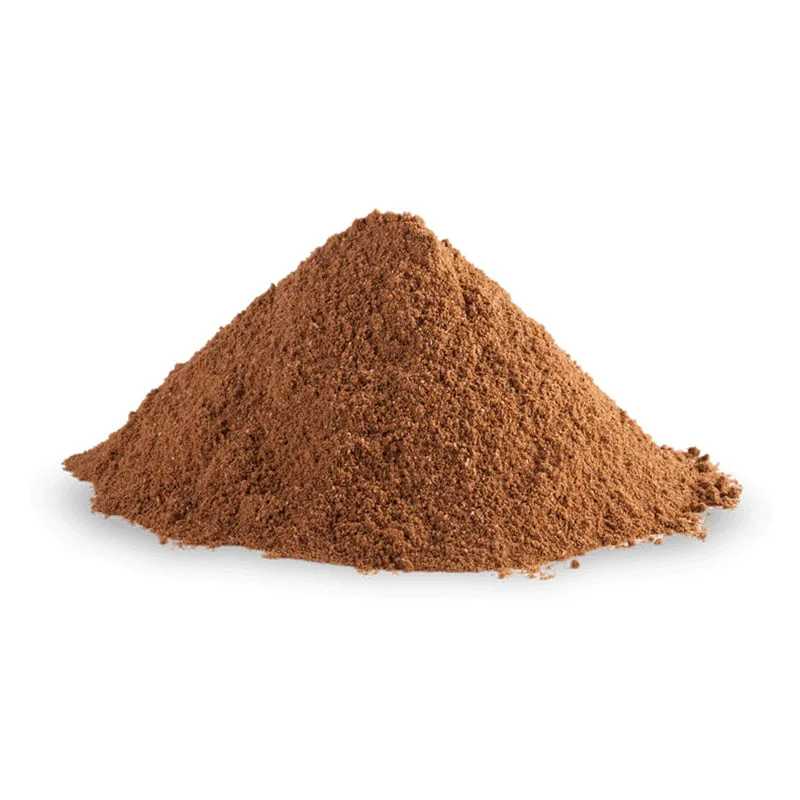
The listed Alba Cinnamon Sticks are typically graded as “Alba” (the highest quality Ceylon cinnamon) with a moisture content not exceeding 12 % and a cinnamon oil content of at least 2 % by weight. Quill grades such as C5, C4, M5, M4, H1 and H2 correspond to industry‑standard size and cut classifications, with “C” grades indicating larger quills and “H” grades finer pieces. Ground cinnamon powder is usually supplied in 25 kg jute bags, with particle size passing through a 250 µm sieve and a total ash content below 5 %. Cinnamon bark oil and leaf oil are extracted by steam distillation and are commonly sold in 1‑L glass bottles or 200 L drums, with ISO 9235 specifications for purity (minimum 70 % cinnamaldehyde for bark oil) and a refractive index around 1.55. Whole Ceylon Black Pepper is exported in 50 kg polypropylene bags, meeting size grading of 6 - 8 mm, moisture ≤13 %, and oil content ≥45 % by weight. International buyers of Ceylon cinnamon often require organic certification recognized by the EU or USDA, along with a Certificate of Analysis confirming moisture, oil content and microbial limits. For essential oils, a Gas Chromatography‑Mass Spectrometry (GC‑MS) profile and a phytochemical assay are standard documentation. Black pepper shipments are usually consolidated in 20‑ft containers holding up to 22 metric tons, with protective inner liners to preserve aroma. The HS codes associated with these products - 0906.11 for cinnamon sticks, 0906.90 for other cinnamon preparations, and 0904.11 for whole pepper - guide customs classification and duty rates. Exporters from Sri Lanka frequently apply for a Phytosanitary Certificate and comply with the EU’s REACH regulations for aromatic substances.
Trade and Export Information - Ceylon Golden Cinnamon Lak Organic (Pvt.) Limited
Sri Lanka is a global source of Ceylon cinnamon and black pepper, with the European Union, United States, Middle East and Southeast Asian markets accounting for the majority of demand. HS chapter 09 codes are used to classify these spices; cinnamon sticks fall under 0906.11, other cinnamon preparations under 0906.90, and whole pepper under 0904.11, which determines tariff treatment in importing countries. Buyers typically request certifications such as ISO 9001 quality management, HACCP food safety plans, and organic certifications (EU organic, USDA organic) for both solid spices and essential oils. Export logistics often employ FOB Colombo or FOB Hambantota, with containers loaded onto container ships bound for Rotterdam, New York, Dubai or Singapore; CIF terms are common for regional buyers. Sri Lankan spice exporters must provide a Phytosanitary Certificate, a Certificate of Origin, and where applicable an EU‑type import health certificate to satisfy customs and quarantine requirements. Standard packaging includes 25 kg jute or polypropylene bags for solid spices and 1 L glass bottles or 200 L drums for oils, all sealed with tamper‑evident liners. Inspection agencies such as SGS or Bureau Veritas frequently conduct pre‑shipment sampling to verify compliance with moisture, oil content and microbiological limits. The country's export authority, the Ministry of Export Agriculture, oversees compliance with the Sri Lankan Organic Certification Scheme, which aligns with international organic standards. Buyers from the food processing sector often require compliance with the Codex Alimentarius limits for pesticide residues, while cosmetics buyers focus on ISO 9235 purity specifications for essential oils.
Sourcing from Ceylon Golden Cinnamon Lak Organic (Pvt.) Limited - Buyer Guidance
Prospective buyers should request a recent Certificate of Analysis for each spice batch, covering moisture, oil content, ash, microbial limits and, for organic items, the organic certificate number. For cinnamon bark and leaf oils, a GC‑MS report and a purity certificate (e.g., minimum 70 % cinnamaldehyde for bark oil) are essential to confirm composition. Verification of HS code alignment with the purchase order prevents customs delays; buyers should confirm that cinnamon sticks are listed under 0906.11 and pepper under 0904.11. Sampling is typically arranged in 500 g quantities for powders and 100 ml for oils, allowing laboratory testing before full‑scale orders. Lead times for organic certification documentation can add 2 - 4 weeks to the order cycle, and minimum order quantities often start at one 20‑ft container (≈22 t) for solid spices or 500 L of oil. Ensure that packaging specifications meet the buyer’s storage conditions; jute bags should have a moisture barrier liner for long‑haul shipments. Request the supplier’s shipping schedule and Incoterm preference, and confirm that the freight forwarder can handle the required container type (dry container for solids, tank container for bulk oil if needed). Confirm that the supplier can provide the necessary phytosanitary and origin certificates for the destination country’s import regulations.
Frequently Asked Questions About Ceylon Golden Cinnamon Lak Organic (Pvt.) Limited
What HS codes are used for the cinnamon and pepper products?
Cinnamon sticks are classified under HS code 0906.11, other cinnamon preparations such as quills and powder fall under 0906.90, while whole Ceylon black pepper is under HS code 0904.11.
Are the organic cinnamon and pepper products certified to any international standards?
The supplier issues organic certificates that are recognized by the EU organic regulation and the USDA National Organic Program; buyers should request a copy of the certificate and the certification body’s accreditation number.
What typical quality specifications apply to Alba cinnamon sticks?
Alba sticks normally have a moisture content ≤12 %, cinnamon oil content ≥2 % by weight, and are free from foreign matter; a Certificate of Analysis should confirm these parameters.
How are the cinnamon essential oils packaged for export?
Bark oil and leaf oil are typically shipped in 1‑liter glass bottles or 200‑liter steel drums, sealed with tamper‑evident caps and accompanied by an ISO 9235 purity certificate and a GC‑MS analytical report.
What size grading is used for the whole black pepper?
The peppercorns are graded by particle size, commonly 6 - 8 mm for export, with moisture not exceeding 13 % and an essential oil content of at least 45 % by weight.
Which certifications are commonly required by importers of Sri Lankan spices?
Importers usually request ISO 9001, HACCP, and where applicable organic certification, as well as a Phytosanitary Certificate, Certificate of Origin and compliance with the EU REACH regulation for aromatic oils.
What are the typical packaging and container loads for the solid spice products?
Solid spices are packed in 25 kg or 50 kg polypropylene/jute bags, and a standard 20‑ft container can accommodate roughly 22 metric tons of such packed goods, while a 40‑ft container can hold about 44 tons.




 , Sri Lanka