ZY-Glass — Supplier

About ZY-Glass - Glass Machinery Supplier in China

ZY-Glass is located in China and currently lists six distinct product entries in its online catalogue. The items cover key stages of a float‑glass production line, including a sheet glass production line, a longitudinal cutting machine, a batch charger, a horizontal drawing machine, a top roller and a cold end. These products are grouped under the supplier’s top categories of Glass Machinery, Light & Medium Machinery, Animal Related Equipment, Welding & Wire Mesh Machinery, Agriculture and Float Glass. The catalogue therefore focuses on equipment used for continuous glass melting, forming and downstream processing.

In the global glass industry, a sheet‑glass production line typically processes 5 000 to 12 000 m² of glass per day, with melt temperatures around 1 600 °C and thicknesses from 4 mm to 19 mm. Cutting machines are expected to achieve a positional tolerance of ±0.2 mm, while batch chargers usually handle 10 t to 30 t of raw batch per hour. Horizontal drawing machines draw molten glass at speeds of 2 m to 5 m per minute, and top rollers are sized to support glass widths up to 2 m. Cold‑end units provide annealing and tempering functions to meet standard strength and safety specifications.

Product Range and Specialties of ZY-Glass

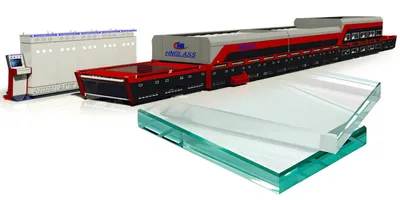
The six catalogue entries describe the core equipment of a continuous float‑glass line. The sheet glass production line integrates melting, forming and primary annealing; the longitudinal cutting machine provides precise straight cuts; the batch charger feeds raw materials into the furnace; the horizontal drawing machine transports the molten ribbon; the top roller stabilises the glass ribbon; and the cold end completes final cooling and handling.

Industry practice classifies float glass into standard grades such as standard float (4 - 19 mm thickness), architectural float (up to 25 mm) and low‑iron glass (ICUMSA 45). Cutting machines are commonly equipped with CNC controls and can achieve cutting speeds of 30 - 50 m min⁻¹. Batch chargers are typically insulated and feature automated weighing systems. Horizontal drawing machines often incorporate variable‑speed drives to adjust ribbon speed for different product specifications. Top rollers are fabricated from high‑strength steel with surface finishes that minimise glass imprint, and cold‑end sections are designed to meet EN 12150 thermal‑shock requirements.

Trade and Export Information - ZY-Glass

Chinese manufacturers of glass machinery export heavily to the Middle East, Southeast Asia, Eastern Europe and North America, where construction and automotive glass demand remains strong. Shipment is usually arranged on 20‑ft or 40‑ft containers with wooden crates, and common Incoterms are FOB Shanghai or CIF destination port. Buyers typically request CE marking for EU markets, ISO 9001 certification for quality management, and an SGS pre‑shipment inspection report to satisfy customs and insurance requirements.

Customs classification for these machines falls under HS Chapter 84, and import licences may be required in certain jurisdictions for high‑temperature equipment. Exporters often provide packing lists, a commercial invoice indicating HS codes, and a certificate of origin to qualify for preferential tariffs under China‑ASEAN or China‑EU agreements. Logistic planning must account for the weight of a full line (often 30 - 50 t) and the need for on‑site assembly, which is usually supported by the supplier’s technical team.

Sourcing from ZY-Glass - Buyer Guidance

When evaluating ZY‑Glass’s equipment, buyers should request detailed technical datasheets that specify melt capacity, glass width, cutting tolerance, power consumption and dimensions. Sample performance reports, such as cutting accuracy tests and thermal‑stress simulations, help verify that the machinery meets project specifications.

It is prudent to ask for copies of ISO 9001 and any CE certificates, as well as a recent SGS inspection report, before finalising a purchase. Clarify the minimum order quantity, which for a complete line is typically one full system, and confirm lead times of 30‑60 days plus shipping. Verify that the supplier can provide installation, training and after‑sales spare‑parts support.

Frequently Asked Questions About ZY-Glass

What types of glass production equipment does ZY-Glass list?

The catalogue includes a sheet glass production line, longitudinal cutting machine, batch charger, horizontal drawing machine, top roller and cold end, which together form a typical continuous float‑glass line.

Which certifications should buyers verify before purchasing glass machinery from China?

Buyers typically request CE marking for EU shipments, ISO 9001 quality‑management certification, and a recent SGS inspection report to confirm compliance with safety and performance standards.

What are typical performance specifications for a longitudinal cutting machine?

Standard models cut float glass up to 19 mm thickness with a positional accuracy of ±0.2 mm and can handle cutting speeds of 30 - 50 m per minute, depending on glass width.

How is a batch charger sized for a float‑glass line?

Batch chargers are usually rated for 10 t to 30 t of raw material per hour, with feed control systems that maintain melt temperature within ±2 °C.

What packaging is used for shipping glass machinery?

Equipment is normally crated in reinforced wooden pallets, protected with anti‑corrosion coating and moisture‑resistant liners, and loaded into 20‑ft or 40‑ft containers according to unit dimensions.

What is a typical lead time for a complete sheet‑glass line from order to delivery?

Manufacturers in China generally require 30 - 60 days for production, followed by 5 - 10 days for factory pre‑shipment inspection and container loading.

Which markets commonly import Chinese glass machinery?

Major importers include construction‑focused regions such as the Middle East, Southeast Asia, Eastern Europe and North‑American glass manufacturers seeking cost‑effective equipment.


Other Suppliers in Agriculture

Top Trusted Suppliers

Related Products

Other Suppliers

EximNext
7.1K+ live requirements
Register Free🎁 Reach global buyers
Post Requirement
🌍 Trusted by 225K+ businesses in 200+ countries|
7.1K+ active requirements right now
✉️ [email protected]
|
Sell on EximNextPost Requirement
EximNext
AgricultureApparelConstructionElectronicFoodHomeIndustrialMineralsMiscellaneous
🔥 Deals|✨ AI Match|🏭 Suppliers|📋 Buy Leads|💰 Trade Finance
7.1K+ live RFQs·194.8K+ suppliers
🎁 Reach global buyers →
EximNext
EximNext
Register Free
🎁 Reach global buyers
Sign In
📋Post Requirement💬Get Quotes✨AI Match📋RFQ Marketplace
All Categories
Services & Tools
🏭Supplier Directory🔥Today's Deals💰Trade Finance
Sell on EximNext →
AboutContactBlogHelp
Industrial & Minerals  ·  China
6
products listed

ZY-Glass

⚓ Harbor
Country flag , ChinaNew supplier / no reviews yet
🛡️
56/100
Trust Score

ZY-Glass Product Catalog

Showing 6 of 6 products
View all products →
Top roller
⚓ Harbor
Top roller
Contact
MOQ: 1 Unit
Cold end
⚓ Harbor
Cold end
Contact
MOQ: 1 Unit
Horizontal drawing machine
⚓ Harbor
Horizontal drawing machine
Contact
MOQ: 1 Unit
Batch charger
⚓ Harbor
Batch charger
Contact
MOQ: 1 Unit
Longitudinal cutting machine
⚓ Harbor
Longitudinal cutting machine
Contact
MOQ: 1 Unit
Sheet glass production line
⚓ Harbor
Sheet glass production line
Contact
MOQ: 1 Unit

About ZY-Glass - Glass Machinery Supplier in China

ZY-Glass is located in China and currently lists six distinct product entries in its online catalogue. The items cover key stages of a float‑glass production line, including a sheet glass production line, a longitudinal cutting machine, a batch charger, a horizontal drawing machine, a top roller and a cold end. These products are grouped under the supplier’s top categories of Glass Machinery, Light & Medium Machinery, Animal Related Equipment, Welding & Wire Mesh Machinery, Agriculture and Float Glass. The catalogue therefore focuses on equipment used for continuous glass melting, forming and downstream processing.

In the global glass industry, a sheet‑glass production line typically processes 5 000 to 12 000 m² of glass per day, with melt temperatures around 1 600 °C and thicknesses from 4 mm to 19 mm. Cutting machines are expected to achieve a positional tolerance of ±0.2 mm, while batch chargers usually handle 10 t to 30 t of raw batch per hour. Horizontal drawing machines draw molten glass at speeds of 2 m to 5 m per minute, and top rollers are sized to support glass widths up to 2 m. Cold‑end units provide annealing and tempering functions to meet standard strength and safety specifications.

Product Range and Specialties of ZY-Glass

The six catalogue entries describe the core equipment of a continuous float‑glass line. The sheet glass production line integrates melting, forming and primary annealing; the longitudinal cutting machine provides precise straight cuts; the batch charger feeds raw materials into the furnace; the horizontal drawing machine transports the molten ribbon; the top roller stabilises the glass ribbon; and the cold end completes final cooling and handling.

Industry practice classifies float glass into standard grades such as standard float (4 - 19 mm thickness), architectural float (up to 25 mm) and low‑iron glass (ICUMSA 45). Cutting machines are commonly equipped with CNC controls and can achieve cutting speeds of 30 - 50 m min⁻¹. Batch chargers are typically insulated and feature automated weighing systems. Horizontal drawing machines often incorporate variable‑speed drives to adjust ribbon speed for different product specifications. Top rollers are fabricated from high‑strength steel with surface finishes that minimise glass imprint, and cold‑end sections are designed to meet EN 12150 thermal‑shock requirements.

Trade and Export Information - ZY-Glass

Chinese manufacturers of glass machinery export heavily to the Middle East, Southeast Asia, Eastern Europe and North America, where construction and automotive glass demand remains strong. Shipment is usually arranged on 20‑ft or 40‑ft containers with wooden crates, and common Incoterms are FOB Shanghai or CIF destination port. Buyers typically request CE marking for EU markets, ISO 9001 certification for quality management, and an SGS pre‑shipment inspection report to satisfy customs and insurance requirements.

Customs classification for these machines falls under HS Chapter 84, and import licences may be required in certain jurisdictions for high‑temperature equipment. Exporters often provide packing lists, a commercial invoice indicating HS codes, and a certificate of origin to qualify for preferential tariffs under China‑ASEAN or China‑EU agreements. Logistic planning must account for the weight of a full line (often 30 - 50 t) and the need for on‑site assembly, which is usually supported by the supplier’s technical team.

Sourcing from ZY-Glass - Buyer Guidance

When evaluating ZY‑Glass’s equipment, buyers should request detailed technical datasheets that specify melt capacity, glass width, cutting tolerance, power consumption and dimensions. Sample performance reports, such as cutting accuracy tests and thermal‑stress simulations, help verify that the machinery meets project specifications.

It is prudent to ask for copies of ISO 9001 and any CE certificates, as well as a recent SGS inspection report, before finalising a purchase. Clarify the minimum order quantity, which for a complete line is typically one full system, and confirm lead times of 30‑60 days plus shipping. Verify that the supplier can provide installation, training and after‑sales spare‑parts support.

Frequently Asked Questions About ZY-Glass

What types of glass production equipment does ZY-Glass list?

The catalogue includes a sheet glass production line, longitudinal cutting machine, batch charger, horizontal drawing machine, top roller and cold end, which together form a typical continuous float‑glass line.

Which certifications should buyers verify before purchasing glass machinery from China?

Buyers typically request CE marking for EU shipments, ISO 9001 quality‑management certification, and a recent SGS inspection report to confirm compliance with safety and performance standards.

What are typical performance specifications for a longitudinal cutting machine?

Standard models cut float glass up to 19 mm thickness with a positional accuracy of ±0.2 mm and can handle cutting speeds of 30 - 50 m per minute, depending on glass width.

How is a batch charger sized for a float‑glass line?

Batch chargers are usually rated for 10 t to 30 t of raw material per hour, with feed control systems that maintain melt temperature within ±2 °C.

What packaging is used for shipping glass machinery?

Equipment is normally crated in reinforced wooden pallets, protected with anti‑corrosion coating and moisture‑resistant liners, and loaded into 20‑ft or 40‑ft containers according to unit dimensions.

What is a typical lead time for a complete sheet‑glass line from order to delivery?

Manufacturers in China generally require 30 - 60 days for production, followed by 5 - 10 days for factory pre‑shipment inspection and container loading.

Which markets commonly import Chinese glass machinery?

Major importers include construction‑focused regions such as the Middle East, Southeast Asia, Eastern Europe and North‑American glass manufacturers seeking cost‑effective equipment.

About ZY-Glass - Glass Machinery Supplier in China

ZY-Glass is located in China and currently lists six distinct product entries in its online catalogue. The items cover key stages of a float‑glass production line, including a sheet glass production line, a longitudinal cutting machine, a batch charger, a horizontal drawing machine, a top roller and a cold end. These products are grouped under the supplier’s top categories of Glass Machinery, Light & Medium Machinery, Animal Related Equipment, Welding & Wire Mesh Machinery, Agriculture and Float Glass. The catalogue therefore focuses on equipment used for continuous glass melting, forming and downstream processing.

In the global glass industry, a sheet‑glass production line typically processes 5 000 to 12 000 m² of glass per day, with melt temperatures around 1 600 °C and thicknesses from 4 mm to 19 mm. Cutting machines are expected to achieve a positional tolerance of ±0.2 mm, while batch chargers usually handle 10 t to 30 t of raw batch per hour. Horizontal drawing machines draw molten glass at speeds of 2 m to 5 m per minute, and top rollers are sized to support glass widths up to 2 m. Cold‑end units provide annealing and tempering functions to meet standard strength and safety specifications.

Product Range and Specialties of ZY-Glass

The six catalogue entries describe the core equipment of a continuous float‑glass line. The sheet glass production line integrates melting, forming and primary annealing; the longitudinal cutting machine provides precise straight cuts; the batch charger feeds raw materials into the furnace; the horizontal drawing machine transports the molten ribbon; the top roller stabilises the glass ribbon; and the cold end completes final cooling and handling.

Industry practice classifies float glass into standard grades such as standard float (4 - 19 mm thickness), architectural float (up to 25 mm) and low‑iron glass (ICUMSA 45). Cutting machines are commonly equipped with CNC controls and can achieve cutting speeds of 30 - 50 m min⁻¹. Batch chargers are typically insulated and feature automated weighing systems. Horizontal drawing machines often incorporate variable‑speed drives to adjust ribbon speed for different product specifications. Top rollers are fabricated from high‑strength steel with surface finishes that minimise glass imprint, and cold‑end sections are designed to meet EN 12150 thermal‑shock requirements.

Trade and Export Information - ZY-Glass

Chinese manufacturers of glass machinery export heavily to the Middle East, Southeast Asia, Eastern Europe and North America, where construction and automotive glass demand remains strong. Shipment is usually arranged on 20‑ft or 40‑ft containers with wooden crates, and common Incoterms are FOB Shanghai or CIF destination port. Buyers typically request CE marking for EU markets, ISO 9001 certification for quality management, and an SGS pre‑shipment inspection report to satisfy customs and insurance requirements.

Customs classification for these machines falls under HS Chapter 84, and import licences may be required in certain jurisdictions for high‑temperature equipment. Exporters often provide packing lists, a commercial invoice indicating HS codes, and a certificate of origin to qualify for preferential tariffs under China‑ASEAN or China‑EU agreements. Logistic planning must account for the weight of a full line (often 30 - 50 t) and the need for on‑site assembly, which is usually supported by the supplier’s technical team.

Sourcing from ZY-Glass - Buyer Guidance

When evaluating ZY‑Glass’s equipment, buyers should request detailed technical datasheets that specify melt capacity, glass width, cutting tolerance, power consumption and dimensions. Sample performance reports, such as cutting accuracy tests and thermal‑stress simulations, help verify that the machinery meets project specifications.

It is prudent to ask for copies of ISO 9001 and any CE certificates, as well as a recent SGS inspection report, before finalising a purchase. Clarify the minimum order quantity, which for a complete line is typically one full system, and confirm lead times of 30‑60 days plus shipping. Verify that the supplier can provide installation, training and after‑sales spare‑parts support.

Frequently Asked Questions About ZY-Glass
What types of glass production equipment does ZY-Glass list?
The catalogue includes a sheet glass production line, longitudinal cutting machine, batch charger, horizontal drawing machine, top roller and cold end, which together form a typical continuous float‑glass line.
Which certifications should buyers verify before purchasing glass machinery from China?
Buyers typically request CE marking for EU shipments, ISO 9001 quality‑management certification, and a recent SGS inspection report to confirm compliance with safety and performance standards.
What are typical performance specifications for a longitudinal cutting machine?
Standard models cut float glass up to 19 mm thickness with a positional accuracy of ±0.2 mm and can handle cutting speeds of 30 - 50 m per minute, depending on glass width.
How is a batch charger sized for a float‑glass line?
Batch chargers are usually rated for 10 t to 30 t of raw material per hour, with feed control systems that maintain melt temperature within ±2 °C.
What packaging is used for shipping glass machinery?
Equipment is normally crated in reinforced wooden pallets, protected with anti‑corrosion coating and moisture‑resistant liners, and loaded into 20‑ft or 40‑ft containers according to unit dimensions.
What is a typical lead time for a complete sheet‑glass line from order to delivery?
Manufacturers in China generally require 30 - 60 days for production, followed by 5 - 10 days for factory pre‑shipment inspection and container loading.
Which markets commonly import Chinese glass machinery?
Major importers include construction‑focused regions such as the Middle East, Southeast Asia, Eastern Europe and North‑American glass manufacturers seeking cost‑effective equipment.

ZY-Glass
Country flag China
⚓ HarborIndustrial & Minerals
56/100
Trust Score
6
Products
✓ Free to contact — no commission
✓ Escrow payment available
✓ Verified business identity
Compare more suppliers
Post a requirement — get 10 quotes free
Let verified suppliers compete for your business. Free, fast, no commitment.
Due Diligence
Verify this supplier's real shipping history.
Every shipment, every buyer, every port. Trade data that can't be faked.
Run due diligence →
Discover More

Related Suppliers & Products

Explore similar suppliers, related products and trending categories

Other Suppliers in Agriculture

Top Trusted Suppliers

Stay ahead in global trade
Weekly market insights & new supplier alerts.
EximNext
Exim Next is a leading global B2B marketplace, connecting over 220,000 registered suppliers and buyers across 200+ countries. As a trusted import export marketplace, it serves as the essential B2B portal for businesses worldwide, empowering them to expand their international reach. With Exim Next, businesses can trade smarter and grow faster.
SECURE PAYMENTS
VISAMastercardPayPalSWIFTL/CEscrow
Follow us
© 2026 EximNext