Wayne Campbell — Verified Supplier
About Wayne Campbell - Fresh Vegetables Supplier in Jamaica
Wayne Campbell operates from Jamaica and lists six active fresh‑produce items in its catalogue. The portfolio includes Sweet Pepper, Cabbage, Tomatoes, Sweet Potato, Bak Choi and Yam, covering the top categories of Fresh Vegetables, Pepper, Fresh Cabbage, Fresh Tomato and Fresh Potato as indicated in the supplier data. All products fall under the HS chapter 07 family for fresh or chilled vegetables, with sub‑headings such as 0709 for peppers, 0704 for cabbage, 0702 for tomatoes and 0701 for potatoes and yams. The supplier’s catalogue does not specify individual HS codes, but the products align with the standard tariff classifications used for Caribbean fresh‑produce exports.
The Jamaican origin places the produce in a tropical climate that supports year‑round cultivation, allowing continuous supply to markets that import fresh vegetables. Typical export destinations for Jamaican fresh produce include the United States, Canada, the United Kingdom and other EU members, where buyers often require compliance with GlobalGAP, HACCP and phytosanitary regulations. Shipping is usually performed in refrigerated containers (20 ft or 40 ft) to preserve freshness during the transit from Caribbean ports such as Kingston or Montego Bay. Buyers therefore need to account for temperature control, moisture loss and shelf‑life specifications when planning orders.
Product Range and Specialties of Wayne Campbell
Wayne Campbell’s catalogue lists Sweet Pepper, Cabbage, Tomatoes, Sweet Potato, Bak Choi and Yam. In the fresh‑vegetable sector, buyers commonly differentiate these items by size, colour grade, firmness and moisture content. Sweet Pepper is typically graded by colour uniformity and cap shape, with market grades ranging from “extra bright red” to “standard”. Cabbage is measured in head weight (e.g., 1 - 2 kg) and leaf density, while Tomatoes are classified by diameter (e.g., 60 - 80 mm) and firmness (measured in kg f). Sweet Potato quality is often expressed as dry‑matter percentage (20 - 25 %) and uniform root size. Bak Choi (bok choy) is evaluated by leaf length (20 - 30 cm) and stem thickness, and Yam is sorted by tuber size and skin integrity. These specifications align with the typical HS sub‑headings and allow buyers to match product grades to their processing or retail requirements.
Trade and Export Information - Wayne Campbell
Jamaica’s fresh‑produce exports are governed by the Caribbean Community (CARICOM) trade framework and the World Trade Organization’s SPS (Sanitary and Phytosanitary) Agreement. HS chapter 07 products from Jamaica are usually subject to a phytosanitary certificate, a certificate of origin and, where required, a GlobalGAP audit report. Major import regions - North America and the EU - frequently request ISO 22000 or HACCP compliance for fresh vegetables to ensure food‑safety management. Logistics for these items involve refrigerated sea freight (reefer containers) or air freight for time‑critical shipments, with typical Incoterms such as FOB Kingston or CIF New York. Exporters from Jamaica often coordinate with local port authorities for pre‑export inspections, and buyers should verify that the shipment meets the destination country’s maximum residue limits (MRLs) for pesticides.
Sourcing from Wayne Campbell - Buyer Guidance
When sourcing from Wayne Campbell, buyers should request a sample batch and a recent phytosanitary certificate to confirm freedom from pests and diseases. It is advisable to obtain the supplier’s GlobalGAP or HACCP audit reports, as these are standard evidence of compliance for fresh‑produce imports into the US and EU. Buyers should also verify the product’s size and grade specifications - for example, pepper colour uniformity, cabbage head weight, or tomato diameter - against their own quality standards before confirming a full order. Clarify the packaging format (e.g., bulk cartons of 20 kg, palletised in insulated boxes) and the expected lead time, which for Jamaican fresh produce typically ranges from 10 to 21 days from harvest to shipment departure.
Frequently Asked Questions About Wayne Campbell
What fresh‑vegetable products does Wayne Campbell list for export?
The supplier lists six items: Sweet Pepper, Cabbage, Tomatoes, Sweet Potato, Bak Choi and Yam, all classified under HS chapter 07 for fresh vegetables.
Which certifications should a buyer request from this Jamaican supplier?
Buyers should ask for a phytosanitary certificate, GlobalGAP or HACCP audit report, and any ISO 22000 documentation that the supplier may hold.
What HS sub‑headings apply to the products in the catalogue?
Typical HS codes are 0709 for Sweet Pepper, 0704 for Cabbage, 0702 for Tomatoes, 0701 for Sweet Potato and Yam, and 0705 for Bak Choi, all within the fresh‑produce chapter.
What are the common quality parameters for these vegetables?
Quality parameters include pepper colour uniformity, cabbage head weight (1 - 2 kg), tomato diameter (60 - 80 mm) and firmness, sweet potato dry‑matter (20 - 25 %), Bak Choi leaf length (20 - 30 cm), and yam tuber size and skin integrity.
Which markets typically import Jamaican fresh vegetables?
The United States, Canada, the United Kingdom and other EU member states are the primary import markets for Jamaican fresh produce.
What packaging and shipping methods are standard for these goods?
Refrigerated containers (20 ft or 40 ft reefers) with insulated palletised cartons are standard; Incoterms such as FOB Kingston or CIF New York are commonly used.
What lead time should a buyer expect for an order?
Lead times generally range from 10 to 21 days, covering harvest, post‑harvest handling, phytosanitary inspection and loading for refrigerated shipment.
Are there any typical minimum order quantities?
Buyers often arrange orders by container load, which translates to roughly 10 - 15 metric tonnes per 20 ft container, but exact MOQ should be confirmed with the supplier.




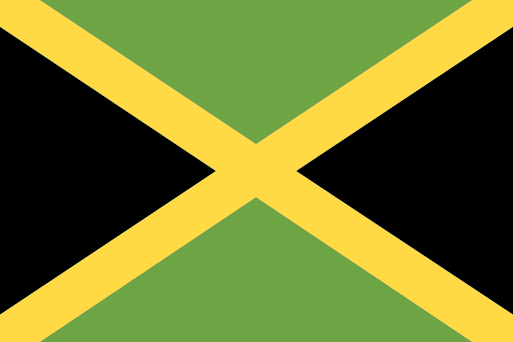 , Jamaica