Wadekar Foods — Verified Manufacturer & Wholesale Supplier
About Wadekar Foods - Peanuts Supplier in India
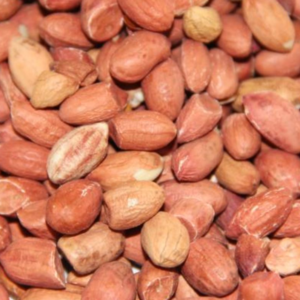
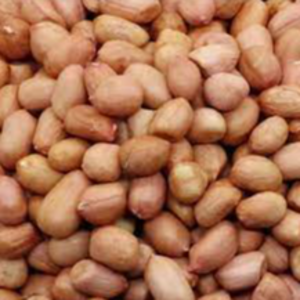
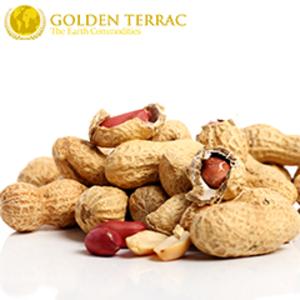
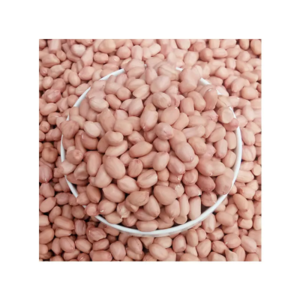
India, specifically Nashik in Maharashtra, is the base of Wadekar Foods, which currently lists five distinct peanut products in its catalogue. The company’s portfolio includes BOLD PEANUT classified under HS code 1202.30, and four items - JAWA PEANUT, TJ PEANUT, BLANCHED PEANUT, and JAVA PEANUT - associated with HS code 1202.42 where specified. All products are derived from Arachis hypogaea, covering both raw kernels and processed forms such as blanched kernels. The catalogue groups these items under the broader categories of Peanuts, Groundnuts, Groundnut Kernel, and Processed Food. No additional products beyond the five listed are indicated.
The listed items represent typical commodity forms of the peanut seed, ranging from whole kernels (BOLD PEANUT) to shelled and blanched variants (JAWA PEANUT, TJ PEANUT, BLANCHED PEANUT). The HS code 1202.42 covers shelled or roasted peanuts, while 1202.30 applies to raw or in‑shell peanuts, aligning with international tariff classifications. Each product is described using the botanical material Arachis hypogaea, reflecting standard nomenclature for trade documentation. The absence of a specific HS code for JAVA PEANUT suggests it is grouped under the general peanut category pending further detail. Buyers can reference the HS codes to assess duty rates and import requirements.
Product Range and Specialties of Wadekar Foods
The catalogue comprises BOLD PEANUT (HS 1202.30) and four items under HS 1202.42 - JAWA PEANUT, TJ PEANUT, BLANCHED PEANUT and JAVA PEANUT - all sourced from Arachis hypogaea kernels. In the global peanut trade, raw kernels are often graded by size (large > 12 mm, medium 8‑12 mm) and moisture content not exceeding 5 % to limit fungal growth. Blanched kernels typically require a minimum shell‑removal rate of 95 % and an aflatoxin limit of 15 ppb for most EU and US markets. Common packaging includes 25 kg polypropylene bags stacked on pallets, with a 20‑ft container accommodating roughly 800 bags (≈20 tonnes). Buyers frequently request certificates such as ISO 22000, HACCP, and a phytosanitary inspection for these commodity grades.
Trade and Export Information - Wadekar Foods
India ranks among the top global exporters of peanuts, with the Gujarat region supplying the majority of raw kernels due to its favorable climate. HS chapter 12, specifically codes 1202.30 and 1202.42, is used worldwide to classify in‑shell and shelled peanuts, and duty rates vary by destination country. Major import markets include the United Arab Emirates, Saudi Arabia, the European Union, and the United States, where food processors and snack manufacturers source bulk peanuts. Typical export documentation comprises a commercial invoice, packing list, certificate of origin, and a phytosanitary certificate issued by Indian authorities. Shipping is usually arranged on a CIF or FOB basis, with cargo packed in 25 kg bags placed on standard 40‑ft containers for efficient handling.
Buyers in the EU and US often require additional compliance such as EU Regulation (EC) No 1881/2006 limits for aflatoxins and FDA import alerts for pesticide residues, prompting exporters to provide laboratory test reports. ISO 22000 or HACCP certification is commonly requested to demonstrate food safety management. Freight logistics favor containerized transport, with a 40‑ft container holding approximately 1,600 kg of peanuts per pallet layer. Timelines for customs clearance depend on the completeness of the phytosanitary and analytical certificates.
Sourcing from Wadekar Foods - Buyer Guidance
When sourcing peanuts from Wadekar Foods, buyers should request the latest phytosanitary certificate and a laboratory analysis report covering moisture content, aflatoxin levels, and pesticide residues. Verification of ISO 22000 or HACCP compliance should be confirmed through a copy of the certificate and the scope of the food safety plan. Samples are typically supplied in 1 kg sealed bags, allowing laboratory testing for size distribution and shelling percentage before committing to larger orders. Minimum order quantities for bulk shipments generally start at one metric tonne, which can be loaded into a 20‑ft container or scaled to a 40‑ft container for higher volumes. Lead times for production and packaging are commonly 30‑45 days after order confirmation, subject to seasonal availability of raw kernels.
Buyers should also verify the packing list details, such as bag weight (25 kg), pallet dimensions, and total container load, to ensure alignment with shipping terms. Requesting a pre‑shipment inspection report from an accredited third‑party agency can further reduce risk of non‑conformity. Clarifying the preferred Incoterm (e.g., FOB Nashik or CIF destination port) early in the negotiation helps streamline logistics and cost allocation.
Frequently Asked Questions About Wadekar Foods
What peanut products are listed in Wadekar Foods' catalogue?
The catalogue lists five items: BOLD PEANUT (HS 1202.30), JAWA PEANUT, TJ PEANUT, BLANCHED PEANUT and JAVA PEANUT, the latter four being associated with HS 1202.42 where specified.
Which HS codes apply to the listed peanuts?
BOLD PEANUT falls under HS code 1202.30 for in‑shell peanuts, while JAWA PEANUT, TJ PEANUT, BLANCHED PEANUT and JAVA PEANUT are classified under HS code 1202.42 for shelled or processed peanuts.
Does Wadekar Foods hold any food safety certifications?
The supplied facts do not specify any certifications; buyers should ask the supplier to provide any ISO 22000, HACCP, or FSSAI certificates that may be in place.
How can I obtain a sample before placing a bulk order?
Request a 1 kg sealed sample of the desired peanut type; the supplier can ship the sample in a protective bag for laboratory evaluation of size, moisture and aflatoxin levels.
What are the typical minimum order quantities and container capacities?
Bulk orders usually start at one metric tonne. Standard packaging is in 25 kg polypropylene bags, allowing a 20‑ft container to hold about 800 bags (≈20 tonnes) and a 40‑ft container roughly double that capacity.
What documentation is required for importing these peanuts into the EU or US?
Importers should obtain a commercial invoice, packing list, certificate of origin, phytosanitary certificate, and laboratory test reports for moisture, aflatoxins and pesticide residues to meet EU and US regulatory requirements.
What packaging format is used for shipment?
Peanuts are packed in 25 kg polypropylene bags, stacked on standard Euro pallets, and loaded into containers according to the agreed Incoterm.
What is the usual lead time from order confirmation to shipment?
Lead times are typically 30‑45 days after order confirmation, depending on raw kernel availability and any required quality testing.




 Nashik, India




.jpg.png)