Tryken Traders — Verified Supplier
About Tryken Traders - Coir Products Supplier in India
Tryken Traders operates from India and lists six active products in its catalogue. The supplier's portfolio spans the top categories of Blocks, Tiles & Slabs; Other Coir Products; Coco Peat & Coir Pith; Coir Fibers; and Suitcases, Briefcases & Bags. Within the coir family the catalogue includes curled coir, cocopeat, cocopeat blocks, coir fiber, grow bag and growbag slabs. The HS code families appearing are 1401.20 for cocopeat blocks and 0602.90 for growbag slabs. The supplier is classified in the harbor trust tier.
The product “Cocopeat Blocks” is recorded under HS code 1401.20 and is described as coconut coir pith processed into block form. “Growbag Slabs” carries HS code 0602.90 and consists of coco coir fiber substrate that is pH‑buffered. The remaining items - curled coir, cocopeat, coir fiber and grow bag - are listed without specific HS codes in the provided data. All items are derived from coconut husk or pith, a renewable agricultural residue commonly used in horticulture and erosion control. The catalogue does not specify any certifications held by the supplier.
Product Range and Specialties of Tryken Traders
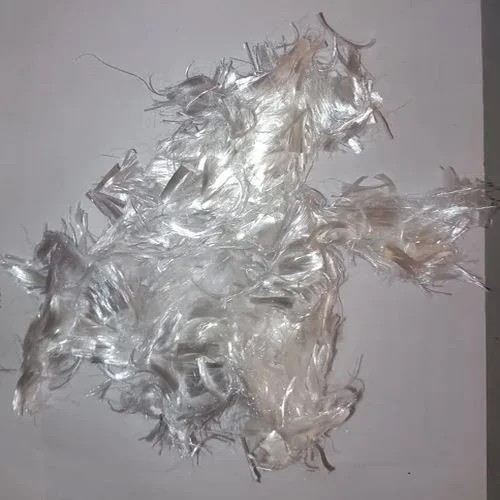
The catalogue from Tryken Traders includes curled coir, raw cocopeat, cocopeat blocks (HS 1401.20), coir fiber, grow bags and growbag slabs (HS 0602.90). Each product is sourced from coconut husk or pith and is marketed for horticultural, landscaping and packaging applications.
In the coir industry, coconut‑derived substrates are graded by bulk density (typically 0.12‑0.18 g cm‑3 for cocopeat), moisture content (40‑60 %), pH (5.5‑6.5), and particle size distribution (2‑10 mm for blocks). Coir fibers are usually specified by length (30‑100 mm), tensile strength (30‑70 MPa) and ash content (<5 %). Grow bags and slabs are commonly offered in capacities from 10 L to 100 L and are expected to be pH‑neutral and free of contaminants. Buyers often look for ISO 9001 or ISI compliance, as well as a phytosanitary certificate, to confirm product safety and quality.
Trade and Export Information - Tryken Traders
India is a leading exporter of coir and coco peat, supplying the United States, European Union, Middle East and Southeast Asian markets. The HS 1401.20 code covers processed cocopeat blocks, while HS 0602.90 applies to coir fiber products and related horticultural slabs; both codes fall under Chapter 06 and Chapter 14 of the Harmonized System, which are subject to standard customs valuation and inspection procedures.
Typical export logistics involve loading compressed bales or bulk bags into 20‑ft or 40‑ft containers, with FOB or CIF terms most frequently used. Importing countries usually require a phytosanitary certificate, a certificate of origin and, where applicable, compliance with ISO 9001 or local organic standards. Packaging must protect the material from moisture ingress and mechanical damage, and shipments are often accompanied by a detailed packing list, material safety data sheet and laboratory test report.
Sourcing from Tryken Traders - Buyer Guidance
Buyers should request a product data sheet that includes bulk density, moisture content, pH and particle‑size distribution for cocopeat, and tensile strength and length for coir fiber. A recent laboratory analysis, phytosanitary certificate and certificate of origin are standard documents for Indian coir exports, and any ISO or ISI certification should be verified if claimed. Samples of curled coir, cocopeat blocks or growbag slabs can be requested to assess texture, pH buffering and overall quality before committing to larger volumes.
Typical minimum order quantities for bulk coir products range from one metric ton to several tons, which can be consolidated into a 20‑ft container. Lead times in India are generally 30‑45 days from order confirmation, depending on production scheduling and export clearance. Buyers are advised to confirm packaging dimensions, container loading plans and Incoterm preferences early in the negotiation process.
Frequently Asked Questions About Tryken Traders
What coir‑derived products does Tryken Traders list in its catalogue?
Tryken Traders lists curled coir, raw cocopeat, cocopeat blocks (HS 1401.20), coir fiber, grow bags and growbag slabs (HS 0602.90), all sourced from coconut husk or pith.
Are phytosanitary certificates required for Indian coir exports?
Importers of Indian coir products typically require a phytosanitary certificate issued by the Indian agricultural authority to confirm the material is pest‑free and complies with the destination country’s regulations.
What specifications are common for cocopeat blocks?
Industry standards for cocopeat blocks include a bulk density of 0.12‑0.18 g cm‑3, moisture content of 40‑60 %, pH between 5.5 and 6.5, and a particle size range of 2‑10 mm. These parameters are usually verified by an independent laboratory report.
How are growbag slabs packaged for shipment?
Growbag slabs are compressed, wrapped in moisture‑resistant film, and loaded into 20‑ft containers. The shipment is classified under HS 0602.90 and is accompanied by a packing list, certificate of origin and, where required, a phytosanitary certificate.
Which regions commonly import Indian coir fibers?
Major importers of Indian coir fiber include the United States, Germany, the United Arab Emirates and Japan, where the fibers are used for horticultural substrates, geotextiles and rope manufacturing.
What documentation should a buyer request before placing an order?
Buyers should request a product data sheet, laboratory test results for moisture, pH and tensile strength, a phytosanitary certificate, a certificate of origin and any ISO or ISI compliance certificates the supplier can provide.
What is the typical minimum order quantity for cocopeat from Tryken Traders?
Suppliers of Indian cocopeat often set a minimum order of one metric ton, which can be consolidated into a 20‑ft container for bulk shipment; the exact MOQ should be confirmed with the seller.




 , India