Senusha — Verified Suppliers
About Senusha - Organic Fertilizers Supplier in Indonesia
Senusha operates from DKI Jakarta, Indonesia and currently lists seven active products in its catalogue. The product portfolio includes fast moving consumer goods classified under HS code 1806.31, briquette and charcoal under HS code 4402.00, plywood under HS code 4412.33, rice bran and husk under HS code 2302.40, as well as vermicompost and growing media with non‑numeric HS descriptors. The listed categories span food products, organic fertilizers and wood products, reflecting a diversified export range. All items are recorded with their respective material descriptions as provided.
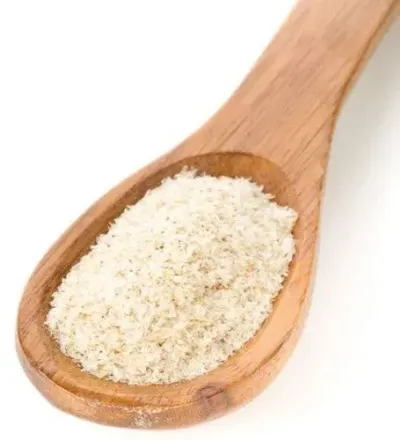
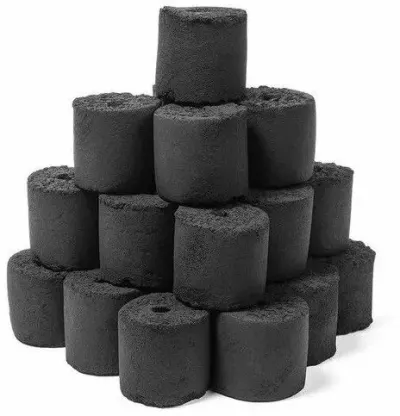
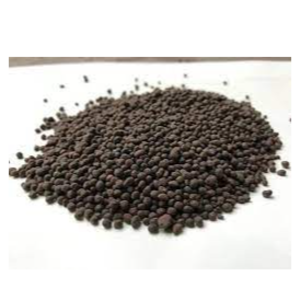
The FMCG entry specifies cocoa‑based confectionery containing cocoa butter, cocoa mass, sugar and milk solids. The charcoal offering cites coconut shell and hardwood sources, while the plywood description mentions hardwood or softwood cores with veneer layers. Rice bran and husk are presented as raw agricultural by‑products of Oryza sativa. Vermicompost is described as organic compost in granule or powder form, and the growing media is noted as a compost‑based powder mix. No additional product attributes are stated in the supplied data.
Product Range and Specialties of Senusha
In the FMCG segment, cocoa‑based confectionery typically conforms to standards such as ISO 22000 for food safety and may be graded by cocoa solids percentage (e.g., 30 % - 70 %). Charcoal briquettes and hardwood charcoal are commonly evaluated by moisture content (≤10 %), bulk density (0.4 - 0.6 t/m³) and calorific value (7,000 - 8,000 kcal/kg) under ASTM D1765. Indonesian plywood exports frequently follow the Indonesian National Standard (SNI) and may be classified as marine or structural grades with thicknesses from 6 mm to 30 mm and moisture limits of 12 %. Rice bran is generally marketed with oil content around 15 % - 20 % and complies with HACCP or ISO 17088 for grain products. Vermicompost and potting mixes are judged by N‑P‑K ratios (e.g., 2‑1‑2), particle size distribution (≤5 mm), and moisture levels (30 % - 45 %). These industry benchmarks help buyers compare Senusha’s catalogue items against typical market expectations.
Trade and Export Information - Senusha
Indonesia ranks among the world’s top exporters of coconut‑shell charcoal, plywood and agricultural by‑products, with primary destinations in Southeast Asia, the Middle East, Europe and North America. HS chapter 44 items such as charcoal (4402) and plywood (4412) are subject to phytosanitary certification and may require FSC or PEFC documentation for timber. Food products under HS 18 xxx, including cocoa confectionery, often need a Certificate of Origin and compliance with EU food safety regulations (e.g., EU Reg 1169/2011). Rice bran and vermicompost fall under HS 23 xxx and are commonly shipped in 20‑ft or 40‑ft containers, packed in bulk sacks or breathable bags to preserve quality. Typical Incoterms used by Indonesian exporters are FOB Jakarta or CIF destination, with freight forwarding handled through Jakarta Port.
Sourcing from Senusha - Buyer Guidance
Buyers should request a detailed specification sheet for each product, including moisture, bulk density, calorific value for charcoal, cocoa solids percentage for confectionery, and N‑P‑K analysis for vermicompost. Laboratory test reports complying with ISO 17025 or equivalent third‑party labs are standard for verifying these parameters. It is advisable to confirm the presence of phytosanitary certificates for wood products and any organic certification for the fertilizer line before placing an order. Verify packaging details - for example, 25 kg polypropylene bags for charcoal, 12 mm plywood bundles, or 20 kg woven sacks for rice bran - and ensure the HS code matches the intended customs classification. Clarify lead times, which for Indonesian exporters typically range from 2 weeks for bulk agricultural products to 4 - 6 weeks for processed wood items.
Frequently Asked Questions About Senusha
What HS codes are associated with Senusha’s product range?
The catalogue lists HS code 1806.31 for cocoa‑based confectionery, 4402.00 for briquette and charcoal, 4412.33 for plywood, and 2302.40 for rice bran and husk. Vermicompost and growing media are described with non‑numeric HS descriptors such as “Granule or powder” and “Powder.”
Which certifications are commonly required for the charcoal and plywood products?
International buyers typically request phytosanitary certificates for charcoal and timber, along with FSC or PEFC certification for plywood to verify sustainable sourcing. Additional quality certifications such as ISO 9001 or ISO 14001 are often stipulated in contracts.
What quality parameters should be verified for the vermicompost?
Standard checks include the N‑P‑K nutrient ratio (e.g., 2‑1‑2), moisture content between 30 % and 45 %, particle size not exceeding 5 mm, and the absence of heavy metals. A third‑party analysis following ISO 17025 is commonly required.
How is the cocoa‑based confectionery graded and what safety standards apply?
Confectionery is usually graded by cocoa solids content (30 % - 70 %) and sugar level. Food safety compliance generally follows ISO 22000, HACCP principles and, for EU markets, Regulation 1169/2011 on food information.
What packaging formats are standard for rice bran and charcoal when shipped from Indonesia?
Rice bran is commonly packed in 20 kg woven polypropylene sacks, while charcoal briquettes are shipped in 25 kg bulk bags or 1‑ton liners. Both packaging types are designed to protect the product from moisture during sea transport.
Which markets most frequently import Indonesian plywood and charcoal?
Key importers of Indonesian plywood include countries in Southeast Asia, the Middle East and the European Union, whereas charcoal is largely shipped to the Middle East, South Asia and Africa for industrial and domestic use.
What documentation is needed to clear customs for the listed HS codes?
Customs clearance generally requires a commercial invoice, packing list, Certificate of Origin, and, where applicable, phytosanitary certificates for wood and charcoal. For food products, a health certificate or food safety compliance document is often mandatory.





 , Indonesia