Sagar packaging — Verified Supplier
About Sagar packaging - Corrugated Paper Boxes Supplier in India
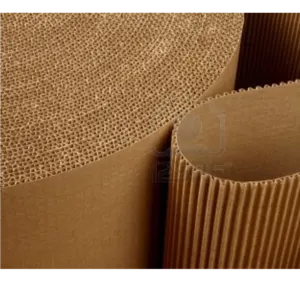
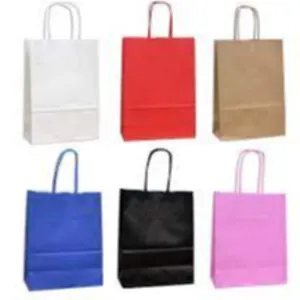
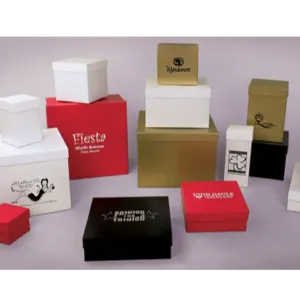
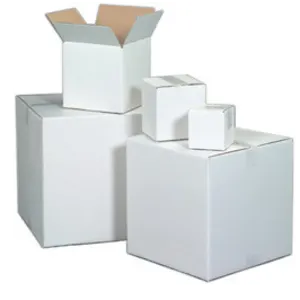
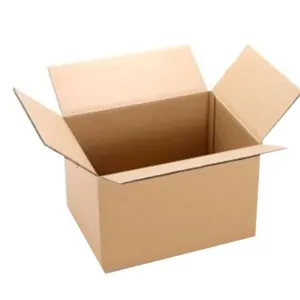
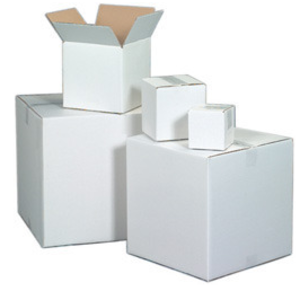
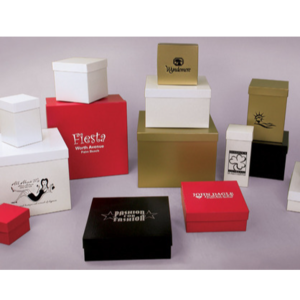
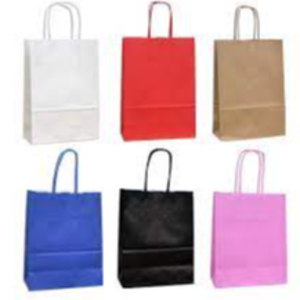
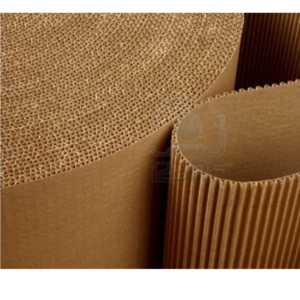
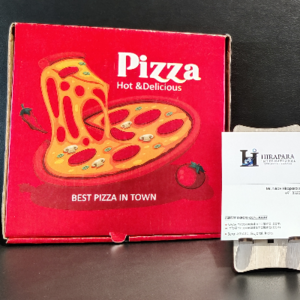
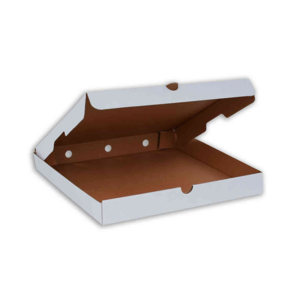
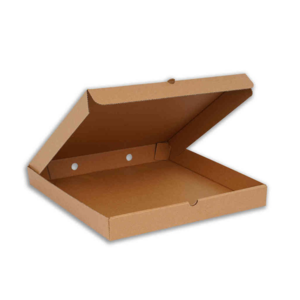
India, Firozabad in Uttar Pradesh, hosts Sagar packaging which lists six active products in its catalogue. The company offers corrugated boxes (HS 4819.10) made from kraftliner and fluting medium, white boxes (HS 4819.10) of corrugated paperboard, printed boxes (HS 4819.20) using corrugated cardboard, paper bags (HS 4819.30) from recyclable kraft paper, corrugated rolls (HS 4805.19) composed of kraft liner and fluting medium, and paper straws (HS 4823.90) produced from a wheat‑straw fiber blend. Each item is identified by its HS code family and material as recorded in the supplier’s catalogue. The product set covers rigid packaging, printed packaging, flexible paper bags, bulk rolls and biodegradable straws.
The catalogue groups the items under broader categories such as Corrugated Paper Boxes, Printed Corrugated Boxes, Paper Bags, Corrugated Carton Boxes and Paper Products. The listed HS codes place the corrugated items in chapter 48 (paper and paperboard) and the paper straws in sub‑heading 4823.90 for other paper products. No additional product lines beyond the six described are indicated.
Product Range and Specialties of Sagar packaging
Sagar packaging’s catalogue includes six specific items: corrugated boxes, white boxes, printed boxes, paper bags, corrugated rolls and paper straws, each associated with HS codes 4819.10, 4819.20, 4819.30, 4805.19 and 4823.90 respectively. In the corrugated sector, buyers typically encounter single‑wall boards with flute profiles A, B, C or E, and edge‑crush test (ECT) values ranging from 24 to 44 kN m‑1 for standard grades. Printed boxes often use CMYK offset printing on 250 - 300 gsm board, and industry standards call for colour consistency and registration accuracy. Paper bags are commonly manufactured from 70 - 80 gsm kraft paper with tear resistance of at least 30 N. Corrugated rolls are supplied in widths up to 1 200 mm and thicknesses from 2 mm to 6 mm, enabling custom box production. Paper straws are usually required to meet food‑contact regulations such as FDA 21 CFR 176.300 and European Standard EN 1400, with biodegradability verified by ASTM D6400.
Typical certifications for these product families include FSC or PEFC for sustainable fibre sourcing, ISO 9001 for quality management, and for food‑contact items ISO 22000 or BRC. Buyers often request test reports for ECT, burst strength, moisture content and for straws, biodegradability and microbial limits.
Trade and Export Information - Sagar packaging
India is a major exporter of corrugated packaging and paper products, with shipments primarily destined for the United States, European Union, Middle East and African markets. The HS 4819 series is classified under chapter 48, which is subject to standard customs valuation and may require a certificate of origin for preferential duty rates under the India‑UAE or India‑EU agreements. Export logistics typically involve 20‑ft or 40‑ft containers; a 20‑ft container can accommodate roughly 1,200 standard 0.5 m³ corrugated boxes or several hundred kilograms of rolls, while paper bags and straws are packed in bulk cartons.
Buyers usually request documentation such as a commercial invoice, packing list, phytosanitary certificate (if wooden pallets are used) and, for food‑contact straws, a declaration of compliance with FDA or EU regulations. Common Incoterms employed by Indian packaging exporters are FOB Mumbai or CIF destination, with freight forwarders handling container loading of the corrugated rolls on pallets and straws in moisture‑resistant bags. Indian exporters often hold ISO 9001 and FSC certifications, which buyers may verify before contract finalisation.
Sourcing from Sagar packaging - Buyer Guidance
When sourcing from Sagar packaging, buyers should obtain material data sheets confirming board grade, flute profile and ECT values for the corrugated boxes, and request printed sample proofs to verify colour fidelity. For paper bags, a test report on tensile strength and recyclability, together with an FSC declaration, is advisable. Paper straws should be supplied with a food‑contact compliance certificate, biodegradability test results and the exact composition of the wheat‑straw fibre blend.
Before placing an order, verify that the HS codes on the commercial invoice match those listed in the catalogue (4819.10, 4819.20, 4819.30, 4805.19, 4823.90) and that the packaging dimensions fit the intended shipping container. Request a pre‑shipment inspection report, such as SGS or BVQI, to confirm material specifications and print quality. Clarify the minimum order quantity, typically expressed in cartons for boxes and rolls, and the expected lead time of 4 - 6 weeks for standard items.
Frequently Asked Questions About Sagar packaging
What packaging products are listed in Sagar packaging’s catalogue?
The catalogue lists six items: corrugated boxes, white boxes, printed boxes, paper bags, corrugated rolls and paper straws, each with a specific HS code and material description. These products cover rigid and printed boxes, flexible bags, bulk rolls and biodegradable straws.
Which HS codes correspond to the corrugated box products?
Both corrugated boxes and white boxes are classified under HS 4819.10, while printed boxes fall under HS 4819.20. The codes place these items in the paper and paperboard chapter for customs purposes.
Are the paper bags recyclable and what material are they made from?
The paper bags are made from recyclable kraft paper and are classified under HS 4819.30. This material is commonly used for single‑use packaging and can be reprocessed through standard paper recycling streams.
What certifications should a buyer request for the paper straws?
Buyers should ask for food‑contact compliance certificates such as FDA 21 CFR 176.300 or the corresponding EU regulation, and a biodegradability report following ASTM D6400. Additional documentation on the wheat‑straw fibre composition is also useful.
What typical specifications are used for corrugated rolls?
Corrugated rolls (HS 4805.19) are supplied in widths up to 1 200 mm and thicknesses between 2 mm and 6 mm, made from kraft liner and fluting medium. They are intended for custom box production and are measured for edge‑crush and burst strength.
What are common minimum order quantities for printed boxes?
Printed boxes are usually ordered in cartons of 500 units or multiples thereof, depending on size and print complexity. Larger runs may qualify for reduced per‑unit cost but require advance artwork approval.
How are the products usually shipped from India?
Export shipments are commonly packed in 20‑ft or 40‑ft containers using standard palletisation for rolls and bulk cartons for boxes, bags and straws. The supplier can offer FOB Mumbai or CIF terms, with goods secured on wooden pallets or moisture‑resistant packaging for the straws.




 Firozabad, India