Qingdao Hiwell Machinery Co., Ltd. — Supplier
About Qingdao Hiwell Machinery Co., Ltd. - Light & Medium Machinery Supplier in China
Qingdao Hiwell Machinery Co., Ltd. is based in China and currently lists ten distinct products in its catalogue. The company groups its offering under Light & Medium Machinery, Heat Exchangers and Agriculture, reflecting a focus on industrial components rather than finished equipment. Its catalogue includes five heat‑exchanger related items, four metal‑working parts and one rigging hardware item, covering both primary equipment and auxiliary components. The active product count of ten indicates a modest but focused portfolio that spans plate‑type exchangers and a range of forged, cast and machined parts.
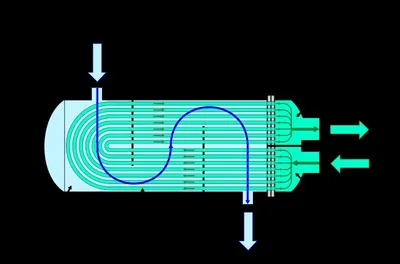
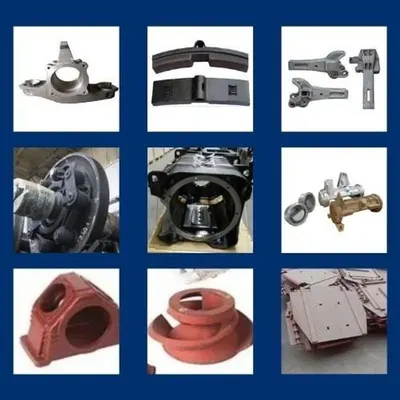
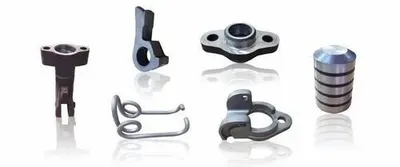
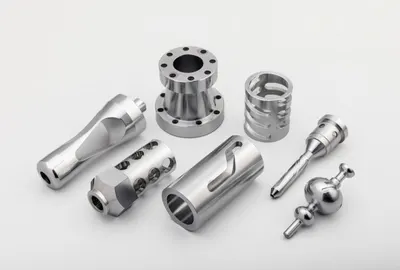
The heat‑exchanger line comprises Plate & Shell, Plate & Frame, Brazed Plate, Semi‑welded Plate models and a separate entry for exchanger plates and gaskets, all of which are standard configurations in process and HVAC sectors. The remaining items - Casting Parts, Forging Parts, Machining Parts, Powder Metallurgy Parts and Rigging Hardware - represent typical downstream components used in machinery assembly, equipment retrofits and plant infrastructure. Each product name aligns with a specific manufacturing process, suggesting the supplier can provide both standard and custom‑fabricated parts for industrial projects.
Product Range and Specialties of Qingdao Hiwell Machinery Co., Ltd.
The catalogue lists five plate‑type heat exchangers: Plate & Shell, Plate & Frame, Brazed Plate, Semi‑welded Plate and a separate line for plates and gaskets. In the heat‑exchanger market, plate units are usually fabricated from stainless steel grades 304 or 316 for corrosion resistance, while brazed plates often employ copper‑based cores with nickel‑silver brazing alloys. Gaskets are commonly supplied in EPDM, NBR or PTFE depending on temperature and fluid compatibility. The four metal‑working categories - Casting, Forging, Machining and Powder Metallurgy - cover a spectrum of material grades: carbon‑steel castings (e.g., ASTM A216), alloy forgings (e.g., 4140 or 4340 steel), precision‑machined parts with tolerances of ±0.02 mm and powder‑metallurgy components typically produced from iron‑based powders with densities above 7 g/cm³. Rigging hardware such as shackles and turnbuckles is normally manufactured from high‑strength steel grades like ASTM A490, finished by hot‑dip galvanizing or black‑oxide coating.
Trade and Export Information - Qingdao Hiwell Machinery Co., Ltd.
Chinese manufacturers of heat exchangers and metal components frequently ship to Southeast Asian, Middle Eastern, European and North American buyers, driven by demand for cost‑effective process equipment and replacement parts. Heat exchangers generally fall under HS Chapter 84, heading 8419, while casting, forging and machining parts are classified in HS Chapter 84 headings 8479 or 8465 depending on their end use. Importers typically request ISO 9001 quality‑management certification, CE marking for equipment destined for the EU, and material test reports complying with ASTM or EN standards. Standard packaging includes wooden crates or steel‑framed pallets with moisture‑resistant liners, and shipments are commonly arranged on 20‑ft or 40‑ft containers under CIF or FOB terms. Chinese export logistics for these categories benefit from well‑developed port infrastructure and a track record of meeting international inspection regimes such as CIQ and SGS audits.
Sourcing from Qingdao Hiwell Machinery Co., Ltd. - Buyer Guidance
When sourcing heat‑exchanger plates or metal components from this supplier, buyers should ask for mill test certificates (MTC) that specify chemical composition and mechanical properties of the base material. Requesting a pressure‑test report for plate exchangers and a dimensional inspection report for machining parts helps verify compliance with industry tolerances (e.g., plate gap tolerance ±0.1 mm, bolt‑hole positional tolerance ±0.05 mm). Samples of the gasket material and a small batch of the finished exchanger can be used to confirm corrosion resistance and sealing performance before placing a larger order. Verify the supplier’s ISO 9001 certification and, for EU shipments, confirm CE conformity documentation; these documents are standard prerequisites for most industrial buyers.
Frequently Asked Questions About Qingdao Hiwell Machinery Co., Ltd.
What types of heat exchangers does Qingdao Hiwell Machinery offer?
The catalogue includes Plate & Shell, Plate & Frame, Brazed Plate, Semi‑welded Plate heat exchangers and a separate line for exchanger plates and gaskets. Each type follows common industry dimensions and is typically fabricated from stainless steel grades 304/316 or copper‑based brazed plates.
Can the company provide custom dimensions for heat‑exchanger plates?
Yes, the product range mentions plates and gaskets as separate items, indicating the ability to manufacture to customer‑specified dimensions. Buyers should supply detailed drawings and tolerance requirements, and request a prototype or sample before full production.
What material certifications are available for the casting and forging parts?
Typical certifications include mill test certificates that reference ASTM A216 for castings and ASTM A490 or equivalent for forgings. Buyers should request these certificates together with a hardness report (e.g., Rockwell B 90‑95) for verification.
Which packaging options are used for shipping the metal parts?
Standard practice for Chinese exporters of heavy metal components is to pack items in wooden crates or steel‑framed pallets, wrapped in shrink film and protected with moisture‑resistant liners. For delicate plates, additional edge protectors and padding are applied to prevent deformation.
What are the usual incoterms and container sizes for orders?
Export shipments are commonly arranged under FOB Qingdao or CIF to the buyer’s destination port. Products fit into standard 20‑ft or 40‑ft containers; heat‑exchanger plates are often loaded in bulk with spacers to maximize space utilization.
What documentation should a buyer request before confirming an order?
Buyers should request the supplier’s ISO 9001 certificate, mill test certificates for each metal grade, a pressure‑test report for heat‑exchanger units, and, if exporting to the EU, CE conformity documentation. Additionally, a pre‑shipment inspection report from a third‑party agency such as SGS can provide extra assurance.
Is there a minimum order quantity (MOQ) for the powder‑metallurgy parts?
While the catalogue does not specify an MOQ, powder‑metallurgy components are typically supplied in batches of at least 500 kg or 1,000 pieces, depending on part size. Buyers should confirm the exact MOQ and lead time during the quotation stage.
How long is the typical lead time for a full heat‑exchanger set?
Lead times for plate‑type heat exchangers in Chinese manufacturing range from 30 to 45 days after receipt of final engineering drawings and material approvals. Complex configurations or large‑scale orders may extend the schedule by an additional 10‑15 days.




 , China