Polytech Instruments Pvt. Ltd. — Supplier
About Polytech Instruments Pvt. Ltd. - Scientific Instruments Supplier in India
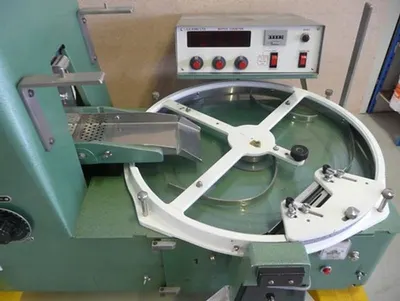
Polytech Instruments Pvt. Ltd. is an India-based supplier operating with 6 active products across two industrial categories: scientific instruments and automobile gears, shafts and clutches. The catalogue centres on surface-mechanics testing equipment, with five dedicated instruments for measuring stiffness, shear, scratch, mar resistance, and abrasion behaviour of coated and uncoated surfaces. The sixth item, the TBX1000_1500 Transmission Densitometer, falls under HS code 9031.40 (optical instruments for measuring surface roughness, coating thickness, or related properties) and is built around optical-grade glass and electronic components. The combination of mechanical tribology testers and a transmission optical densitometer positions the supplier in a niche that overlaps materials testing, automotive R&D, and quality-control laboratories. The product mix reflects the kind of equipment used by paint and coating laboratories, automotive OEM and Tier-1 suppliers, and academic research facilities that need to characterise coating durability and optical transmission. Buyers sourcing from India in this segment typically work with manufacturers who assemble precision mechanical stages, load cells, and optical benches for both domestic industrial users and export markets. Polytech Instruments' listing of a Taber rotary abraser alongside a multi-finger scratch/mar tester and a linear abraser indicates coverage of the two principal abrasion-test methodologies used in the coatings industry: the rotary-platform Taber method and the linear-reciprocating method governed by ASTM and ISO standards.
Product Range and Specialties of Polytech Instruments Pvt. Ltd.
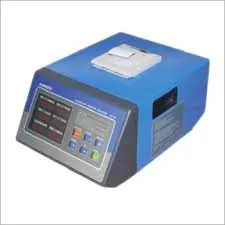
The catalogue breaks into two functional groups. The first five items are mechanical surface-test instruments: a stiffness tester for evaluating the flexural response of coated substrates, a shear/scratch tester for single-pass scratch resistance, a multi-finger scratch/mar tester for simulating multi-contact mar damage, a linear abraser for reciprocating wear cycles, and a Taber rotary abraser for the classic rotary-platform abrasion test (typically run with CS-10 or CS-17 wheels under specified loads). Buyers in the coatings, automotive, packaging, and polymer-film industries usually specify these instruments against ASTM D3363 (pencil hardness), ASTM D7027 / ISO 19252 (scratch), ASTM D4060 (Taber abrasion), and ISO 1518 (scratch hardness), and they expect test parameters such as applied load in newtons, scratch speed in mm/s, and taber wear-index values in mg per 1,000 cycles. The second group is the TBX1000_1500 Transmission Densitometer, classified under HS 9031.40 and built with optical-grade glass and electronic components. Transmission densitometers in this class typically measure optical density from 0 to 4.0 D (or higher), with readout steps of 0.01 D, and are used to verify the silver and dye densities of radiographic film in medical, industrial non-destructive testing (NDT), and dental imaging. Buyers in this category usually require calibration traceability to a national standards body, conformance to ISO 5-2 and ISO 5-3 for radiographic film density, and a slit aperture matched to the film format being inspected. Polytech Instruments' pairing of a tribology instrument line with a transmission densitometer is unusual, and buyers should clarify with the supplier which product line is the primary focus for any given enquiry.
Trade and Export Information - Polytech Instruments Pvt. Ltd.
India exports a significant share of the world's laboratory and scientific instruments, with clusters of manufacturers in Maharashtra, Gujarat, Tamil Nadu, and the National Capital Region serving both the domestic market and overseas buyers. Scientific instruments in the HS 9031 and 9024 families typically flow into the European Union, the Gulf states, Southeast Asia, and Africa, where they support automotive paint shops, NDT service companies, and academic laboratories. For coating and surface-test equipment, common buyer industries include automotive OEM and Tier-1 paint shops, coil-coating lines, packaging converters, and polymer-film producers. For transmission densitometers under HS 9031.40, the principal end users are medical imaging centres, dental clinics, and industrial radiography NDT service providers. Export shipments of scientific instruments from India are usually dispatched by air freight for small bench-top units and by sea in plywood or corrugated cartons for heavier floor-standing models, with ISPM-15 compliant wooden crates required for any wooden packaging entering the EU, the UK, North America, and Australia. Buyers in this segment typically request CE marking for the European market, ISO 9001 quality management certification from the manufacturer, and calibration certificates traceable to NABL (India), NIST (USA), or PTB (Germany). Incoterms used in this trade are commonly EXW, FOB Mumbai or FOB Chennai, and CIF for sea shipments. Indian scientific-instrument exporters are also increasingly asked for IEC 61010-1 safety conformance for electrical laboratory equipment and for country-specific registration such as CDSCO licensing where densitometers are classified as medical devices in certain jurisdictions.
Sourcing from Polytech Instruments Pvt. Ltd. - Buyer Guidance
Before placing an order with Polytech Instruments Pvt. Ltd., a buyer should request the technical datasheet for each specific instrument, including load range in newtons, scratch or stroke speed in mm/s, taber wheel compatibility, optical density range and aperture size for the densitometer, and the country of manufacture of key sub-components such as load cells, stepper motors, and optical sensors. A factory or laboratory video walk-through, a list of existing installations, and at least one reference customer in the buyer's region are standard due-diligence items in this category. For the densitometer, buyers should confirm whether the unit carries CE marking under the EU Medical Devices Regulation or In Vitro Diagnostics Regulation as applicable, and whether the optical bench is calibrated against a traceable density standard. Sample or demonstration testing is uncommon for capital instruments of this type, so buyers typically negotiate a factory acceptance test (FAT) protocol before shipment and a site acceptance test (SAT) clause in the purchase contract. Documentation that should be requested includes the calibration certificate, the operating and service manual, a bill of materials for spare-parts planning, and a warranty statement of at least 12 months. For coating-test instruments, buyers should also confirm conformance to the specific ASTM or ISO method they intend to run, because a generic scratch tester may not meet the geometry and load-profile requirements of ASTM D7027 or ISO 19252. Payment terms in this segment are usually 30 percent advance against purchase order and 70 percent against pre-shipment inspection, with a letter of credit used for first-time transactions above typical threshold values.
Frequently Asked Questions About Polytech Instruments Pvt. Ltd.
What product categories does Polytech Instruments Pvt. Ltd. supply?
The supplier lists 6 active products across two categories: scientific instruments (stiffness tester, shear/scratch tester, multi-finger scratch/mar tester, linear abraser, Taber rotary abraser, and TBX1000_1500 Transmission Densitometer) and automobile gears, shafts and clutches. Buyers should confirm with the supplier which line is the focus for any specific enquiry.
What is the HS code for the TBX1000_1500 Transmission Densitometer?
The TBX1000_1500 Transmission Densitometer is listed under HS code 9031.40, which covers optical instruments for measuring surface roughness, coating thickness, or related optical properties including densitometers used in radiographic film inspection.
Which international standards apply to the scratch and abrasion testers?
Buyers of coating-test instruments in this category typically reference ASTM D3363 for pencil hardness, ASTM D7027 and ISO 19252 for scratch testing, ASTM D4060 for Taber abrasion, and ISO 1518 for scratch hardness. Buyers should request written confirmation that the specific instrument meets the geometry and load-profile requirements of the standard they intend to run.
Which certifications should buyers request from this Indian supplier?
Buyers should request ISO 9001 quality management certification, a calibration certificate traceable to NABL or an equivalent national body, CE marking for instruments entering the European Economic Area, and IEC 61010-1 safety conformance for electrical laboratory equipment. For the densitometer, country-specific medical-device registration should be confirmed where applicable.
What is the typical minimum order quantity and lead time for scientific instruments?
Capital laboratory instruments of this type are usually supplied on a single-unit basis rather than a recurring MOQ, and lead times of 6 to 12 weeks are typical for built-to-order configurations. Buyers should confirm the production slot and current backlog with the supplier at the time of enquiry.
How are scientific instruments from India typically packaged and shipped?
Bench-top units are usually packed in corrugated cartons with foam inserts, while heavier floor-standing models are crated in ISPM-15 compliant plywood for sea freight to the EU, UK, North America, and Australia. Air freight is common for small, urgent shipments, and Incoterms EXW, FOB Indian port, or CIF destination port are all used in this trade.
What optical-density range should a buyer expect from a transmission densitometer in this class?
Transmission densitometers used for radiographic film inspection in medical, dental, and industrial NDT applications typically measure from 0 to 4.0 D with a readout resolution of 0.01 D, and conform to ISO 5-2 and ISO 5-3 density measurement standards. The specific range and aperture size of the TBX1000_1500 unit should be confirmed with the supplier against the film format being inspected.
Which regions typically import scientific instruments from India?
Indian scientific-instrument exporters typically serve the European Union, the Gulf Cooperation Council states, Southeast Asia, Africa, and parts of Latin America. End-user industries for coating-test equipment include automotive paint shops, coil-coating lines, and packaging converters, while transmission densitometers are used by medical imaging centres, dental clinics, and industrial radiography NDT service providers.




 , India