Agriculture›
 Apparel and fashion accessories›
 Construction & real estate›💡Electronic & Electrical›🍎Food & Beverages›🛋️Home furnishing & supplies›⚗️Industrial goods & chemical›🪨Minerals & metals›📦Miscellaneous›Agriculture›Apparel and fashion accessories›Construction & real estate›💡Electronic & Electrical›🍎Food & Beverages›🛋️Home furnishing & supplies›⚗️Industrial goods & chemical›🪨Minerals & metals›📦Miscellaneous›
MEGAHPRINTING Product Catalog

About MEGAHPRINTING - Computer Printers & Materials Supplier in Indonesia
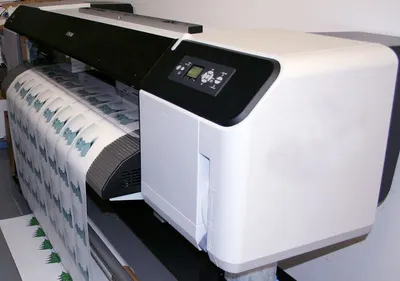
Indonesia, Sumatera Utara region, hosts MEGAHPRINTING with an active catalogue of 46 distinct products. The supplier lists items across eight top categories, including Computer Printers & Materials, Printing Machinery Spare Parts, Computer Scanners, Computer Parts, Optical Machinery & Equipment, Photographic Equipment, Computer Hardware & Peripherals, and Dental Equipments & Materials. The product list contains a mix of scanners, printheads, 3‑D printers and large‑format production printers, each identified with a numeric HS code in the catalogue. Examples are the Canon Colortrac SmartLF SCi 42 Scanner (HS code 1) and the Epson I3200(8)-A1HD Printhead (HS code 5). The catalogue also includes brand‑specific models such as Hasselblad Flextight X1 Scanner and Roland BN-20A Printer, reflecting a focus on professional imaging and printing equipment.
The scanner entries cover four models from Canon and Hasselblad, each paired with HS codes ranging from 1 to 5. Printhead items include Epson, Mimaki, Spectra and Xaar variants, again each linked to a numeric HS code. Additional hardware includes full printers such as the Mimaki 3DGD-1800, Mutoh PerformanceJet and HP Color LaserJet Enterprise Flow series. The presence of both flatbed scanners and large‑format inkjet printers indicates coverage of both document digitisation and high‑volume production printing markets. No other product families are listed beyond the categories mentioned.
Product Range and Specialties of MEGAHPRINTING
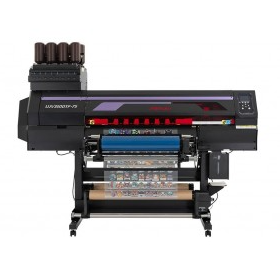
MEGAHPRINTING’s catalogue groups scanners, printheads and printers that are standard in commercial and industrial imaging workflows. Flatbed scanners like the Canon Colortrac series typically offer optical resolutions of 600 - 1200 dpi, colour depth of 48‑bit and USB or Ethernet interfaces, matching industry expectations for archival digitisation. Printheads such as the Epson ECO Solvent DX7 and Mimaki JV33 are commonly rated by nozzle count (e.g., 1440, 1920 nozzles) and droplet size from 2 to 10 picoliters, which determines print speed and detail for solvent‑based inks. Large‑format printers like the Epson SureColor R5070L and Roland CAMM‑1 GR2‑540 usually support media widths up to 64 inches, print speeds of 80 - 120 m²/h, and are built for PVC, canvas and textile substrates. Industry practice separates printers by ink technology - solvent, UV, dye‑sublimation - and buyers often specify the required ink type, print resolution (e.g., 1200 dpi) and media handling capabilities when evaluating such equipment.
Frequently Asked Questions About MEGAHPRINTING
What types of scanners does MEGAHPRINTING offer and what are their typical specifications?
The catalogue lists five scanner models, including Canon Colortrac SmartLF and Hasselblad Flextight series. Typical specifications are optical resolutions of 600 - 1200 dpi, colour depth of 48‑bit, and connectivity via USB or Ethernet. HS codes for these scanners are recorded as 1 through 5 in the supplier’s data.
Which printhead technologies are included in the product range?
Printheads from Epson, Mimaki, Spectra and Xaar are listed, covering solvent, eco‑solvent and UV ink technologies. Common technical data include nozzle counts from 1440 to 1920 and droplet sizes between 2 pL and 10 pL. HS codes for the printheads appear as 1‑5 in the catalogue.
Are large‑format printers such as the Epson SureColor R5070L suitable for textile printing?
The Epson SureColor R5070L is a wide‑format printer that supports media widths up to 64 inches and can handle textile‑compatible inks when configured for dye‑sublimation or pigment inks. Buyers should verify the printer’s ink compatibility sheet and request a sample print on the intended fabric. The product is classified under the printer HS code family in the supplier’s list.
What certifications should a buyer request for the electronic equipment?
Buyers should request CE Declaration of Conformity, FCC compliance reports and RoHS compliance certificates for all scanners, printers and printheads. These documents confirm that the equipment meets safety, electromagnetic and hazardous substance standards required in most import markets.
How are the products packaged for international shipment?
Typical packaging involves custom‑fit cardboard cartons with internal foam inserts, palletised on standard Euro‑pallets, and shrink‑wrapped for moisture protection. Containers used are 20‑ft or 40‑ft depending on order volume, following common logistics practices for electronic imaging equipment.
 Indonesia
Related Suppliers & Products
Explore similar suppliers, related products and trending categories