Frankincense Store — Supplier
About Frankincense Store - Resin Supplier in Canada
Canada‑based Frankincense Store lists eight active products across two primary categories: resin and essential oils. The catalogue includes four resin variants - Sacred, Carterii, Hojari and Neglecta - and four corresponding essential‑oil variants. Each entry is identified by botanical source rather than by grade or certification, reflecting the supplier’s focus on raw material differentiation. No additional product attributes such as packaging size or certification are provided in the source data.
The supplier’s product list is confined to frankincense derived from Boswellia species, with the resin catalogued separately from the distilled oils. All eight items are presented without accompanying HS‑code references, so trade classification must be inferred from standard industry codes for aromatic resins and essential oils. The catalogue does not specify origin city or region within Canada, nor does it claim any particular export markets.
Product Range and Specialties of Frankincense Store
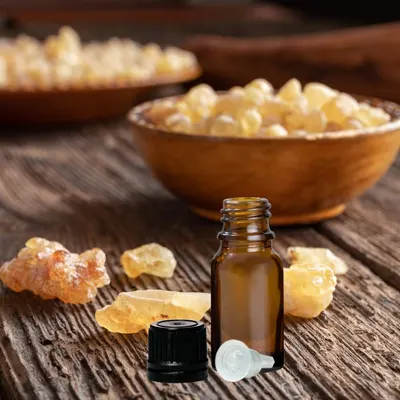
Frankincense resin is commonly graded on colour, moisture content and impurity level, with industry grades ranging from Grade A (light colour, <5 % moisture) to lower grades used for incense blends. Typical particle size for bulk resin lies between 1 mm and 3 mm, and bulk shipments are often packed in 25 kg jute bags. Essential oils from frankincense are usually sold as 100 % pure, steam‑distilled extracts; buyers often request a gas‑chromatography‑mass‑spectrometry (GC‑MS) profile and a minimum of 0.5 % oil yield by weight of raw resin. Standard packaging includes 1 L amber glass bottles for retail and 5 L PET containers for bulk trade. The supplier’s eight SKUs cover the four main botanical variants, allowing buyers to select resin or oil based on the desired aroma profile and application.
Trade and Export Information - Frankincense Store
Globally, frankincense resin and oil are imported by manufacturers of cosmetics, perfumery, aromatherapy products and traditional medicines. Major import regions include the European Union, the United States, the Middle East and Southeast Asia, where the raw material supports both luxury fragrance formulations and herbal supplement production. Trade under the HS chapter 13 (vegetable products) for resin and chapter 33 (essential oils) for the distilled oils is typical, and customs authorities often require a Certificate of Origin and a phytosanitary certificate for plant‑derived goods. Buyers usually request ISO 9001 or GMP compliance certificates, and for organic‑label claims, a certified organic audit report. Logistics commonly involve 20‑foot containers with resin in stacked jute bags and oils in sealed drums or bottles, loaded on pallets to meet standard INCOTERMS such as FOB or CIF.
Sourcing from Frankincense Store - Buyer Guidance
When sourcing frankincense resin, buyers should request a moisture‑content analysis and a visual grade report, as these parameters affect both price and suitability for incense production. For essential oils, a recent GC‑MS fingerprint, a purity assay (typically > 95 % sesquiterpenes), and a batch‑specific COA are standard verification documents. As the supplier does not list any certifications, buyers are advised to confirm any quality management system certificates directly with the exporter before confirming purchase. Minimum order quantities are often set at 500 g for resin samples and 1 L for oil samples, with larger bulk orders typically consolidated into 25 kg bags or 5 L drums.
Frequently Asked Questions About Frankincense Store
What frankincense variants does Frankincense Store offer?
The catalogue lists four botanical variants - Sacred, Carterii, Hojari and Neglecta - each available as raw resin and as distilled essential oil.
How many products are listed by the supplier?
Eight active SKUs are listed: four resin types and four corresponding essential‑oil types.
Which documents should a buyer request before purchasing?
Buyers should ask for a Certificate of Analysis, a moisture‑content report for resin, a GC‑MS profile for oil, and any available ISO 9001 or GMP certificates.
What are typical packaging formats for these products?
Resin is usually packed in 25 kg jute bags, while essential oil is commonly shipped in 1 L amber glass bottles or 5 L PET containers for bulk orders.
Which markets commonly import frankincense resin and oil?
Key importing regions include the EU, the United States, the Middle East and Southeast Asia, where the materials are used in cosmetics, perfumery and traditional‑medicine products.
What quality parameters are important for frankincense oil?
Buyers typically verify oil purity (> 95 % sesquiterpenes), yield (0.5‑1 % of raw resin weight), and a recent GC‑MS fingerprint to confirm botanical origin.
Is a phytosanitary certificate required for export?
Yes, most customs authorities require a phytosanitary certificate for plant‑derived resin and oil to confirm the material is free of pests and disease.
What Incoterms are commonly used for shipping these goods?
Suppliers often quote FOB or CIF terms, with resin loaded in containers on pallets and oil sealed in drums or bottles.




 , Canada